
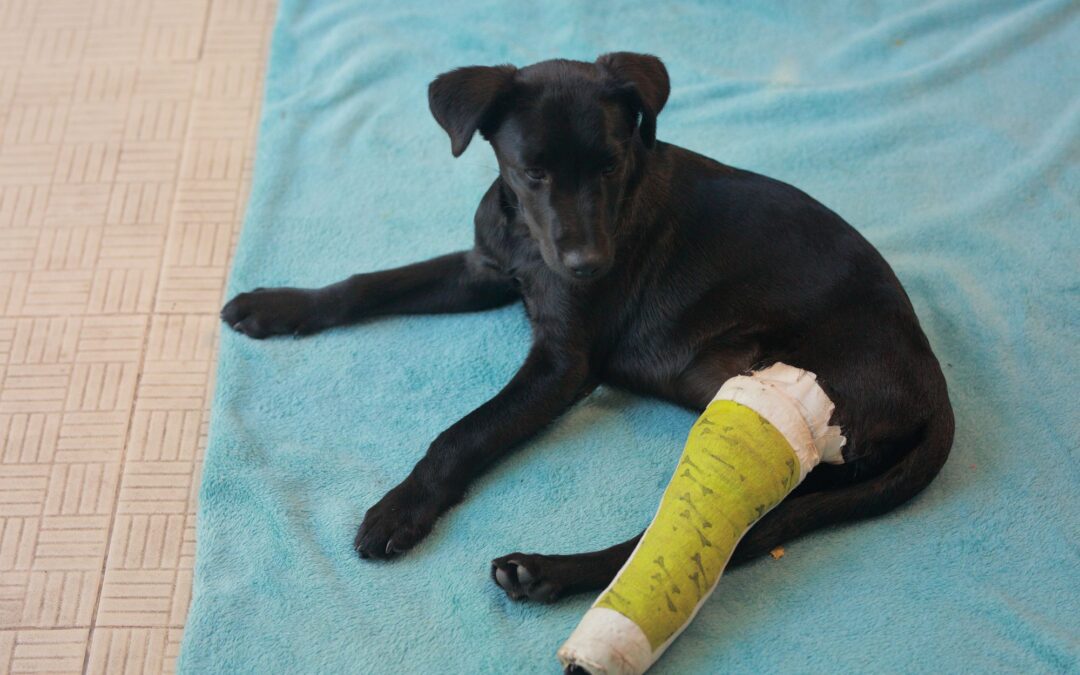
Dog ACL tear symptoms often include limping on a hind leg, putting less weight on the affected leg, stiffness after rest, difficulty getting up, and reluctance to jump or use stairs. Symptoms may appear suddenly after activity or develop gradually and come and go over time.
In dogs, the ligament commonly called the ACL is more accurately called the cranial cruciate ligament (CCL). It helps stabilize the knee and prevent abnormal movement between the bones of the joint. You may see both terms used when reading about dog knee injuries, but they refer to the same ligament in this context.
What Are the Most Common Dog ACL Tear Symptoms?
The signs of a CCL injury can range from a mild limp to refusal to use one hind leg. According to the American College of Veterinary Surgeons, common signs of cranial cruciate ligament disease include lameness, stiffness, pain, difficulty rising, trouble jumping, reduced activity, loss of muscle, and decreased knee movement.
Watch for:
- Limping on one of the hind legs
- Putting less weight on the affected leg
- Difficulty getting up after lying down
- Reluctance to jump or use stairs
- Stiffness after rest or exercise
- Swelling around the knee
- Sitting with one hind leg extended outward
- Reduced interest in walking, running, or playing
These symptoms can occur with other orthopedic problems, so they cannot confirm a CCL tear on their own. A veterinary examination is needed to determine the cause of your dog’s lameness.
Limping and Reduced Weight-Bearing
Limping is one of the most recognizable dog ACL tear symptoms. Your dog may favor one hind leg, put less weight on it, or briefly hold the leg off the ground. Some dogs shift more weight onto their other legs to reduce pressure on the painful knee.
With a more severe CCL injury, your dog may suddenly stop bearing weight on the affected leg. However, being able to put some weight on the leg does not rule out a CCL tear.
Stiffness and Difficulty Getting Up
A painful or unstable knee can make everyday movements more difficult. Your dog may take longer to get up after lying down, move more slowly, or appear stiff when starting to walk.
You may also notice reluctance to jump onto furniture, get into a vehicle, use stairs, run, or play. These changes can be subtle, especially if your dog remains interested in normal activities but stops sooner or moves more carefully.
Swelling, Muscle Loss, or Clicking
A CCL injury can cause swelling around the knee, especially when the joint is irritated or inflamed. Over time, dogs may also lose muscle in the affected hind leg because they use it less to avoid putting pressure on the painful knee.
You may also notice a clicking or popping sound when your dog walks or moves the knee. This can occur when a CCL injury is accompanied by damage to the meniscus, a piece of cartilage that helps cushion and stabilize the knee.
Early or Intermittent Dog ACL Tear Symptoms
A CCL problem does not always begin with sudden, severe lameness. In some dogs, the ligament weakens gradually, so the first signs may be mild or come and go.
You may notice a pattern such as:
Limping or stiffness → rest → seems better → normal activity → limping or stiffness returns
Your dog may appear more comfortable after resting because the knee is under less stress. Once normal activity resumes, limping or stiffness may return. This recurring pattern should not automatically be dismissed as a minor strain, particularly if it continues to happen.
Partial CCL injuries can produce subtler symptoms because the ligament may still provide some stability. A dog may continue walking normally at times while still having pain or an unstable knee.
Can a Dog Still Walk With a Torn ACL?
Dogs may continue walking after a CCL injury by shifting more weight onto their other legs or changing how they move. This compensation can make the injury less obvious during normal activity.
Dogs also do not always cry or whine when they are in pain. Changes in activity, willingness to jump or play, or the way your dog uses the affected leg may be easier to notice than obvious signs of pain.
Complete Dog ACL Tear Symptoms
A complete CCL tear may cause a sudden and noticeable change in how your dog uses the affected leg. Your dog may suddenly become very lame, stop bearing weight, or hold the leg up. VCA Animal Hospitals notes that dogs with a complete CCL rupture may become suddenly very lame and unable to bear weight.
Some dogs may cry out when the ligament ruptures, while others show little or no vocal reaction. The severity of the limp can vary between dogs.
Causes of ACL Injuries in Dogs
In dogs, CCL disease often develops as the ligament gradually weakens rather than from one sudden injury. Factors such as genetics, age, joint structure, body condition, breed, and physical conditioning may contribute to this weakening. A partially weakened ligament can eventually tear during an ordinary activity.
A sudden movement, slip, jump, or sharp turn may be the moment a weakened ligament fails. Direct trauma can also injure the CCL, but not every tear results from a single obvious accident.
Dogs at Higher Risk of CCL Tears
CCL disease can affect dogs of any breed, size, or age, but some dogs are more likely to develop it. Rottweilers, Newfoundlands, Staffordshire Terriers, Mastiffs, Akitas, Saint Bernards, Chesapeake Bay Retrievers, and Labrador Retrievers have been reported to have higher rates of cruciate disease.
Several factors may increase a dog’s risk. Age can contribute to gradual weakening of the ligament, while genetics and the structure of the knee may affect how much stress the CCL experiences. Excess body weight can also place additional stress on the knee joint.
Keeping your dog at a healthy weight and providing regular, appropriate exercise can help maintain muscle strength and joint health. However, these steps cannot eliminate the risk of a CCL tear.
Other Causes of Back-Leg Limping
A hind-leg limp does not automatically mean your dog has a CCL tear. Other possible causes include:
- Patellar luxation
- Hip disease
- Arthritis
- Muscle or tendon injuries
- Paw or nail injuries
- Fractures
- Other knee injuries
- Neurologic problems
Pain can originate anywhere from the paw to the spine, and different conditions can produce similar changes in walking. Veterinarians consider the location of pain, joint stability, medical history, and physical examination findings when narrowing down the cause.
Diagnosing an ACL Tear in Dogs
Diagnosing a CCL injury involves more than watching for a limp. A veterinarian looks at the history of the problem, evaluates how your dog moves, examines the entire limb, and checks the knee for signs of instability.
History and Physical Examination
Your veterinarian may ask:
- When did the limping begin?
- Did it start suddenly or gradually?
- Does it come and go?
- Was there a fall, slip, or other injury?
- Is it worse after activity or rest?
- Has your dog’s activity level changed?
Watching your dog stand and walk helps show how weight is distributed between the legs.
During the physical examination, the veterinarian may check the paw, muscles, hip, knee, and surrounding joints for swelling, tenderness, loss of muscle, reduced movement, or pain. Looking at the whole limb helps distinguish CCL disease from other causes of lameness.
Cranial Drawer and Tibial Thrust Tests
The cranial drawer test and tibial thrust test are used to check for abnormal movement within the knee.
A healthy CCL limits forward movement of the tibia relative to the femur. When the ligament is ruptured or significantly damaged, the tibia may move abnormally relative to the femur, indicating loss of normal knee stability.
Pain, muscle tension, and anxiety can make the joint difficult to evaluate. Sedation may sometimes be recommended so the muscles relax enough for a reliable examination.
These tests should be performed by a veterinary professional rather than attempted at home.
X-Rays and Other Diagnostic Imaging
Standard X-rays usually do not show the torn ligament itself.
They can still provide useful information about the knee, including:
- Joint swelling or fluid
- Arthritis
- Bone changes
- Joint alignment
- Fractures
- Other possible causes of lameness
At Ridgefield Veterinary Center, dogs with suspected ACL or CCL injuries can receive an orthopedic evaluation to assess lameness, joint pain, and knee stability. When needed, the veterinary team can use in-house digital X-rays to evaluate the joint and rule out other causes of limping. Treatment may include conservative management and pet pain management or, when appropriate, pet surgery for cranial cruciate ligament repair performed on-site by a board-certified veterinary surgeon.
What Happens If a CCL Tear Is Left Untreated?
The Merck Veterinary Manual identifies cranial cruciate ligament disease as a leading cause of hind-limb lameness in dogs and links CCL rupture with osteoarthritis.
When the CCL no longer stabilizes the knee, abnormal movement can continue to damage the joint and surrounding structures. Possible complications include:
- Persistent or recurring lameness
- Muscle loss in the affected leg
- Reduced activity
- Progressive arthritis
- Meniscal damage
- Increased strain on the other legs
Arthritis can progress even after CCL disease is treated. Treatment depends on the severity of the injury and your dog’s individual needs. Your veterinarian can recommend appropriate options for managing pain, protecting the joint, and maintaining mobility.
What Should You Do If You Notice Dog ACL Tear Symptoms?
If you notice dog ACL tear symptoms, limit activities that put extra stress on the knee and arrange a veterinary examination.
Until your dog is evaluated:
- Keep walks short and controlled on a leash.
- Avoid running, jumping, and rough play.
- Limit unnecessary stair use.
- Provide good traction on slippery floors.
- Do not repeatedly bend or test the knee.
- Do not give human pain medication unless your veterinarian specifically tells you to do so.
Medications such as ibuprofen and naproxen can be dangerous for dogs. Your veterinary team can recommend safe pain relief if your dog needs it.
When to Seek Prompt Veterinary Care
Seek prompt veterinary care if your dog:
- Cannot bear weight on the leg
- Appears to be in severe pain
- Develops major or rapidly worsening swelling
- Has an obviously deformed limb
- Becomes lame after a serious fall, collision, or other trauma
A mild limp that keeps coming back also deserves a veterinary evaluation, even if your dog seems normal between episodes.
Conclusion
Dog ACL tear symptoms can range from a mild, recurring limp to sudden difficulty bearing weight on a hind leg. Early veterinary evaluation can help identify the cause of your dog’s lameness and determine the appropriate next steps.
At Ridgefield Veterinary Center, we evaluate dogs with limping, knee pain, and other mobility changes and can recommend the appropriate diagnostic and treatment options for your pet. If your dog has started favoring a hind leg or you are concerned about a possible CCL injury, contact us today to discuss your dog’s symptoms and next steps.
FAQs
Can a dog still walk or put weight on a torn ACL?
Yes. Some dogs can continue walking and putting weight on the affected leg, especially with a partial tear. Others compensate by shifting more weight onto their other legs. Being able to walk does not rule out CCL damage or knee pain.
Do dog ACL tear symptoms come and go?
Yes. Symptoms can come and go, particularly with a partial or gradually developing CCL tear. Rest may reduce discomfort temporarily, and limping may return once the dog becomes more active again.
Can a dog ACL tear heal with rest alone?
Rest can reduce stress on the knee and may improve pain and limping, but it does not necessarily restore normal stability to a damaged ligament. The best treatment depends on the amount of ligament damage, knee stability, your dog’s size and activity, and other findings from the veterinary examination.