
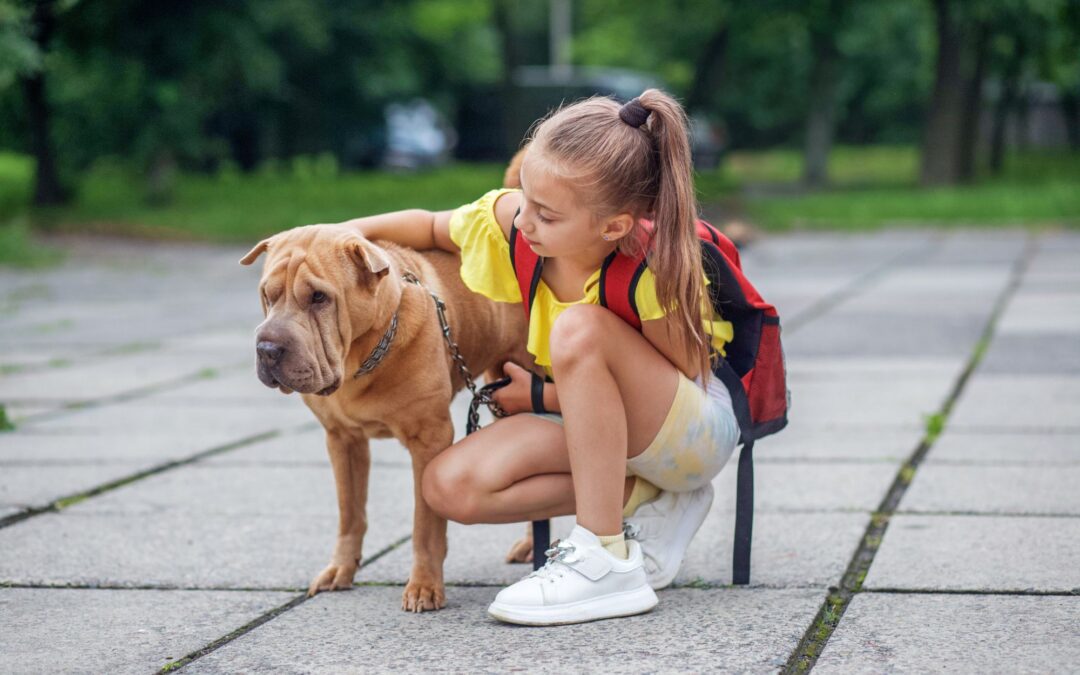
Back-to-school schedule changes can be difficult for some dogs. After spending summer days with family, your dog may suddenly be alone while everyone is at school or work. That shift in daily routine can cause stress and, in some cases, separation anxiety.
With preparation, some dogs adjust as the new routine becomes familiar. Dogs with separation anxiety may need a longer, gradual behavior-modification plan and veterinary support. Others may bark, chew, pace, or panic when left alone. Recognizing these changes early can help you support your dog and know when to call your veterinarian.
Why the Back-to-School Season Can Trigger Separation Anxiety
The back-to-school season often changes a dog’s whole day. Morning walks may become shorter. Meals may happen earlier. Children who spent the summer at home are suddenly gone for school, while adults may leave for work. For a dog, this can feel like an abrupt change instead of a small schedule shift.
Most dogs can learn a new school year routine, but some dogs develop separation anxiety after a significant change in their daily life. This does not mean your dog is being stubborn or trying to punish you. Separation-related distress is an emotional response to being away from the people your dog depends on.
Dogs that have had constant companionship, have recently moved, lost a family member or pet, or have a history of anxiety may have a harder time. A dog may also develop separation anxiety after illness, boarding, or another stressful event. A sudden behavior change should always be discussed with a veterinarian because pain or another medical condition can affect a dog’s behavior.
What Are the Signs of Back-to-School Separation Anxiety in Dogs?
Some dogs handle a new back-to-school routine without much trouble. Others struggle when the house suddenly becomes quiet, and they are left alone for longer periods. Your dog may seem fine while you get ready for work or school, then start barking, pacing, or trying to escape soon after you leave.
A pet camera can be useful because some signs of separation anxiety only appear when you’re away. Look at how your dog behaves during the first few minutes after you leave and whether they eventually settle.
The table below can help you tell the difference between a dog that is adjusting to more time alone and one that may be experiencing separation anxiety.
| Normal Adjustment To Alone Time | Possible Separation Anxiety |
| Settles after you leave | Remains distressed for much of the time you’re away |
| Checks the door or window, then relaxes | Repeatedly barks, paces, pants, or tries to escape |
| Eventually eats a treat or uses a food toy | Refuses food or cannot settle enough to engage with a toy |
| Takes a nap or rests while alone | Becomes destructive or increasingly distressed |
| Improves as the new routine becomes familiar | Continues or worsens despite having time to adjust |
The pattern matters more than any single behavior. A dog that checks the door and then settles may simply be adjusting to a new routine. A dog that continues barking, pacing, destroying things, or trying to escape may be experiencing significant distress when left alone.
Escape attempts deserve particular attention. A panicked dog can damage their paws, tear their nails, or break a tooth while trying to get out. If your dog injures themselves or repeatedly tries to escape, contact your veterinarian.
These signs don’t automatically mean your dog has separation anxiety. A dog may chew because they are bored, bark because they hear something outside, or have accidents because of a medical problem. If you’re unsure what’s causing the change, your veterinarian can help determine whether separation anxiety or another issue is involved.
Help Your Dog Adjust Before School Begins
The best time to prepare is before school begins. Start practicing the schedule several days, or even a few weeks, before the first day. Your goal is to gradually introduce the times your dog will be alone rather than making the first school day a major shock.
Practice Short Departures
Put on your shoes, pick up your keys, and leave for a few minutes. Return quietly and wait until your dog shows calm behavior before giving attention. Over time, gradually increase the length of these practice departures. This teaches your dog that departures are normal and that you return.
Do not move too fast. If your dog’s anxiety rises during a practice, shorten the next absence. Some dogs can adjust within days; others need more time. The goal is not to force your dog to tolerate distress. It is to build comfort with alone time in small, manageable steps.
Make Departures Predictable and Positive
You can create positive associations with being alone by saving a favorite safe treat or activity for departure time. Food dispensing toys, puzzle toys, or a long-lasting veterinarian-approved chew can give your dog’s mind something to do. These tools work best for dogs that are mildly worried and still willing to eat. A dog in panic may not touch food.
Keep leaving and returning low-key. Stay calm rather than giving long, emotional goodbyes. Quiet, predictable departures can have a calming effect and help your dog feel secure. Provide a comfortable space away from windows or busy entryways if outside activity triggers barking.
Meet Exercise and Enrichment Needs
Before you leave, give your dog time outdoors for a walk, sniffing, play, or training. Mental stimulation can also include simple cues, scent games, and safe food puzzles. A tired dog may settle more easily because they have used some excess energy, but exercise is not a stand-alone treatment for severe separation anxiety.
Match activity to your dog’s age, health, and overall needs. Puppies, senior dogs, and dogs with joint, heart, or breathing concerns may need a different plan. Your veterinarian can help you choose safe activities for your dog.
Should You Use a Crate When Your Dog Is Home Alone?
Crate training can help some dogs when the crate is already a safe space. Your dog should be able to enter willingly, rest comfortably, and feel calm while the door is closed for short periods. Never use the crate as punishment.
| A Crate May Be Appropriate When Your Dog… | Consider Another Safe Space When Your Dog… |
| Voluntarily enters and rests in the crate. | Panics or tries to break out. |
| Remains relaxed when the door is closed for short periods. | Bites or claws at the crate. |
| Eats treats or meals comfortably inside. | Shows heavy drooling, frantic pacing, or intense distress. |
| Has been gradually and positively introduced to the crate. | Has injured their teeth, paws, or nails trying to escape. |
| Treats the crate as a comfortable, familiar space. | Becomes more anxious when confined. |
For other dogs, confinement makes anxiety worse. A dog that bites bars, panics, drools heavily, or makes frantic escape attempts in a crate may hurt themselves. In that situation, a dog-proofed room, exercise pen, or another comfortable space may be safer while you seek professional guidance.
Help Your Dog Get Comfortable With the New Routine
Reward-based training can help your dog become more comfortable with the changes that come with the school-year routine. Practice calm behaviors during everyday moments, such as settling on a mat while you move to another room or relaxing while you pick up your keys.
Behavior modification is most effective when it helps your dog build confidence without punishment. Use positive reinforcement to reward calm behavior, such as lying on a mat while you walk to another room or settling with a chew as you pick up your keys. Short, repeated practice can change the meaning your dog attaches to departure cues.
Avoid scolding your dog for accidents, excessive barking, or destructive behavior that happened while you were gone. Your dog will not connect punishment with the earlier event, and it can add more fear. The American Veterinary Society of Animal Behavior recommends reward-based training methods for training and behavior problems.
For mild anxiety, behavior modification techniques may include practicing brief separations, rewarding relaxed body language, and gradually increasing distance and duration. Dogs with severe separation anxiety often need a plan from a veterinarian, and some may benefit from referral to a veterinary behaviorist or a reward-based trainer working in coordination with the veterinarian.
Practical Support for Long School Days
For families in Ridgefield, the return to school can mean a major shift in your dog’s weekday routine. School drop-offs, work schedules, and longer stretches at home alone can change when your dog eats, exercises, and gets attention. If your dog will be alone for extended periods, planning for that change before school starts can make the transition easier.
A dog sitter, trusted neighbor, family member, or dog walker can help break up long periods alone. A midday visit can give your dog a bathroom break, some time outdoors, and a calm check-in while they adjust to the new schedule.
Some families also consider getting another dog when their pet struggles with the change. Another dog may provide companionship, but it does not treat separation anxiety or replace the people your dog is attached to. If your dog becomes anxious when you leave, adding another pet may not change that response.
Before the school year begins, use this simple checklist to help your dog adjust:
- Keep meals, walks, and departure times as consistent as possible.
- Set up a safe space with water, bedding, and approved enrichment.
- Practice the new routine before the school year begins.
- Arrange a midday visit on days when your dog would otherwise be alone for long periods.
- Track your dog’s behavior, including when signs start and how long they last.
When Your Dog Needs Veterinary Help
A sudden behavior change can have more than one cause. Dog separation anxiety may be part of the picture, but pain, illness, or another health concern can also affect a dog’s behavior. Looking at your dog’s overall health is especially important when new anxious behaviors appear around the back-to-school time. The Merck Veterinary Manual’s guide to behavior problems in dogs explains why behavior changes should be evaluated alongside a dog’s physical health.
Severe distress when owners leave, repeated escape attempts, destructive chewing, excessive panting, damage to crates or doors, or self-injury can indicate that a dog needs professional help. Broken teeth, damaged nails, or other injuries from trying to escape can also occur with severe isolation distress. A veterinary consultation can help determine whether separation anxiety is contributing to the behavior and whether another health problem needs attention.
For dogs with severe cases of separation anxiety, medication may be part of the treatment plan alongside behavior modification. Medication does not replace behavior work, but it may help some dogs become calm enough to learn new coping skills.
If a dog injures themselves during an escape attempt, prompt veterinary attention is important. Until care is available, stick to basic pet-safe first aid. Our guide to basic pet first aid explains what pet parents can do in an emergency and when a veterinary visit is needed.
Some dogs may also benefit from a veterinary behaviorist or qualified professional trainers who use reward-based methods. A veterinarian can help determine whether additional behavioral support is appropriate.
Conclusion
Help your dog feel secure during the new school year. A return to school can be a big adjustment for dogs who are used to having their family around during the day. With patience and a consistent routine, many dogs can settle into the change. If your dog continues to struggle when left alone, it may be time to look more closely at what is causing the distress.
Ridgefield Veterinary Center can help if your dog continues to struggle when left alone or you notice signs of separation anxiety. If the behavior is becoming difficult to manage, schedule an appointment so we can talk through what you’re seeing and determine the best way to help your dog.
FAQs
Can dogs develop separation anxiety when school starts?
Yes. A sudden change from spending most of the day with family to being alone for several hours can trigger separation anxiety in some dogs. Others may show milder stress as they adjust to the new school-year routine.
How long does it take for a dog to adjust to a new routine?
It depends on the dog. Mild stress often improves as the new schedule becomes familiar. Dogs with separation anxiety may need a gradual behavior-modification plan and veterinary support to adjust.
Can a dog sitter help a dog with separation anxiety?
Yes, a dog sitter can help. A midday visit can break up long periods alone and give your dog a bathroom break, exercise, and companionship. However, a sitter does not treat separation anxiety itself, so behavior modification may still be needed.
Are food dispensing toys enough for separation anxiety relief?
No, not for severe separation anxiety. Food dispensing toys can help mildly stressed dogs that are still willing to eat, but dogs experiencing severe distress may ignore food altogether. These dogs may need behavior modification and veterinary care.
Should I get a second dog for my anxious dog?
Not as a treatment for separation anxiety. A second dog may provide companionship, but it does not reliably resolve anxiety when the people your dog is attached to leave. Consider another dog because it is a good fit for your household, not as a way to treat separation anxiety.
When is anti-anxiety medication used for dogs?
Anti-anxiety medication may be appropriate when separation anxiety is severe, causes self-injury, or prevents a dog from making progress with behavior modification. The choice depends on the dog’s health, symptoms, and treatment plan. Medication is typically used as part of a broader behavior plan rather than as the only treatment.