
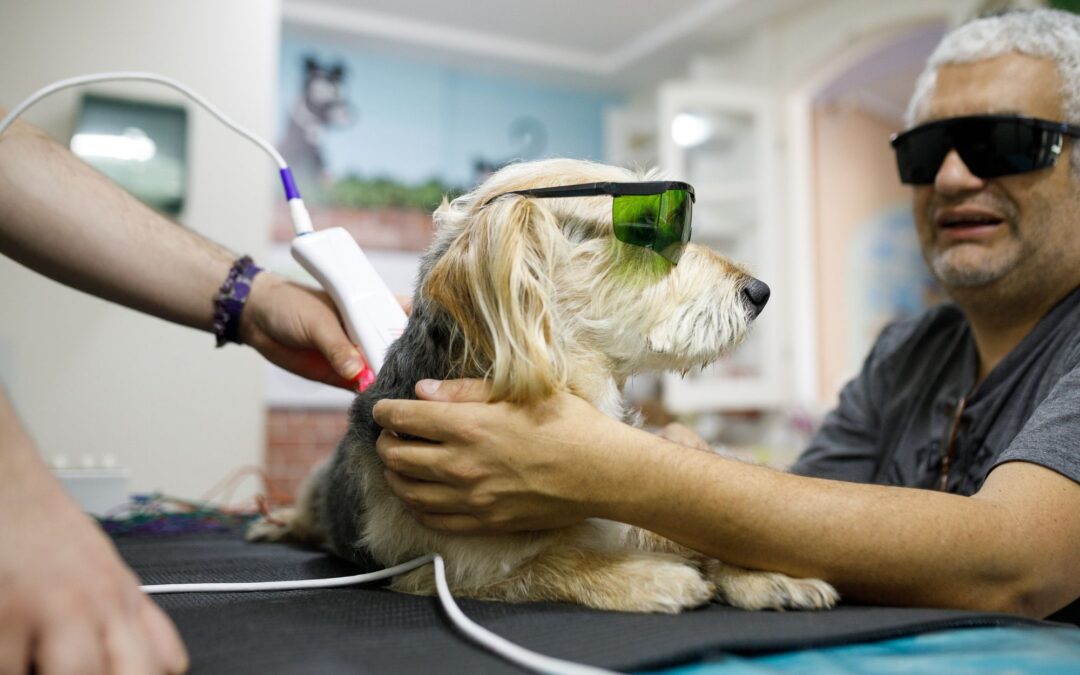
The benefits of cold laser therapy for dogs may include reduced pain and inflammation, improved mobility, and support for healing. If arthritis, an injury, or surgery is making it harder for your dog to move comfortably, this non-invasive treatment may help without incisions or injections.
At Ridgefield Veterinary Center, we begin with a complete physical exam to identify the cause of your dog’s limping, stiffness, or reduced activity. We then review your dog’s diagnosis, medical history, and individual needs to determine whether laser therapy may be a suitable part of their care plan.
This article provides general information about cold laser therapy. For guidance tailored to your dog, schedule an examination with our veterinary team.
What Is Cold Laser Therapy?
Cold laser therapy is a non-invasive treatment that uses red or near-infrared light on a specific area of your pet’s body. The cells absorb this light energy through a process called photobiomodulation, which may help reduce pain and inflammation while supporting tissue repair.
You may also hear it called low-level laser therapy, pet laser therapy, or therapeutic laser treatment. Laser devices vary in power, wavelength, and energy output. Class IV refers to a higher-power laser classification, but higher power does not always mean better results. Our veterinary team selects the appropriate settings based on your dog’s condition, the treatment area, tissue depth, coat, and the device being used.
How Does Veterinary Laser Therapy Work?
During treatment, a trained member of our veterinary team guides a handheld applicator over the affected area. The device delivers a measured amount of light energy, and the applicator may move across the skin or pause over specific points depending on your dog’s treatment plan.
Researchers are still studying exactly how photobiomodulation works. Current evidence suggests that it may affect cellular energy production, inflammatory responses, nerve sensitivity, blood flow, and circulation. These effects may help your dog feel more comfortable and support the body’s natural healing process.
Laser therapy is usually one part of a broader treatment plan. It cannot repair a torn ligament, stabilize a fracture, clear an infection, or cure arthritis. However, it may help manage pain and inflammation while other treatments address the underlying condition.
Main Benefits of Cold Laser Therapy for Dogs
The benefits of dogs’ cold laser therapy depend on your pet’s condition and response to care. At Ridgefield Veterinary Center, we use this treatment option to reduce pain and inflammation, support mobility, and promote healing. We also set clear goals and monitor your dog’s progress throughout treatment.
Helps Reduce Pain
Cold laser treatment uses focused light to influence inflammation, cellular activity, and how pain signals are processed. It can reduce discomfort in injured tissue and help your dog stand, rest, walk, or play more comfortably.
Pain relief does not always mean an injury has fully healed. Continue following activity restrictions and properly complete treatment, even if your dog appears more active. Do not stop or reduce medications administered by our veterinary team without speaking with us first.
Laser therapy can also support dogs whose specific pain management medications are limited by kidney disease, liver disease, digestive problems, or another health concern.
Reduces Inflammation and Swelling
Laser therapy helps treat inflammatory conditions affecting joints and soft tissue. The light energy can influence inflammatory activity, nerve sensitivity, vasodilation, and blood circulation around the treatment area.
By helping increase blood circulation, laser therapy supports the delivery of oxygen and nutrients to injured tissue. However, pain and swelling can have many causes. We first examine your dog to identify the underlying problem before recommending treatment.
Supports Better Mobility
By reducing pain and stiffness, laser therapy can make it easier for your dog to stand, walk, climb stairs, or settle comfortably. Older pets commonly receive treatment for chronic joint problems, but dogs of any age can experience an orthopedic or soft-tissue injury.
Depending on your pet’s condition, we may combine laser therapy with weight management, controlled exercise, rehabilitation, or medication. These traditional medical treatments and supportive therapies work together to improve comfort, strength, and joint function.
Supports Wound Healing and Recovery
Veterinarians use laser therapy after certain surgeries and injuries to support tissue repair and reduce discomfort. It may also be used to treat soft-tissue injuries and selected skin wounds.
Research has produced varied results. An animal wound-model review found that outcomes differed based on the type of wound and treatment method. A laboratory study involving canine fibroblasts also examined how laser exposure affected cells involved in connective-tissue repair.
Laser therapy cannot effectively treat diseases or injuries on its own. It does not replace wound cleaning, bandaging, infection control, surgery, or follow-up care when these measures are needed.
Offers a Drug-Free, Non-Invasive Treatment
Laser therapy is a drug-free treatment because the session does not involve medication, incisions, or injections. During treatment, a handheld device delivers laser beams directed at a specific area using carefully selected settings.
Most dogs do not require sedation and show little discomfort. Some relax or experience a mild, pleasant sensation as the treated area becomes warm. However, “drug-free” does not mean prescribed medication is unnecessary. Laser therapy often complements traditional medical treatments as part of a personalized care plan.
Conditions That May Be Supported by Laser Treatment
Laser therapy can be used for several orthopedic, soft-tissue, and postoperative conditions in dogs. Common uses include osteoarthritis, joint dysplasia, tendon or ligament injuries, surgical recovery, and selected wounds.
| Condition or Situation | How Laser Therapy Can Help | Other Care That May Be Needed |
| Osteoarthritis | Reduces pain and inflammation while supporting comfort and mobility | Weight management, controlled exercise, and medication |
| Hip or elbow dysplasia | Supports long-term pain management and joint comfort | Exercise changes, medication, rehabilitation, or surgery |
| Soft-tissue injuries | Helps manage localized pain, swelling, and inflammation | An exam to rule out a fracture or significant tear |
| Tendon or ligament injuries | Supports comfort and structured rehabilitation | Activity restrictions, rehabilitation, or surgery for a complete tear |
| Surgical incisions | Supports comfort and normal tissue healing | Incision monitoring and postoperative restrictions |
| Traumatic injuries | Helps manage pain and inflammation after the dog is stabilized | Direct treatment for bleeding, fractures, or internal injuries |
| Intervertebral disc disease | May support recovery alongside surgery and rehabilitation in selected cases | Neurologic evaluation and a diagnosis-specific care plan |
| Selected wounds or lick granulomas | Supports tissue repair as part of a broader treatment plan | Wound care, infection treatment, and management of the underlying cause |
The evidence is stronger for some uses than others, and results depend on the condition and treatment protocol. For example, a study of dogs undergoing TPLO surgery did not find a clear improvement in pain scores or radiographic bone healing with low-level laser therapy. In contrast, a University of Florida report on postoperative disc-disease care described an earlier return to walking among a specific group of dogs that received laser treatment after surgery.
For this reason, we recommend laser therapy only after examining your dog and identifying the cause of their symptoms. It works best as one part of a condition-specific care plan rather than as a standalone treatment.
What Happens During a Typical Laser Therapy Session?
During a laser therapy session, your dog will stand, sit, or lie comfortably while a trained member of our veterinary team moves a handheld applicator over the treatment area. Your dog, our team, and anyone else in the room will wear protective goggles during the procedure.
Sessions are generally brief, but treatment time depends on the size and number of areas being treated. Most dogs remain calm without sedation and can return home immediately afterward. Any exercise restrictions, home-care instructions, or personalized pet pain management recommendations will remain in place.
How Many Sessions Will Your Dog Need?
Acute conditions may receive closely spaced appointments for a short period. Chronic conditions may begin with more frequent care, followed by longer intervals or maintenance visits if your dog responds.
The schedule may change based on:
- The condition and tissue being treated
- How long the problem has been present
- The size and number of treatment areas
- The laser system and dose used
- Changes in pain, mobility, or wound appearance
- Other treatments your dog is receiving
Ask when your dog will be reassessed. Continuing the same schedule without a defined goal or documented response makes it harder to judge whether treatment is worthwhile.
How Can You Tell Whether Treatment Is Helping?
Look for changes in your dog’s comfort and movement, such as standing more easily, limping less, showing less stiffness after rest, or becoming more willing to walk and play. A short weekly video or simple progress log can help our veterinary team evaluate their response.
Professional Treatment vs. At-Home Devices
Professional laser therapy uses treatment settings selected for your dog’s diagnosis, the area being treated, and the type of device. Our veterinary team also monitors your dog’s response and adjusts the treatment plan when needed.
At-home devices vary in power, quality, and safety features. Using the wrong settings can make treatment ineffective or risk eye and tissue injury. Before buying or using one, ask our veterinary team to review the device and show you how to use it safely. An at-home laser should only supplement professional care and not replace veterinary examinations or prescribed treatment.
Conclusion
Cold laser therapy can reduce pain and inflammation, improve mobility, and support healing after an injury or surgery. It can also help dogs with chronic conditions such as arthritis feel more comfortable. However, the right approach depends on your dog’s diagnosis, symptoms, and response to treatment. That is why a veterinary examination comes first.
At Ridgefield Veterinary Center, we offer pet cold laser therapy tailored to your dog’s condition and comfort needs. If pain, stiffness, or a slow recovery is keeping your dog from enjoying their usual activities, our veterinary team can identify the cause and recommend appropriate care. Contact us today to schedule an evaluation.
FAQs
Is veterinary cold laser therapy safe?
Yes. Laser therapy is generally safe when a trained veterinary professional selects the settings and administers the treatment. Everyone in the room wears protective eyewear because direct laser exposure can damage human and canine retinas. Added caution is required near the eyes, suspicious masses, active bleeding, reproductive organs, and other sensitive areas.
Can laser therapy replace medication or surgery?
No. Laser therapy supports, rather than replaces, prescribed medication, surgery, wound care, or rehabilitation. The right care plan starts with an accurate diagnosis and considers the condition, pain involved, and your dog’s overall health.
Does cold laser therapy work for dogs?
Laser therapy can reduce pain and inflammation, improve mobility, and encourage wound healing in suitable patients. Results depend on your dog’s condition and response to treatment.
Is cold laser therapy painful?
Most pets tolerate treatment well. It does not involve an incision or injection, although your dog may feel mild warmth as the handheld laser wand moves over the treatment area.
How soon will my dog improve?
Some dogs show changes after their first appointment, while others need several sessions. The frequency recommended and the number of sessions vary depending on the diagnosis, severity, treatment area, and response.
Can laser therapy help my dog walk again?
Laser therapy can support comfort and rehabilitation for arthritis, tendon injuries, and selected spinal conditions. However, it cannot guarantee restored mobility because results depend on the cause and severity of the condition.