
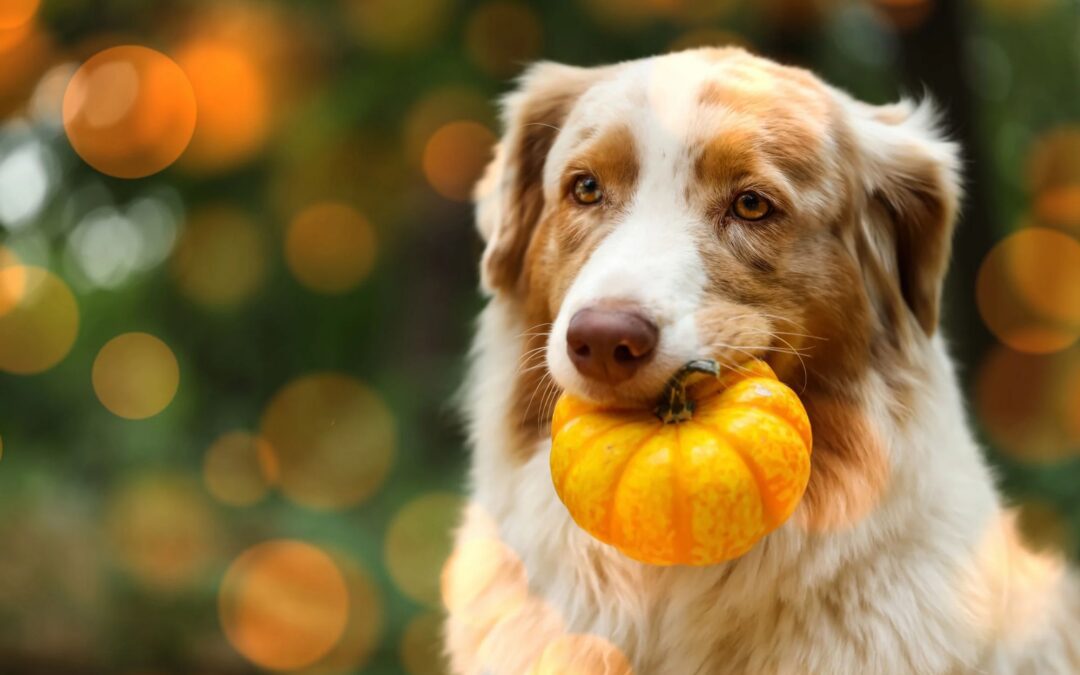
You may be wondering: can dogs eat pumpkin? The answer is yes. Plain pumpkin can be a safe and nutritious addition to your dog’s diet when served in small amounts. It can provide fiber, support healthy digestion, and make a simple occasional topper or treat.
If you’re thinking about adding pumpkin to your dog’s meals, the type and portion matter. Plain cooked or 100% canned pumpkin are good choices, while pumpkin pie filling and heavily seasoned products should be avoided. Introducing it gradually can also give your dog’s stomach time to adjust.
In this guide, we’ll cover how much pumpkin your dog can have, whether pumpkin seeds are safe, and when digestive problems are a sign that it’s time to talk with your veterinarian.
What Kind of Pumpkin Is Safe for Dogs?
Dogs can eat both plain canned pumpkin and fresh pumpkin when they are prepared without added sugar, salt, butter, spices, or other ingredients. The American Kennel Club recommends plain canned or fresh pumpkin as safe options for dogs.
Plain Canned Pumpkin
Plain canned pumpkin is an easy option for your dog. Check the ingredient list before serving it and avoid products with added sugar, salt, spices, or other ingredients. Be careful not to grab pumpkin pie filling by mistake. It can contain ingredients that are not safe for dogs.
Fresh Pumpkin
Fresh pumpkin can also be a good choice when prepared properly. Remove the stem, seeds, skin, and tough rind, then cook the flesh without oil, butter, salt, or seasoning. Once it is soft, you can mash or puree it before serving.
Pumpkin Foods to Avoid
Skip pumpkin foods made for people, such as pumpkin pie, pumpkin bread, pumpkin spice drinks, and seasoned pumpkin dishes. These foods may contain added sugar, extra fat, dairy, spices, or other ingredients that can upset your dog’s stomach or be harmful to dogs. If your dog accidentally eats something they shouldn’t, see our guide on what to do if your dog eats something bad.
How Much Pumpkin Can Dogs Eat?
A small amount of pumpkin is usually enough. As a general guide, you can give about 1 teaspoon of plain pumpkin per 10 pounds of body weight per day. The right amount may vary depending on your dog’s diet, digestive health, and individual needs. If pumpkin is new to your dog, start with less and see how they respond before giving more.
Giving your dog too much pumpkin at once can cause loose stool, gas, or an upset stomach. Keep it as a small addition to their regular food, not a replacement for a complete and balanced diet. If you’re also reviewing your dog’s everyday food, our guide to choosing the right dog food can help.
Can Pumpkin Help With Diarrhea or Constipation?
Pumpkin may help some dogs with mild diarrhea or constipation because of its dietary fiber. Fiber can add bulk to stool, support digestive health, and help regulate bowel movements. It can be a simple addition when your dog has a mild upset stomach, but it will not address every cause of digestive issues.
Pumpkin for Diarrhea
Pumpkin may help firm up loose stool in some dogs. If your furry friend has a mild upset stomach after eating something unusual or having a change in diet, a small amount of plain pumpkin may help support normal bowel movements.
However, diarrhea can have many causes, including food intolerance, parasites, infections, or other health problems. If your dog’s diarrhea is severe, keeps coming back, or does not improve, talk with your vet instead of relying on pumpkin alone.
Pumpkin for Constipation
Pumpkin’s fiber may also help some dogs with mild constipation by adding bulk and supporting regular bowel movements. If your dog is straining to poop, seems uncomfortable, or has gone longer than usual without a bowel movement, check with your veterinarian before trying to manage the problem at home.
If your veterinarian recommends pumpkin, introduce pumpkin gradually and follow their guidance on the right amount for your dog. Our pet gastrointestinal services in Ridgefield, CT can help determine what may be causing your dog’s digestive issues and what care is appropriate.
How to Add Pumpkin to Your Dog’s Meals
Once you have your pumpkin ready, you can work it into your dog’s meals or offer it as a simple treat:
- Mix it with regular food: Stir pumpkin into your dog’s usual wet or dry food as a simple meal topper.
- Serve it on its own: Offer pumpkin as an occasional treat between meals, following the serving amount appropriate for your dog.
- Make frozen treats: Spoon pumpkin into an ice cube tray and freeze it for an easy treat on a warm day.
- Use it in homemade treats: Add pumpkin puree to homemade dog treat recipes for a little variety.
These simple options let you incorporate pumpkin into your dog’s routine while keeping their usual meals familiar.
When Should You Call Your Veterinarian?
A mild digestive upset may sometimes settle with simple care at home. However, some symptoms need more attention. Stop trying to manage your dog’s digestive problem at home and call your veterinarian if your dog has:
- Repeated vomiting or diarrhea
- Blood in the vomit or stool
- Severe or ongoing abdominal pain
- A swollen or unusually tense abdomen
- Loss of appetite or refusal to drink
- Straining to poop without passing stool
- Weakness, unusual tiredness, or a noticeable change in behavior
Some signs require urgent veterinary care. If your dog has trouble breathing, collapses, has a seizure, becomes unresponsive, or has a severely swollen abdomen with repeated attempts to vomit, seek emergency veterinary care right away.
Puppies, senior dogs, and dogs with existing health conditions may also need veterinary guidance sooner when digestive problems develop.
Conclusion
Pumpkin can be a healthy addition to your dog’s diet when you choose the right type and serve it appropriately. Plain canned or properly prepared fresh pumpkin is a simple option. If you’re adding pumpkin for the first time, start with a small amount and see how your dog responds. Remember that pumpkin may help with mild digestive changes, but ongoing or concerning symptoms need veterinary attention.
At Ridgefield Veterinary Center, we help pet parents make feeding and nutrition choices that fit their dog’s individual needs. Contact our veterinary team if you have questions about your dog’s diet or digestive health.
FAQs
Can dogs eat pumpkin seeds?
Yes, dogs can eat plain, unsalted pumpkin seeds in small amounts. If you roast them, skip the oil, salt, and seasonings. Whole seeds may present a choking risk, particularly for small dogs, so grinding them can make them easier to serve. Pumpkin seeds are technically edible for dogs, but they should only be an occasional treat.
Can dogs eat pumpkin from a jack-o’-lantern?
No. Do not let your dog eat a carved jack-o’-lantern, especially if it has been sitting outside. Once a pumpkin is carved, it can become contaminated with bacteria or mold. Decorative pumpkins may also contain candle wax, paint, or other materials that should not be eaten. Stick with plain dog pumpkin prepared specifically for feeding.
Does pumpkin get rid of worms in dogs?
No. Pumpkin is not a treatment for intestinal worms. Pumpkin seeds are sometimes promoted as a natural dewormer, but feeding pumpkin is not a substitute for veterinary testing or appropriate deworming medication. If you suspect your dog has worms, talk with your veterinarian about the right treatment.
Can dogs eat pumpkin stems?
No. Pumpkin stems are tough and can be difficult for dogs to chew and digest. When preparing fresh pumpkin for your dog, remove the stem and other tough parts before serving the flesh. While plain pumpkin is generally safe for dogs, not every part of the pumpkin is suitable for feeding.
Can pumpkin upset a dog’s stomach?
Yes. Although pumpkin can be a low-fat option with nutritional benefits, excessive consumption can cause loose stool, gas, or other digestive changes. If pumpkin is a new food for your dog, start with a small amount and gradually increase it if they tolerate it well. Good portion control can help avoid digestive upset, and the right amount also depends on your dog’s size.