
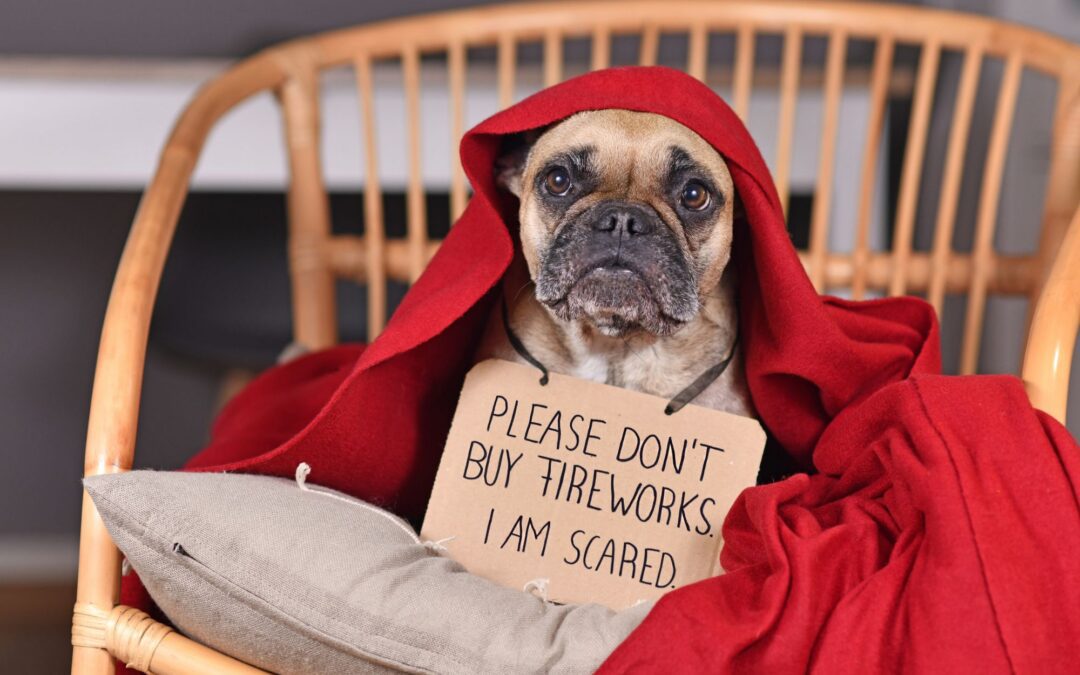
Fireworks anxiety in dogs can cause panting, trembling, hiding, destructive behavior, or escape attempts. When fireworks start, a frightened dog should be moved to a secure indoor space where noise and flashes are reduced. Offering a calm, reassuring presence without forcing interaction can also help keep them safe and grounded during stressful moments. Dogs that show severe panic, self-injury, or repeated escape behavior may need a veterinary treatment plan before the next fireworks event.
This guide explains what to do during fireworks, how to prepare in advance, and when anxiety signals a need for professional veterinary support.
Signs and Symptoms of Fireworks Anxiety in Dogs
To better understand your dog’s behavior during fireworks, it helps to recognize the different signs of anxiety and how they can range from mild discomfort to severe panic.
Dogs react to fireworks in different ways. Some may pant, tremble, pace, hide, or try to escape, while others may bark, drool, or become destructive. In some cases, fear can begin even before fireworks start if your dog has learned to associate evening activity, distant booms, or flashes with something stressful.
Fear does not look the same in every dog. Some stay close to their owners, while others retreat to quiet spaces or move restlessly from room to room. Reactions may also intensify as the fireworks continue.
Mild Signs
In mild cases, dogs often show early stress signals that may appear subtle but are still meaningful. These signs can include:
- Watching doors or windows closely
- Following you from room to room
- Brief pacing
- Pulling ears back
- Seeking a familiar safe space
- Settling once the fireworks end
Your dog may still take part in normal activities and respond to you. Even so, mild fear deserves attention because repeated frightening events may make the response stronger over time.
Moderate Signs
As fireworks anxiety progresses, symptoms become more persistent and harder for dogs to self-regulate. Moderate signs may include:
- Ongoing trembling
- Panting without physical exertion
- Hiding or seeking enclosed spaces
- Whining or vocalizing
- Difficulty settling or resting
- Loss of interest in food or toys
- Panting that persists after fireworks end (possible medical concern)
If these symptoms occur without a clear cause, continue after fireworks stop, or are accompanied by weakness or distress, veterinary evaluation is recommended.
Severe Signs
Severe fireworks anxiety can place dogs at significant risk of injury and requires prompt intervention. Signs include:
- Frantic escape attempts
- Scratching or biting at doors or windows
- Loss of bladder or bowel control
- Panic-related aggression
- Inability to settle for extended periods
- Progressive worsening with each event
Use the table below to match the response to the level of fear:
| Level | Common Signs | Recommended Response |
| Mild | Alertness, brief pacing, seeking reassurance | Provide a quiet, safe space and stay calm nearby |
| Moderate | Persistent trembling, panting, hiding, and restlessness | Consult a veterinarian before future fireworks events |
| Severe | Escape behavior, self-injury, prolonged panic | Seek an individualized veterinary treatment plan |
Why Are Dogs Afraid of Fireworks?
Dogs may be afraid of fireworks because the sounds are sudden, loud, and unpredictable. The flashes, vibrations, and changes in household routine can also increase stress. In some dogs, genetics, early experiences, past trauma, aging, pain, or underlying anxiety conditions can intensify the reaction.
A fearful response is not disobedience. Your dog is reacting to something they perceive as a threat. Punishment or forced exposure can increase fear and make symptoms worse over time.
To better understand your dog’s reaction to fireworks, it helps to look at the most common underlying causes. These factors often work together, influencing how strongly a dog responds to loud and unpredictable noises.
Sudden and Unpredictable Fireworks Sounds
Fireworks do not follow a predictable pattern, making it difficult for dogs to anticipate or locate the source. This lack of control can keep their stress response activated even between bursts.
Early Experiences and Puppy Socialization
Early exposure to new experiences can help reduce sensitivity later in life, but only when done correctly. Puppies should be gradually introduced to sounds and environments at a safe, non-threatening level, paired with positive experiences.
Genetics and Noise Sensitivity in Dogs
Some dogs are naturally more sensitive to noise, but breed alone does not determine fear response. Herding and working breeds may appear more noise-sensitive in studies, but individual temperament, early life exposure, and past experiences play a larger role.
Medical Causes of Sudden Fireworks Anxiety
A sudden behavior change should be evaluated by a veterinarian. Pain, cognitive decline, neurologic conditions, sensory loss, or medication changes may contribute to increased fear responses. In senior dogs, new anxiety should not be assumed to be normal aging.
How to Calm a Dog When Fireworks Begin
When fireworks start, focus on keeping your dog safe and reducing exposure rather than trying to train or correct behavior. The goal is to prevent escape, reduce stress, and create a secure environment until the noise stops.
Move your dog to a safe indoor space, close windows and curtains, and use steady background sound such as soft music, a fan, or white noise. Allow your dog to hide or stay close to you without forcing interaction. Keep all exits secured, and use a leash for any necessary bathroom breaks. Give prescribed medication only as directed by your veterinarian.
Follow These Immediate Steps During Fireworks
- Move your dog to a secure indoor room. Choose a quiet interior space away from windows and exterior doors to reduce exposure to sound and flashes.
- Close windows, curtains, and blinds. This helps reduce visual stimulation and slightly mutes outside noise.
- Add steady background sound. Play calming music, use a fan, television, or white noise at a moderate level. Avoid turning the volume too high, as this may add stress.
- Let your dog choose a safe space. Allow your dog to hide in a crate, under furniture, or in a preferred room. Do not force them to come out or move.
- Offer a calm, quiet presence. Stay nearby and speak in a normal, steady voice. Only provide physical contact if your dog seeks it.
- Secure all exits and use a leash for bathroom breaks. Even fenced yards are not safe during fireworks. A frightened dog may bolt, dig, or escape through small openings.
- Follow your veterinarian’s treatment plan. Administer anti-anxiety medication only as prescribed in timing and dosage.
What If Your Dog Will Not Take Treats?
If your dog will not take treats during fireworks, they may be experiencing severe fear and may be too stressed to eat, play, or respond to rewards. Do not force food or interaction. Instead, keep the environment calm, secure the room, and continue following your veterinarian’s instructions.
Should You Comfort a Fearful Dog?
Yes. Calm comfort is safe and does not reinforce fear. Allow your dog to stay near you, hide, or seek contact on their own terms. Speak in a steady, normal voice and offer gentle reassurance if your dog initiates contact. Avoid forcing your dog out of hiding or restraining them when they are trying to move away.
If your dog cannot settle, refuses all food or comfort, attempts to escape, or shows signs of injury or extreme panic during fireworks, contact your veterinarian for guidance.
Ridgefield Veterinary Center supports pet owners in Ridgefield, Redding, Danbury, Wilton, South Salem, North Salem, and surrounding communities.
How to Prepare Before Fireworks Season
Begin preparing several weeks before fireworks are expected. Early preparation helps reduce stress and allows you to respond more calmly when fireworks begin. Update your dog’s identification details, set up a safe space, and speak with your veterinarian about any past anxiety or reactions.
Dogs with moderate to severe fireworks anxiety may benefit from a treatment plan that is started and tested before the event rather than during active panic.
Create a Safe Space
Choose a quiet interior room where your dog feels comfortable. Set up the area with familiar and calming items, such as:
- Familiar bedding
- Water bowl
- Favorite blanket or toys
- Safe chew items
- Closed curtains or blinds
- Steady background music or white noise
- A crate only if your dog already uses it comfortably
- A clear, unobstructed entry and exit path
Remove any sharp, breakable, or unstable objects. Do not introduce confinement tools like crates for the first time during fireworks, as this can increase panic.
Check Identification and Escape Safety
Confirm that the ID tag has your current phone number and that the microchip registry contains accurate contact details. Check doors, screens, gates, fences, and pet doors before darkness. Keep a recent photo of your dog on your phone. Also, review basic pet first aid so you are better prepared for a cut, torn nail, or other injury caused during an escape attempt.
The American Veterinary Medical Association’s July Fourth guidance also recommends checking identification, keeping pets indoors, and securing the home before celebrations begin.
Plan Daily Routine and Timing
Complete walks, exercise, and outdoor activity earlier in the day before fireworks are likely to begin. Feed meals earlier if your dog’s appetite is affected by stress, and schedule bathroom breaks before nightfall. Try to keep the rest of the day as routine and predictable as possible. Once fireworks begin, avoid outdoor walks or play, even in familiar areas.
Speak With Your Veterinarian Early
Bring notes about when the reaction starts, how long it lasts, whether your dog will eat or respond to you, and whether there have been escape attempts or injuries. Medication planning may require a review of your dog’s health, current prescriptions, age, and past reactions. Your veterinarian may also need to explain timing, possible side effects, and what to do if the first plan does not provide enough relief.
One of the most common problems we see is that owners wait until their dog is already panicking before giving prescribed medication. For some dogs, timing the medication before the fireworks begin can make the treatment plan more effective
Can Training Reduce Fireworks Anxiety?
Behavior modification may reduce fireworks anxiety when training begins several weeks or months before the event. Play recorded firework sounds at a very low volume while your dog remains relaxed, then pair the sound with treats or play. Increase the volume slowly and stop if your dog shows fear, tension, panting, or avoidance. Training should never push your dog into a panic.
If your dog has not yet experienced fireworks, training can be a helpful way to gradually change how they respond to the sounds over time. Two common approaches used are desensitization and counterconditioning.
Desensitization
Desensitization works by gradually exposing your dog to firework sounds at a level they can tolerate without becoming fearful. This process should only begin when your home is calm and no real fireworks are expected.
Start by playing a firework recording at very low volume. From there, slowly introduce structured sessions while closely observing your dog’s body language.
- Play a recording at low volume.
- Watch your dog’s face, posture, and movement.
- Keep the first sessions brief.
- Repeat regular training sessions several times each week.
- Gradually increase the volume only while your dog remains relaxed.
- Lower the volume at the first sign of stress.
- End the session before your dog becomes afraid.
If your dog shows signs of fear at any stage, the session is too difficult and should be adjusted immediately.
Counterconditioning
Alongside desensitization, counterconditioning helps change your dog’s emotional response to the sound by pairing it with something positive. You might offer small treats, start a favorite game, or provide a valued toy while the sound is playing. The goal is to create a more positive association with the noise, not to push your dog through discomfort. If your dog stops eating, freezes, hides, pants, or tries to leave, reduce the volume or end the session right away.
When Home Training Is Not Appropriate
Do not continue unsupervised sound training when your dog:
- Panics at very low volume
- Attempts to escape
- Cannot accept food
- Has severe anxiety
- Has a bite history
- Becomes more fearful after a session
In these cases, continued exposure at home can reinforce fear rather than reduce it. Dogs showing these responses often require a more structured and closely guided behavioral approach tailored to their level of anxiety.
Which Fireworks Anxiety Treatments Have the Best Support?
Different treatments for fireworks anxiety in dogs do not have the same level of clinical support. Veterinary-prescribed medications and structured behavior modification have the strongest evidence, while calming supplements, pheromone products, and wearable tools may offer variable or limited results depending on the individual dog.
Environmental management, such as creating a safe indoor space, remains an important foundation for all dogs regardless of anxiety severity. However, dogs with moderate to severe panic often require a more structured veterinary-led approach.
To better understand how these options compare, the table below summarizes their evidence level, ideal use, and key limitations.
| Option | Evidence Level | Best Suited For | Main Limitation |
| Veterinary-prescribed anti-anxiety medication | Higher clinical support for selected medications. | Moderate or severe anxiety, panic, or escape risk. | Requires veterinary review, correct timing, and individual dosing. |
| Behavior modification | Moderate support and strong veterinary behavior consensus. | Long-term fear reduction in dogs able to train below their threshold. | Takes several weeks or longer and may not control an immediate crisis. |
| Safe room and environmental management | Strong professional consensus and practical safety support. | All dogs, including mild and severe cases. | May not control severe panic on its own. |
| Calming music and steady background sound | Supportive professional consensus. | Mild fear and dogs that settle with familiar sounds. | May not help a dog that is already panicking. |
| Pressure wraps or anxiety wraps | Limited or mixed support. | Dogs that tolerate gentle body pressure. | Some dogs dislike the wrap, and the effect varies. |
| Pheromone products | Limited or mixed support. | Mild fear as an added supportive measure. | The response varies and may be too weak for severe cases. |
| Calming supplements | Product-specific and often limited support. | Mild cases under veterinary guidance. | Ingredients, quality, dosing, and results vary. |
| Mutt Muffs or other ear coverings | Limited direct evidence. | Dogs are already trained to wear them comfortably. | Forced use or poor fit may add stress. |
| Food toys and chew toys | Practical behavioral support. | Dogs still willing to eat and engage. | Often ineffective once severe fear begins. |
Prescription Medication
A veterinarian selects medication based on your dog’s age, health, current prescriptions, and level of fear. Never share medication between pets or use a leftover prescription without approval.
A randomized, double-blind clinical trial found that dexmedetomidine oromucosal gel reduced signs of acute fear associated with fireworks compared with a placebo. That finding does not make the medication right for every dog. It shows why selected prescription treatments have stronger direct evidence than many over-the-counter products.
Medication timing also matters. Some treatments need to be given before fireworks start or at the first sign of fear, based on your veterinarian’s directions.
Physical sleepiness does not always mean the emotional fear has resolved. Ask what behavior changes to watch for and how the prescribed treatment is expected to help.
Calming Supplements and Pheromone Products
Calming supplements may contain ingredients such as amino acids, proteins, herbs, or other compounds. Pheromone products may provide added support in some mild cases. They should not replace veterinary care for panic, self-injury, destructive behavior, or repeated escape attempts.
“Natural” does not always mean safe. Ask your veterinarian to check the ingredients against your dog’s health history and medications.
Pressure Wraps, Ear Coverings, and Other Products
Pressure wraps and anxiety wraps apply gentle pressure around the body. Some owners report that their dogs settle more easily. Mutt Muffs and similar ear coverings may soften some sound when they fit well, and the dog has learned to wear them comfortably. Do not force any wearable item onto a dog that freezes, struggles, pants more heavily, or tries to remove it.
Schedule a veterinary visit with Ridgefield Veterinary Center before fireworks season if your dog has repeated trembling, panic, destructive behavior, or escape attempts.
What Should You Avoid During Fireworks?
Do not punish a scared dog, force your dog out of hiding, begin loud sound training during an active event, or give human medication without veterinary advice. Avoid outdoor fireworks displays, unlocked doors, unsupervised yard access, and unfamiliar confinement. These actions can increase fear, injury risk, or the chance of escape.
Your dog is not choosing to panic. Focus on physical safety and lower exposure instead of trying to correct the behavior.
Avoid these common mistakes:
- Taking your dog to a fireworks display
- Punishing shaking, barking, hiding, or accidents
- Forcing your dog to face the sound
- Raising a recording until fear appears
- Locking an untrained dog in a crate
- Leaving your dog alone outdoors
- Relying on a fenced yard without supervision
- Giving human sleep aids, pain relievers, cannabis products, or leftover medication
- Assuming a quiet or sleepy dog feels safe
- Waiting until fireworks begin to seek help for a dog with a history of severe anxiety
The ASPCA advises moving a frightened pet into a comfortable interior room and using soft music as part of a safe indoor setup. It also warns that dogs and cats can panic, run away, injure themselves, or react aggressively during fireworks.
When Should You Take a Dog With Fireworks Anxiety to the Veterinarian?
Contact a veterinarian when fireworks anxiety causes escape attempts, self-injury, destructive behavior, panic-related aggression, prolonged distress, or refusal to eat and drink. Veterinary care is also appropriate when fear worsens each year, begins suddenly in an older dog, or continues despite a safe room, background sound, and careful training.
Do not wait for a holiday event when you already know that your dog has severe anxiety. An early appointment gives you time to review medical concerns, discuss treatment, and test the plan before it is needed.
Signs That Need Prompt Veterinary Guidance
Seek veterinary help when your dog:
- Breaks through a door, gate, window, or screen
- Develops bleeding paws or broken nails
- Injures itself during an escape attempt
- Collapses
- Has trouble breathing
- Shows panic-related aggression
- Cannot settle for hours after the event
- Reacts more severely each year
- Develops sudden fear as a senior dog
Call an emergency veterinary service when your dog has severe bleeding, collapse, breathing trouble, loss of consciousness, or another immediate medical emergency.
What to Bring to the Appointment
The veterinary team looks at when the fear begins, whether the dog can still eat or respond to its owner, how long the reaction lasts, and whether there have been escape attempts or injuries. These details help distinguish mild fear from panic and guide whether environmental management, behavior training, medication, or a combined plan may be appropriate.
Bring or prepare:
- A safe video of the reaction
- A written list of symptoms
- The start and end times
- Known triggers
- Current medications and supplements
- Products or training methods already tried
- Recent changes in health or behavior
- Details about any injuries or escape attempts
These details help assess severity, identify possible medical contributors, and decide whether environmental management, behavior modification, medication, or a combined plan may be appropriate.
Conclusion
Fireworks anxiety in dogs varies widely in severity and presentation. Preparation, environmental management, and structured support can improve safety and comfort for many dogs. However, cases involving panic behavior, self-injury, or escape attempts typically require veterinary-guided intervention beyond at-home management.
Ridgefield Veterinary Center provides care for your pets as though they were our own, with treatment shaped around your dog’s health and behavior. Contact us today to schedule a veterinary anxiety evaluation before the next expected fireworks event. The team can review your dog’s health, past reactions, and current medications, then recommend a treatment plan suited to your pet.
FAQs
How do you calm a dog with fireworks anxiety?
Move your dog into a secure indoor room, close windows and curtains, and reduce outside noise with steady background sound. Allow your dog to hide or stay near you without forcing contact. Keep dogs leashed outdoors and follow any prescribed veterinary treatment plan.
What helps a dog with fireworks anxiety?
A quiet safe space, familiar bedding, calm human presence, and steady background noise can help. Gradual behavior training may also reduce sensitivity over time. Dogs with moderate to severe anxiety may require veterinary treatment.
What should you give a dog for fireworks anxiety?
Only give medications or products prescribed or approved by a veterinarian. Do not give human medications, leftover prescriptions, or another pet’s medication.
Should you comfort a dog during fireworks?
Yes. Calm reassurance is safe. Speaking in a normal voice and allowing your dog to stay close or hide does not reinforce fear.
Can fireworks anxiety get worse with age?
Yes. Fireworks anxiety can worsen due to pain, cognitive decline, sensory loss, or repeated exposure to frightening events. Any new or worsening anxiety in senior dogs should be evaluated by a veterinarian.