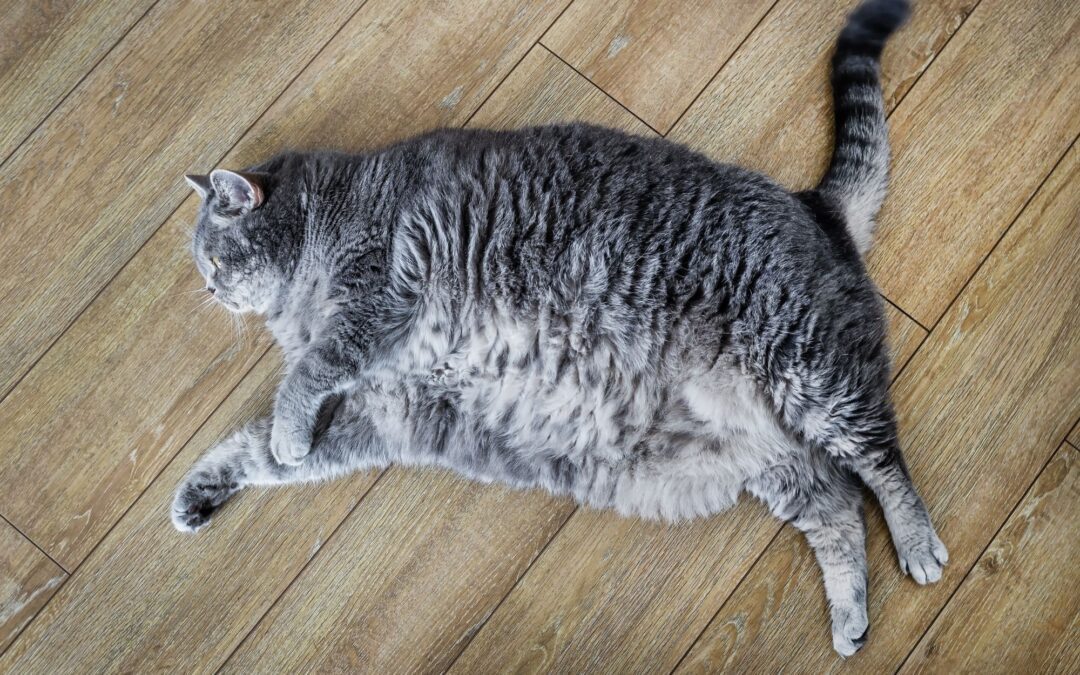
If you’re wondering how to help an overweight cat lose weight, you are not alone. The good news is that gradual, vet-guided weight loss is both safe and gentle on your furry friend. Weight gain often creeps up slowly, especially in indoor cats who have easy access to food and fewer chances to burn off energy each day. Left unchecked, those extra pounds can affect your cat’s mobility, grooming, comfort, and long-term health.
Catching it early and taking a slow, steady approach makes all the difference. A veterinarian can help determine a cat’s ideal weight, daily calorie needs, and a safe pace for shedding pounds, while checking for any underlying health or mobility issues that could affect the plan. Crash diets or suddenly cutting back on food should be avoided, since rapid weight loss can actually be dangerous for cats.
This guide walks you through how to check your cat’s weight, set a realistic goal, manage mealtimes, add more playtime and movement, and track progress along the way.
Start With a Veterinary Wellness Visit
Before you reduce your cat’s food intake, have your veterinarian confirm that your cat is overweight and help set a safe goal weight. Your cat’s ideal weight depends on body frame, age, muscle mass, lifestyle, and health history. Not all cats should weigh the same amount, so an average cat weight is not enough to tell you whether your cat has excess weight.
At a wellness visit, your veterinarian can check your cat’s body condition, current body weight, mobility, and medical history. They may also ask what your cat eats, how often they eat, whether other family members offer treats, and whether there is more than one cat in the home. This information helps create a realistic plan for the individual cat.
For cat owners in Ridgefield, CT, a veterinary wellness exam is a good starting point if you are concerned about your cat’s weight.
How Do You Know if Your Cat Is Overweight?
The most reliable way to assess your cat’s body condition is through a body condition score (BCS), a hands-on method veterinarians use to evaluate body shape and fat coverage rather than relying on weight alone. Most veterinarians use a nine-point body condition scale. On the WSAVA feline body condition score chart, a score of 5 out of 9 represents ideal body condition. Scores above 5 generally indicate increasing amounts of excess body fat, while scores below 5 indicate a cat is under ideal body condition.
Because body condition looks different from cat to cat depending on frame and muscle mass, a number on a scale isn’t something you can judge from a bathroom scale alone. That’s why visual assessment is combined with hands-on touch.
Here are some signs you can look for at home.
| What You See or Feel | What It May Mean |
| Ribs are easy to feel with light pressure | Your cat may be near a normal weight |
| Ribs are hard to feel under a thick layer of fat | Your cat may be carrying excess weight |
| A visible waist when viewed from above | May suggest a healthy body condition |
| A round or bulging shape through the waist | Your cat may be overweight |
| The waist is absent and the abdomen appears rounded | Your cat may be carrying excess body fat |
| Your cat avoids jumping, grooming, or climbing | Weight, pain, or another health issue may be affecting movement |
A loose, swinging primordial pouch is a normal part of feline anatomy and should not be used by itself to determine whether a cat is overweight. The World Small Animal Veterinary Association’s body condition score chart can help you understand what different body condition scores look like in practice.
Even so, body condition scoring takes hands-on training to apply accurately, so your veterinarian should always confirm your cat’s true body condition and calculate an ideal body weight based on that assessment.
Why Cat Obesity Needs Attention
The American Animal Hospital Association notes that excess weight can affect a cat’s quality of life and long-term health. Cat obesity can put added stress on the joints, make it harder for cats to move or groom themselves, and increase the risk of health problems such as diabetes and arthritis.
Many cats gain weight slowly. A food bowl that is always full, frequent treats, leftover food from another cat, and less physical activity can add up over months or years. Middle-aged cats and adult cats may become less active than they were as kittens, which lowers energy expenditure.
An indoor cat can also gain weight if meals are not measured. Indoor living can be safer for domestic cats, but it often means fewer chances to chase, climb, hunt, and explore. The answer is not to send your cat outside. It is to create safe ways for your cat to move more at home while managing calorie intake.
If your cat is carrying extra weight, Ridgefield Veterinary Center offers pet weight management services to help you develop a safe and appropriate weight-management plan.
Why Rapid Weight Loss Is Dangerous for Cats
Rapid weight loss can be dangerous for obese cats. When a cat stops eating or eats much less than usual, the body may begin breaking down stored fat too quickly. This can cause fat to accumulate in the liver and lead to hepatic lipidosis, also called fatty liver disease. The condition can interfere with normal liver function and may become life-threatening. If your cat is losing weight unexpectedly, learn more about common causes of weight loss in cats and when veterinary evaluation may be needed.
A healthy weight-loss plan for cats focuses on gradual weight reduction and adequate nutrition rather than sharply reducing food intake.
Set a Safe Goal Weight and Weight Loss Rate
Start with a clear goal weight and a safe rate of weight loss. Cats should lose weight gradually, and the rate should be tailored to the individual cat rather than pushed as quickly as possible. A commonly used range is about 0.5% to 2% of body weight per week, with your veterinarian determining an appropriate rate based on your cat’s health and starting condition.
Regular weigh-ins help show whether your cat is losing weight at the expected rate. Your veterinary team may also assess body condition score, muscle condition, appetite, energy, and mobility. These measures help confirm that your cat is losing excess fat while maintaining lean muscle and getting adequate nutrition.
How Many Calories Does an Overweight Cat Need?
An overweight cat does not have one standard daily calorie requirement. The appropriate amount depends on factors such as ideal weight, current weight, age, activity level, medical history, and the calorie density of the food.
Food-label feeding charts may not provide an appropriate weight-loss portion for an overweight cat. Your veterinarian can use your cat’s ideal weight and nutritional needs to determine an appropriate daily calorie target, then adjust the amount based on changes in body weight and condition.
| Factor | Why It Affects Your Cat’s Plan |
| Current weight | Establishes the starting point for the weight-loss plan. |
| Ideal weight | Helps determine the target for healthy weight reduction. |
| Body condition score | Shows how much excess body fat your cat carries. |
| Food type | Canned and dry foods can differ significantly in calorie density. |
| Treats and toppers | Add to daily calorie intake and should be included in the feeding plan. |
| Activity level | Affects how much energy your cat uses. |
| Medical history | May influence calorie needs and dietary recommendations. |
The right calorie target should support steady weight loss while providing adequate nutrition. Avoid making major cuts to your cat’s food intake without veterinary guidance.
Feed Measured Meals Instead of Free Feeding
Free feeding makes weight control harder because you cannot tell how much your cat eats. It can also make changes in appetite harder to notice. Measured meals let you control portions and track your cat’s food intake. Choose a schedule that fits your cat’s needs and your household routine.
Weigh Food for More Accurate Portions
A kitchen scale provides more accurate portion sizes than a measuring cup, especially for dry cat food. Weigh each meal according to the amount your veterinary team recommends. Place the measured portion in your cat’s bowl and remove any uneaten food after the recommended meal period. This helps you see how much your cat actually eats.
If your cat is used to grazing, transition to scheduled meals gradually. Keeping meal times predictable can make the change easier.
Choose the Right Cat Food for Weight Loss
The right food depends on your cat’s health, nutritional needs, and preferences. Your veterinarian may recommend canned food, measured dry food, a veterinary therapeutic diet, or a combination of foods. Some cats may benefit from higher-protein or lower-carbohydrate diets, but these choices are not appropriate for every cat. Your veterinarian can help you choose a diet that fits your cat’s age, health, muscle condition, and weight-loss goals.
Make diet changes gradually to help your cat adjust. If your cat refuses food, contact Ridgefield Veterinary Center rather than waiting several days.
Count Treats, Toppers, and Leftover Food
Many cat owners measure meals but forget about the calories that come from treats, table food, flavored toppers, and bites shared by other people in the house. These extras can slow weight loss even when the main meals are carefully planned.
Write down everything your cat eats for a few days. Include food offered by children, guests, and anyone who may not realize the cat is on a weight loss program. If you have multiple cats, watch for one cat eating the other cat’s meal or leftover food.
You may be able to set aside part of your cat’s daily food allowance as treats. This lets you reward your cat without adding extra calories. Ask your veterinarian how treats fit into your cat’s daily calorie intake.
Help Your Cat Lose Weight With Safe Physical Activity
Regular physical activity supports weight loss by increasing energy expenditure and helping maintain muscle. Short, consistent play sessions are usually more practical for cats than long or intense exercise.
Aim for two or more brief play sessions each day using activities such as wand-toy play, chasing rolling toys, tunnels, scratching posts, or food puzzles filled with part of the cat’s measured daily meal. Food puzzles should replace part of a meal rather than add extra calories.
Cats with arthritis, joint pain, or limited mobility may need gentler activities. Low-impact options can include walking between rooms, playing with toys at floor level, or using a low cat tree that does not require high jumping. Signs such as stiffness, reduced jumping, or less movement can indicate that an activity is too demanding.
How to Help an Overweight Cat Lose Weight in a Multi-Cat Household
A multi-cat household can make weight loss harder, but it is manageable. Different cats may have different calorie needs, foods, and feeding routines, which can make it easier for one cat to eat another cat’s meal.
Feed each cat in a separate room if possible. Put meals down at the same time, supervise feeding, and remove bowls after the meal. This helps you see whether the overweight cat is eating their assigned amount and keeps the other cat from finishing it.
For multiple cats with very different needs, regular veterinary visits can help keep each cat’s weight and nutritional needs on track. Learn how often cats should see the vet to understand when routine checkups are recommended. A veterinarian may also recommend a feeder that opens only for one cat or another setup that limits access to food. The goal is to control food intake without making mealtime stressful.
Track Your Cat’s Progress
Weighing your cat every two to four weeks can show whether the plan is working. Use the same scale each time when possible.
Keep track of the following changes throughout your cat’s weight-loss plan:
| Date | Cat’s Weight | Food Amount | Treats or Extras | Play and Activity Notes | Questions for the Veterinary Team |
Do not reduce portions again just because the scale has not changed after a few days. Weight loss takes time. Your veterinarian can decide when the plan needs an adjustment.
Signs of successful weight loss may include a gradual decrease in weight, easier movement, more willingness to play, and a body shape closer to your cat’s ideal body condition.
Conclusion
The safest way to help an overweight cat lose weight is to make gradual, measured changes based on their ideal weight, calorie needs, diet, activity level, and overall health. Avoid crash diets or suddenly restricting food, and work with your veterinarian to monitor progress and adjust the plan as needed.
Ridgefield Veterinary Center can help you determine a healthy target weight and create a weight-loss plan that fits your cat’s needs. Our veterinarians can guide you on proper portions, diet, activity, and safe weight-loss progress. Contact us to help your cat reach and maintain a healthier weight.
FAQs
How long does it take for an overweight cat to lose weight?
Most cats need several months or longer to reach their goal weight. The timeline depends on your cat’s starting weight, target weight, health, and response to the weight-loss plan. Your veterinarian can monitor progress and adjust the plan as needed.
Can a cat lose weight while eating dry food?
Yes, some cats can lose weight while eating dry food if the food is measured and the daily calorie target is appropriate. Canned food may help some cats feel fuller, but the best food choice depends on your cat’s health and feeding routine.
Should I stop free feeding all at once?
A gradual change is usually easier for most cats. Start with scheduled, measured meals and work with your veterinarian on a routine that fits your household. Watch closely for reduced appetite.