
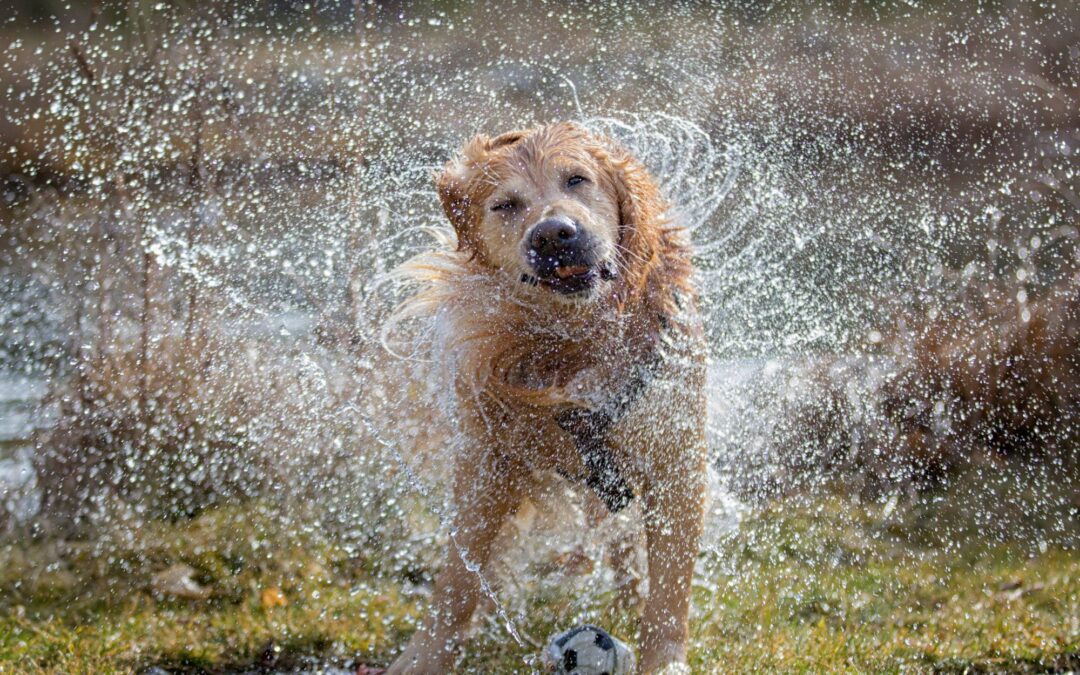
Dogs shake their heads to relieve irritation, moisture, or discomfort in their ears. An occasional shake after a bath, a swim, or a good scratch is usually normal. However, frequent head shaking may signal an ear infection, allergies, ear mites, or something stuck inside the ear canal.
If you’ve noticed your dog shaking their head more than usual, pay attention to how often it happens and whether they also scratch their ears, show signs of pain, or have unusual discharge. These symptoms can help you recognize when your dog needs veterinary attention.
Why Do Dogs Shake Their Heads?
Dogs occasionally shake their heads to remove water, loose debris, or other irritants around their ears. You might notice this after a bath, a swim, or a scratch behind the ears.
The movement becomes concerning when your dog shakes repeatedly or seems uncomfortable afterward. Frequent shaking may indicate irritation inside the ear canal, especially if your dog also scratches their ears or rubs their head against furniture.
What Causes Frequent Head Shaking in Dogs?
Several conditions can cause dogs to shake their heads repeatedly. These range from infections and allergies to parasites, foreign objects, and injuries affecting the ears.
1. Ear Infections
Ear infections are among the most common reasons dogs shake their heads excessively. An infection or inflammation of the outer ear canal, known as otitis externa, can cause itching, pain, and discharge. Inflammation can disrupt the ear’s normal defenses, allowing bacteria or yeast to overgrow. Moisture and underlying allergies can also contribute to recurring infections.
2. Allergies and Ear Irritation
Allergies can cause inflammation inside a dog’s ears, leading to itching and repeated head shaking. Environmental allergens such as pollen, mold spores, and dust mites can trigger reactions. Food allergies may also contribute to recurring ear inflammation. Dogs with allergies may additionally lick their paws, rub their faces, or scratch other areas of their bodies.
3. Water Trapped Inside the Ear
Water can become trapped in the ear canal after swimming or bathing, causing temporary irritation. If moisture remains inside, it can create conditions that favor bacterial or yeast overgrowth. Dogs with floppy ears or narrow ear canals may have more difficulty keeping their ears dry.
4. Ear Mites and Other Parasites
Ear mites are tiny parasites that live inside the ear canal and feed on skin debris and oils. They cause irritation and intense itching, which can lead to frequent head shaking and scratching. Infestations may also produce dark, crumbly debris that resembles coffee grounds. Ear mites are more common in puppies and cats but can also affect adult dogs through close contact with infected animals.
5. Grass Seeds or Other Foreign Objects
Grass seeds, small pieces of plant material, and other debris can enter a dog’s ear canal while exploring tall grass or brush. When lodged inside, these objects can irritate the sensitive ear canal and cause sudden, vigorous head shaking. Dogs may also paw at the affected ear or tilt their heads toward one side.
6. Middle and Inner Ear Problems
Inflammation or infection affecting the middle or inner ear can cause symptoms beyond ordinary ear irritation. Middle ear disease may cause head shaking, facial weakness, reduced tear production, or hearing changes. Inner ear disease can affect the vestibular system, which helps dogs maintain balance and coordinate movement. This may cause a head tilt, stumbling, circling, and involuntary eye movements.
When Should You Worry About Your Dog Shaking Their Head?
Use this guide to understand when your dog may need veterinary care.
| What You Notice | What It May Mean | Recommended Action |
| One or two shakes after bathing | Temporary moisture or mild irritation | Observe if your dog is otherwise comfortable |
| Repeated shaking throughout the day | Possible infection, allergy, or ear irritation | Contact your veterinarian |
| Head shaking with foul odor or discharge | Possible ear infection | Schedule a prompt examination |
| Sudden, forceful shaking after walking in tall grass | Possible foreign object | Seek veterinary care promptly |
| Swollen, painful ear flap | Possible ear hematoma | Arrange prompt veterinary evaluation |
| Head tilt, stumbling, or loss of balance | Possible inner ear or neurologic problem | Seek urgent veterinary care |
Repeated head shaking or scratching can also cause an aural hematoma. This happens when blood vessels in the ear flap rupture, allowing blood to collect between the skin and cartilage. The ear may become swollen, thick, and painful. Contact your veterinarian if you notice swelling in your dog’s ear flap.
Contact your veterinarian if your dog continues shaking their head, even without other visible symptoms. Seek care promptly if the shaking is forceful or accompanied by pain, swelling, discharge, or other concerning signs.
What Should You Do If Your Dog Keeps Shaking Their Head?
If your dog is shaking their head repeatedly, the safest approach is to check for visible signs of irritation without attempting to treat an unknown ear condition.
Here are a few steps you can take while arranging veterinary care.
- Look at the outer ear. Gently lift your dog’s ear flap and check for redness, swelling, discharge, or an unusual smell. Stop if your dog shows signs of pain.
- Think about recent activities. Did your dog swim, have a bath, or run through tall grass? This information may help your veterinarian identify possible triggers.
- Avoid inserting anything into the ear. Cotton swabs, tweezers, or other objects can injure the ear canal or push debris farther inside.
- Keep the ears dry. If the outer ear is damp, gently wipe the visible surface with a clean, soft cloth. Avoid flushing or cleaning a painful ear.
- Contact your veterinarian if shaking continues. Repeated shaking, pain, discharge, swelling, or odor may require examination and treatment.
Do not use leftover ear medications, homemade solutions, or antibacterial products without veterinary guidance. Some products can worsen irritation or cause complications, especially if the eardrum is damaged.
How Does a Veterinarian Treat Head Shaking in Dogs?
Treatment depends on what is causing the discomfort. Because allergies, infections, parasites, and foreign objects can produce similar symptoms, a veterinarian first needs to examine the dog’s ears.
Examining the Ear and Identifying the Cause
During an examination, your veterinarian may inspect the outer ear and use an otoscope to look inside the ear canal. If infection is suspected, a sample of ear debris may be examined under a microscope to check for bacteria, yeast, or parasites.
At Ridgefield Veterinary Center, our pet dermatology services include skin and ear evaluations, with ear swabs and other diagnostic tests when needed. These findings help determine whether your dog’s head shaking is caused by an infection, inflammation, or another issue.
Treating the Underlying Ear Problem
Once the cause is identified, treatment may include prescribed ear medications, professional cleaning, parasite treatment, or removal of trapped debris. If allergies are contributing to recurrent ear problems, managing the underlying allergy may also help reduce future flare-ups.
Our pet allergy testing and consultation services help families explore possible allergy triggers and appropriate treatment options. Your veterinarian may recommend follow-up examinations to confirm that the condition has improved. This is especially important for dogs with recurring ear infections.
How Can You Help Prevent Frequent Head Shaking in Dogs?
Not every cause of head shaking can be prevented. However, regular ear care and attention to changes in your dog’s behavior can lower the risk of certain ear problems.
A few helpful habits include:
- Check your dog’s ears regularly. Look for redness, excess wax, unusual discharge, or a foul odor.
- Dry the visible outer ears after bathing or swimming. Use a soft towel or damp washcloth on the ear flap without inserting anything into the canal.
- Follow your veterinarian’s ear cleaning recommendations. Some dogs need routine cleaning, while others do not.
- Check for plant debris after outdoor walks. Pay extra attention after exploring tall grass or wooded areas.
- Manage known allergies. Follow your veterinarian’s care plan if your dog has recurring skin or ear irritation.
Conclusion
Dogs shake their heads for many reasons, from a little water in the ears to infections, allergies, or other medical conditions. While an occasional shake is normal, repeated or forceful head shaking should not be ignored. Paying attention to changes in your dog’s behavior and seeking veterinary care when needed can help protect their comfort and ear health.
At Ridgefield Veterinary Center, we understand how concerning it can be when your dog seems uncomfortable. Our compassionate veterinary team helps families in Ridgefield, Redding, Danbury, Wilton, and nearby communities identify the causes of ear problems and find appropriate treatment. If your dog keeps shaking their head, contact us today so we can help them feel comfortable again.
FAQs
Why does my dog keep shaking their head but have clean ears?
Your dog’s ears may look clean on the outside even when the deeper ear canal is inflamed. Allergies, early infections, and problems affecting the middle or inner ear can cause discomfort without obvious external signs. A veterinary examination can help identify the cause.
Why is my dog shaking their head only on one side?
If your dog repeatedly shakes their head or favors one ear, they may have discomfort on that side. Possible causes include a foreign object, localized inflammation, or an ear infection. A veterinary examination can help identify the source, especially if the behavior starts suddenly.
Why does my dog shake their head and scratch their ears?
Head shaking and ear scratching often occur together because both are responses to itching or irritation. Ear infections and allergies are common causes, but parasites and foreign objects can also trigger these behaviors. If your dog keeps scratching and shaking, have their ears examined by a veterinarian.
Can a dog shake its head because of something other than an ear problem?
Yes. Although ear conditions are a common reason for repeated head shaking, problems affecting the jaw, mouth, or neck may also cause discomfort that leads to unusual head movements. A veterinarian can examine your dog to determine what’s causing the movement.
Can head shaking damage a dog’s ears?
Yes. Repeated or forceful head shaking can rupture small blood vessels in the ear flap, causing an aural hematoma. This can make the ear swollen, thick, and painful. Have your veterinarian examine any new swelling.