
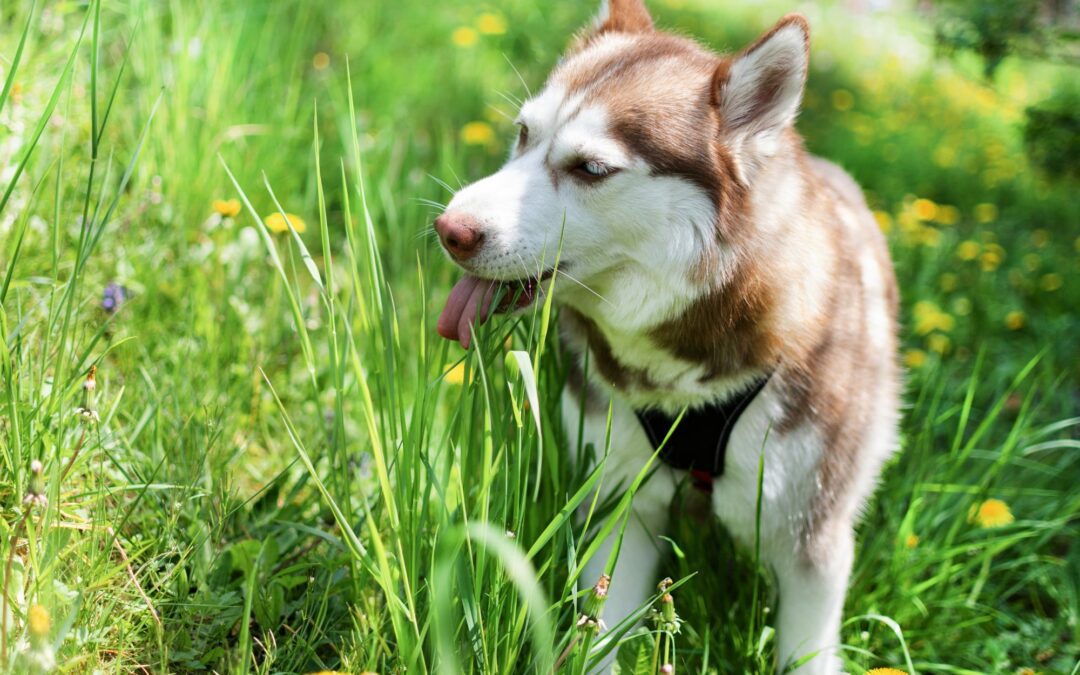
Dogs often eat grass because they enjoy the taste or texture, are curious, bored, or have mild digestive discomfort. Occasional grazing is usually harmless when your dog is eating, playing, and passing stool normally. While the exact reason varies from dog to dog, grass eating by itself is not considered a sign of illness.
Understanding why dogs eat grass can help you tell the difference between normal behavior and signs that may need veterinary attention. This guide explains the most common causes, when vomiting may be a concern, lawn hazards to avoid, and when to seek veterinary care in Ridgefield, CT.
Is It Normal for Dogs to Eat Grass?
Occasional grass eating is common and is usually not a problem when your dog remains energetic, eats normally, and has regular bowel movements. Many healthy dogs nibble grass during walks or while relaxing in the yard. Puppies may also chew grass and other plants as they explore their surroundings, and this alone does not mean they are sick.
Instead of worrying about a single episode, pay attention to how often your dog eats grass and whether the behavior changes or occurs with other symptoms.
The table below summarizes common grass-eating patterns, what they may mean, and when veterinary attention may be needed.
| Grass-Eating Pattern | What It May Mean | What to Do |
| Occasional, relaxed grazing | Normal preference, curiosity, or foraging behavior | Monitor your dog and avoid treated lawns |
| Daily grazing with no other changes | Habit, preference, or lack of stimulation | Track the pattern and mention it at the next wellness exam |
| Sudden or frantic grazing | Possible nausea, stress, or digestive discomfort | Contact your veterinarian if it continues |
| Grazing with repeated vomiting or diarrhea | Possible gastrointestinal problem or exposure | Arrange a prompt veterinary evaluation |
| Grazing with weakness, blood, collapse, or severe pain | Potential emergency | Seek urgent veterinary care |
Why Do Dogs Eat Grass?
Dogs eat grass for several reasons, ranging from normal curiosity to mild digestive discomfort. The most common explanations include the following:
Some Dogs Simply Enjoy Grass
Many adult dogs appear to enjoy fresh grass, especially soft new growth. A dog munching grass during an otherwise normal walk may simply enjoy the moisture, smell, texture, or taste. Also, some puppies eat grass out of natural curiosity as they explore the world around them.
Boredom or Stress May Contribute
Dogs left alone in the yard for long periods may begin eating grass simply because there is little else to do. Anxious dogs may also graze more often during stressful situations, such as when an owner leaves home or after a change in routine.
Regular exercise and mental enrichment may help relieve boredom and reduce this behavior. Frequent walks, scent games, puzzle feeders, interactive toys, and short training sessions give dogs healthy ways to stay active and engaged.
During colder months, when outdoor time is limited, indoor enrichment can help keep your dog physically and mentally stimulated. However, sudden or persistent changes in grazing behavior should still be discussed with your veterinarian.
Digestive Discomfort May Sometimes Play a Role
Some dogs seem drawn to grass when they feel mild nausea, have an upset stomach, or are experiencing other digestive issues. You may also notice drooling, lip licking, stomach noises, reduced appetite, loose stool, or an increased urge to go outside. These signs may point to an underlying issue, such as a recent diet change, food sensitivity, intestinal parasites, pancreatitis, inflammatory bowel disease, or a swallowed foreign object.
Diet and Fiber Should Be Evaluated Carefully
Grass eating alone usually does not mean your dog needs more fiber, a different food, or supplements. A 2008 owner survey found no association between broad diet type and the frequency with which dogs ate plants. However, the researchers noted that more detailed studies are needed to determine whether specific nutrients, minerals, vitamins, or fiber levels influence the behavior. Grass eating alone is not a sufficient reason to change your dog’s food or add supplements.
If you have concerns about your dog’s diet or digestive health, Ridgefield Veterinary Center’s pet nutritional counseling evaluates your dog’s diet, body condition, activity level, medical history, and digestive symptoms before recommending nutritional changes.
Do Dogs Eat Grass to Induce Vomiting?
Dogs can vomit after eating grass, but research does not support the idea that most dogs deliberately graze to make themselves sick.
In a survey of 1,571 owners whose dogs were already known to eat plants, 68% reported plant eating daily or weekly, 9% said their dogs frequently appeared ill beforehand, and 22% said their dogs frequently vomited afterward. Because the survey specifically recruited owners of plant-eating dogs, these percentages should not be interpreted as prevalence rates for all dogs.
| Owner-Reported Behavior | Percentage of Surveyed Plant-Eating Dogs |
| Ate plants daily or weekly | 68% |
| Frequently appeared ill beforehand | 9% |
| Frequently vomited afterward | 22% |
Source: Sueda KLC, Hart BL, and Cliff KD. “Characterisation of Plant Eating in Dogs.” Applied Animal Behaviour Science. 2008;111:120–132.
This observational survey cannot determine why an individual dog eats grass or prove that grass never contributes to vomiting. It does show that frequent illness before grazing and frequent vomiting afterward were uncommon among the plant-eating dogs whose owners responded.
Why Does My Dog Eat Grass and Then Throw Up?
A dog may vomit after eating grass because the blades irritate the throat or stomach, or because the dog already felt nauseated before grazing. Since grass and other plant matter can be difficult to digest, long blades may trigger gagging or appear almost unchanged in vomit. In many cases, it’s difficult to know whether the grass caused the vomiting or whether an underlying digestive issue led the dog to eat grass in the first place.
One isolated episode may not be a cause for concern if your dog quickly returns to normal. However, repeated vomiting or vomiting with blood, abdominal pain, diarrhea, dehydration, weakness, fever, appetite loss, or weight loss should be evaluated by a veterinarian.
Before the visit, make note of the following:
- When did your dog eat the grass?
- Was the grass eating calm or frantic?
- Did nausea or vomiting start before or after eating grass?
- How often has your dog vomited?
- What color was the vomit, and what did it contain?
- Has your dog’s appetite or water intake changed?
- Has your dog had diarrhea or other changes in bowel movements?
- Have you recently changed your dog’s food, treats, or supplements?
- Could your dog have been exposed to lawn chemicals, toxic plants, mushrooms, or other hazards?
If it is safe to do so, a short video of your dog’s behavior can also help your veterinarian during the evaluation.
When Should You Worry About a Dog Eating Grass?
Grass eating becomes more concerning when it starts suddenly, becomes excessive, or occurs with other symptoms. Repeated vomiting, diarrhea, appetite loss, weakness, abdominal pain, or signs of poisoning should prompt a veterinary evaluation. Severe bloating, repeated retching without producing vomit, collapse, or blood in the vomit or stool requires emergency care.
| What You Notice | Level of Concern | Recommended Action |
| Occasional nibbling with no other symptoms | Usually low | Monitor your dog |
| Frequent grass eating but normal behavior | Mild | Record the pattern and discuss it at a wellness visit |
| Sudden or excessive grazing | Moderate | Contact your veterinarian if it continues |
| Vomiting, diarrhea, appetite loss, or low energy | Higher | Arrange a prompt examination |
| Weight loss, dehydration, or abdominal pain | Higher | Contact a veterinarian promptly |
| Repeated retching with little or no vomit | Urgent | Seek emergency veterinary care |
| Swollen abdomen, collapse, blood, or severe weakness | Urgent | Go to an emergency veterinary hospital |
| Known chemical or toxic plant exposure | Urgent | Contact a veterinarian or animal poison-control service |
The Merck Veterinary Manual recommends veterinary examination when vomiting is frequent or occurs with warning signs such as blood, abdominal pain, dehydration, weakness, fever, or weight loss. Depending on the findings, gastrointestinal evaluation may help identify the underlying cause.
Is Grass Safe for Dogs to Eat?
A small amount of plain grass is usually safe for a healthy dog. However, the surrounding environment may pose risks. Lawn chemicals, animal feces, parasites, toxic plants, mushrooms, sharp grass awns, and large amounts of swallowed plant material can turn casual grazing into a health concern.
Fertilizers, Herbicides, and Pesticides
Recently treated lawns may expose dogs to fertilizers, herbicides, or pesticides if they swallow the product, lick residue from their paws or fur, or enter the area before it is safe. Some fertilizers also contain ingredients that attract dogs and may cause vomiting, diarrhea, weakness, unsteadiness, or tremors. This is why it’s important to supervise dogs closely when walking through unfamiliar neighborhoods or public green spaces.
Feces, Soil, and Parasites
Grass itself does not cause worms, but contaminated soil, water, and animal feces can expose dogs to parasite eggs, larvae, or cysts. The Companion Animal Parasite Council notes that dogs can acquire hookworms from contaminated environments and that areas such as soil, grass, and standing water can be difficult to decontaminate after Giardia exposure.
Routine fecal testing and year-round parasite prevention can help reduce the risk of infection, especially for dogs that frequently graze outdoors.
Mushrooms, Weeds, and Toxic Plants
Dogs may eat more than just grass while grazing. Weeds, flowers, mushrooms, and plant bulbs can be mixed into the grass, and some may cause digestive upset, neurologic problems, organ damage, or other serious health issues. If you think your dog has eaten a toxic plant or mushroom, prevent further access to the area, take clear photos or save a sample if it is safe to do so, and contact your veterinarian or a poison-control service right away.
Large Amounts and Grass Awns
Chewing a few blades of grass is usually different from swallowing large amounts. Excess plant matter may irritate the stomach, trigger vomiting, or, in rare cases, contribute to an intestinal blockage. Grass awns and other sharp seed heads can also become lodged in your dog’s mouth, throat, ears, skin, or paws.
Check your dog after walks through tall grass, especially if you notice coughing, gagging, head shaking, pawing at the mouth, or persistent licking.
Should I Stop My Dog From Eating Grass?
You do not need to stop occasional grass eating if the grass is untreated, the area is clean, and your dog is otherwise healthy. However, it’s best to interrupt the behavior if your dog eats large amounts of grass, grazes in unsafe areas, or suddenly begins eating grass more often than usual.
Avoid punishing your dog for grazing, as this can increase stress without addressing the underlying cause. Instead, use this positive training and simple management strategies to encourage safer habits.
- Walk your dog in areas where fertilizers, herbicides, and pesticides have not been applied.
- Teach a “leave it” cue. Reward your dog for ignoring grass instead of using punishment.
- Redirect the behavior. Offer a toy, a short training session, or another activity when your dog starts grazing.
- Keep your dog mentally and physically active. Regular walks, puzzle feeders, scent games, and interactive play can help reduce boredom.
- Keep feeding routines consistent. Avoid sudden diet changes unless recommended for a specific health concern.
- Watch for changes. Sudden, excessive grass eating or grazing accompanied by vomiting, diarrhea, appetite loss, or other signs of illness should not be ignored.
These strategies can help reduce normal grazing, but any sudden increase or change in the behavior should be evaluated to rule out an underlying medical condition.
Conclusion
Most dogs eat grass from time to time, and in many cases, it’s a normal behavior that isn’t a cause for concern. Dogs may graze because they’re curious, enjoy the taste or texture, are bored, or have mild digestive discomfort. However, grass eating deserves closer attention if it starts suddenly, becomes frequent or frantic, or occurs with vomiting, diarrhea, appetite loss, abdominal pain, weakness, weight loss, or possible exposure to lawn chemicals or toxic plants.
If you’ve noticed a change in your dog’s behavior or other signs of illness, Ridgefield Veterinary Center is here to help. We provide physical exams, diagnostic services, gastrointestinal care, and personalized treatment plans for dogs in Ridgefield, Redding, Danbury, Wilton, South Salem, North Salem, and nearby communities. Schedule an appointment if you’d like your dog’s symptoms evaluated or have questions about changes in its behavior.
FAQs
Can Dogs Get Sick From Eating Wet Grass?
Wet grass itself is not usually harmful. The bigger concern is what may be on the grass, such as fertilizers, pesticides, toxic plants, mushrooms, parasites, or contaminated soil. Always supervise your dog in unfamiliar areas, especially after lawn treatments or heavy rain.
Can Grass Cause an Intestinal Blockage?
A few blades of grass are unlikely to cause problems. However, swallowing large amounts of grass or other plant material may irritate the digestive tract and, in rare cases, contribute to an intestinal blockage. Seek veterinary care if your dog vomits repeatedly, cannot keep food down, or has a swollen, painful abdomen.
Should I Change My Dog’s Food if It Eats Grass?
Not necessarily. Research has not shown that grass eating is caused by a lack of fiber or another nutrient. Unless your dog has other digestive symptoms or a diagnosed medical condition, changing foods or adding supplements is usually unnecessary.
Can Anxiety Cause Dogs to Eat Grass?
Yes. Anxiety, boredom, and changes in routine may all contribute to grass eating in some dogs. Regular exercise, mental stimulation, and a predictable routine can help reduce stress-related grazing.
When Is Grass Eating an Emergency?
Seek emergency care if your dog has repeated retching without producing vomit, a swollen abdomen, difficulty breathing, collapse, or has eaten a toxic plant or lawn chemical. These signs may indicate a medical emergency that requires immediate treatment.