
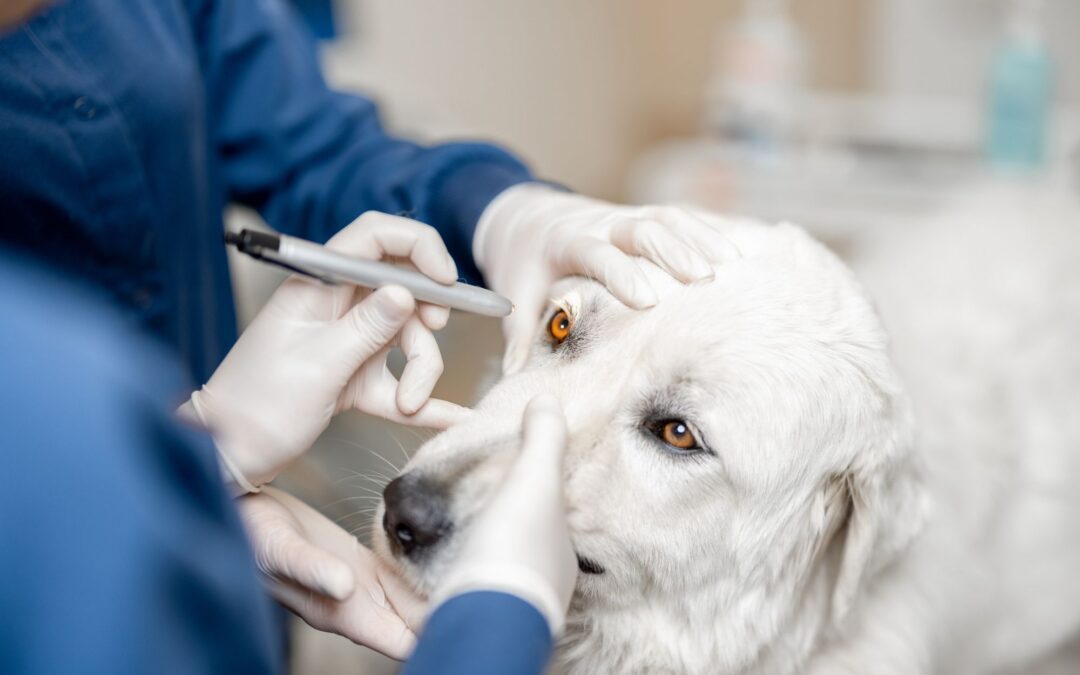
A little crust or discharge in the corner of your dog’s eyes after sleep is often normal. But new, persistent, or thick discharge, especially with redness, swelling, or squinting, can signal an eye problem that needs attention. Common causes of dog eye discharge include irritation, allergies, blocked tear ducts, dry eye, infection, and injuries to the cornea.
The appearance of the discharge can offer clues, but it cannot identify the cause on its own. Watery eyes, for example, may be linked to a drainage problem or an irritated cornea, while yellow or green discharge can occur with both infection and dry eye. In this guide, we’ll cover the common causes of dog eye discharge, what different types of discharge may mean, and when your dog should be examined by a veterinarian.
What Does Normal Dog Eye Discharge Look Like?
Dogs produce tears throughout the day to keep their eyes moist and help clear away debris. A small amount of clear fluid or light-colored crust at the inner corner of the eyes, especially after sleep, can be normal. If your dog’s eyes look comfortable, the discharge wipes away easily, and there is no redness, swelling, squinting, or pawing at the eyes, occasional buildup is usually not a cause for concern.
Pay attention to what is normal for your dog. A sudden change in the amount, color, or consistency of the discharge is more important than an occasional eye booger. Discharge that keeps returning, becomes thick or yellow-green, or occurs alongside redness, squinting, cloudiness, or signs of pain should be evaluated by a veterinarian.
| What You Notice | What To Do |
| Small amount of clear fluid or light crust after sleep; eyes otherwise comfortable | Gently wipe away the buildup and monitor for changes |
| Discharge that keeps returning or becomes thicker | Arrange a veterinary examination |
| Yellow or green discharge, especially with redness or discomfort | Contact your veterinarian promptly |
| Discharge with squinting, a cloudy eye, or obvious pain | Seek veterinary care promptly |
Color alone does not diagnose an eye problem. A veterinarian may need to examine the tear film, eyelids, tear ducts, conjunctiva, and cornea to determine what is causing the discharge.
What Are the Most Common Dog Eye Discharge Causes?
1. Irritation or a foreign object
Dust, wind exposure, smoke, and other irritants can make your dog’s eyes water. Excess tears are a protective response that helps wash foreign material away. A walk through tall grass may also leave a grass seed or other small object near the eye or beneath an eyelid.
Irritation usually deserves closer attention when it affects one eye, starts suddenly, or makes your dog blink, squint, or rub their face. A foreign object can scratch the cornea even when you cannot see anything in the eye. Do not try to remove material stuck to the eye’s surface yourself.
2. Allergies and Conjunctivitis
Environmental allergies can cause watery discharge and red, irritated eyes in dogs. Pollen, dust, and other environmental exposures may affect the eyes along with the skin or ears. If your dog also has seasonal itching, licking, or other allergy symptoms, you can learn more about spring allergies in dogs. However, watery discharge alone does not confirm an allergy, particularly if only one eye is affected or your dog seems uncomfortable.
Conjunctivitis, sometimes called pink eye, is inflammation of the tissue lining the eyelids and covering the white part of the eye. It can follow irritation, allergies, dry eye, a foreign object, or an infection. According to the Merck Veterinary Manual, dogs with conjunctivitis may need tear testing and other eye checks to determine the underlying cause. Because redness and discharge can occur with different eye conditions, your veterinarian may need to examine the eye to determine what is causing the inflammation.
3. Dry eye
Dry eye, or keratoconjunctivitis sicca (KCS), occurs when the eyes do not produce enough of the watery part of the tear film. According to the American College of Veterinary Ophthalmologists, dry eye can cause mucus buildup, thick white-gray or yellow-green discharge, redness, squinting, and a dull-looking eye.
In many dogs, dry eye develops when the immune system attacks the tear-producing glands, although other causes are possible. Without treatment, ongoing inflammation can lead to corneal wounds, scarring, and abnormal pigmentation that may affect vision. A veterinarian can measure tear production with a Schirmer tear test, which uses a small paper strip placed beneath the eyelid for one minute.
4. A Corneal scratch or ulcer
The cornea is the clear surface at the front of the eye. A scratch can happen during play, after contact with a branch or grass seed, or when a dog rubs an irritated eye. Some scratches can develop into corneal ulcers.
According to the Merck Veterinary Manual, corneal ulcers can cause excessive tearing, discharge, redness, light sensitivity, and squinting. Squinting is a sign of eye discomfort, even when the discharge looks mild. Because corneal ulcers can worsen and threaten vision, a painful or tightly closed eye should be checked promptly.
5. Blocked tear ducts or poor tear drainage
Tears normally drain through small openings near the inner corner of the eye and into the nose. When the tear ducts are blocked or do not drain properly, tears can spill onto your dog’s face, causing persistent wet fur and reddish-brown staining beneath the eyes.
Poor drainage is not the only cause of excessive tearing. Eyelid position, hair around the drainage opening, inflammation, and facial structure can also affect tear flow. Dogs with short muzzles or prominent eyes may be more prone to tear overflow. Because irritation and corneal problems can also cause excessive tearing, persistent watery eyes should be evaluated to determine the underlying cause.
6. Eyelid and eyelash problems
Eyelids that roll inward can bring fur into contact with the eye. Abnormal eyelashes may also rub the cornea. The irritation can cause watery discharge, recurring redness, and corneal wounds. Facial folds or hair close to the eye may make it harder to keep the area clean.
Repeatedly wiping away your dog’s eye boogers will not resolve a problem that continues to irritate the eye. The eyelids, eyelashes, and surrounding skin need to be examined so treatment can address the underlying cause.
7. Other eye conditions or illness
Eye discharge sometimes accompanies a condition that affects more than the eye’s surface. Increased eye pressure, inflammation inside the eye, and certain infections or systemic illnesses may also cause redness, tearing, cloudiness, or pain. These possibilities matter most when your dog has a sudden change in vision, unequal pupils, marked swelling, or other signs of illness.
What Does the Color of Your Dog’s Eye Discharge Mean?
The color of your dog’s eye discharge can help you notice changes, especially when you compare it with what is normal for your dog. Here’s what different types of discharge may indicate and what other signs to watch for.
- Clear and watery: Watery discharge may occur when the eye produces extra tears in response to irritation or pain. It can also result from blocked tear ducts or facial structure. A constantly wet face is a reason to check the eye, even if the fluid looks clear.
- White or gray: Thick white-gray mucus can be a sign of dry eye. It may collect again soon after you clean it away. Redness or a dull corneal surface adds to the concern.
- Yellow or green: Yellow or green discharge can occur with infection and inflammation. Green eye discharge does not prove that your dog has a simple bacterial infection or that antibiotic eye drops alone will fix it. Dry eye, a corneal wound, or another condition may be involved.
- Reddish-brown staining on the fur: Tear staining is discoloration left where tears repeatedly wet the fur. Tears contain pigments called porphyrins, which contribute to the stain. The staining itself does not explain why the eye is watering. Look for a constantly damp area, skin irritation, odor, or a recent increase in tearing.
If the discharge is accompanied by squinting, redness, cloudiness, swelling, or obvious discomfort, your dog should be examined promptly. Eye problems can worsen quickly, so changes in your dog’s eyes are worth taking seriously.
When Should You Call a Veterinarian?
Seek veterinary attention right away if your dog holds an eye closed, squints, paws at it, or has a cloudy or visibly injured eye. A painful eye can need treatment even when there is very little discharge. Prompt care is also appropriate after a suspected scratch, chemical exposure, or injury.
Contact your veterinarian promptly if you see:
- Yellow or green discharge
- Thick mucus that repeatedly returns
- Redness or swelling
- A sudden increase in tearing, especially in one eye
- Changes in vision or an eye that looks different from the other
- Persistent wetness, staining, or irritated skin beneath the eye
Contact your veterinarian if unusual discharge persists or keeps returning, even if your dog otherwise seems well. Seek prompt care sooner if the discharge is accompanied by squinting, redness, cloudiness, swelling, or other signs of eye pain.
Ridgefield Veterinary Center’s pet eye care service includes eye examinations and, when appropriate, fluorescein staining, Schirmer tear testing, and eye pressure measurement.
What Can You Do at Home Before the Appointment?
If your dog’s eyes appear comfortable and you only see minor discharge on the surrounding fur, you can gently wipe the buildup away with a clean, soft, damp cloth. Use warm water on the cloth, keep pressure light, and avoid rubbing the eyeball. Use a fresh part of the cloth for each eye.
If a chemical gets into your dog’s eye, immediately flush the eye with clean water or sterile saline for 5 to 10 minutes, then contact a veterinarian for prompt evaluation.
Make a note of when the discharge started, whether one or both eyes are affected, and whether you have seen squinting or rubbing. A clear photo can help show the veterinary team what the eye looked like before you cleaned it.
Do not put leftover eye drops or human eye medication in your dog’s eye without veterinary advice. Eye medicines are chosen for the specific problem, and a veterinarian may need to check for a corneal ulcer before prescribing them. If something appears embedded in the eye, leave it in place and seek care promptly.
Conclusion
A small amount of eye discharge can be normal for dogs, especially after sleep. But persistent or changing discharge, particularly when paired with squinting, redness, cloudiness, swelling, or discomfort, can have many possible causes. Because the appearance of the discharge alone cannot tell you what is wrong, changes in your dog’s eyes are worth having checked.
At Ridgefield Veterinary Center, we can examine your dog’s eyes, identify the likely cause of the discharge, and recommend the appropriate next steps. If you’re concerned about your dog’s eye discharge or have noticed a recent change, contact us today or call 203-438-2658 to arrange an appointment.
FAQs
Are eye boogers normal for dogs?
A small amount of light crust after sleep can be normal if your dog’s eyes are clear and comfortable. Discharge that is thick, suddenly increases, keeps returning, or comes with redness or squinting should be checked.
Does green discharge always mean my dog has an eye infection?
No. Green discharge can appear with an infection, but it can also occur with dry eye and other inflamed eye conditions. An examination is needed to find the underlying cause and choose treatment.
Can allergies cause watery eyes in dogs?
Yes. Environmental allergies can irritate your dog’s eyes and cause tearing. Watery eyes can also be a response to pain, a foreign object, a corneal ulcer, or poor tear drainage, so persistent symptoms deserve an examination.
Can I clean my dog’s eye discharge with warm water?
You can gently clean discharge from the fur around a comfortable-looking eye with a soft cloth dampened with warm water. Do not rub the eye itself or try to remove anything stuck to it. Cleaning does not replace veterinary care when the discharge is abnormal.
Will tear stains go away if I clean them every day?
Regular cleaning can help keep the fur and skin beneath the eyes comfortable, but staining may return while the eye continues to overflow with tears. A veterinarian can check whether irritation, drainage, or your dog’s facial structure is contributing to the wetness.