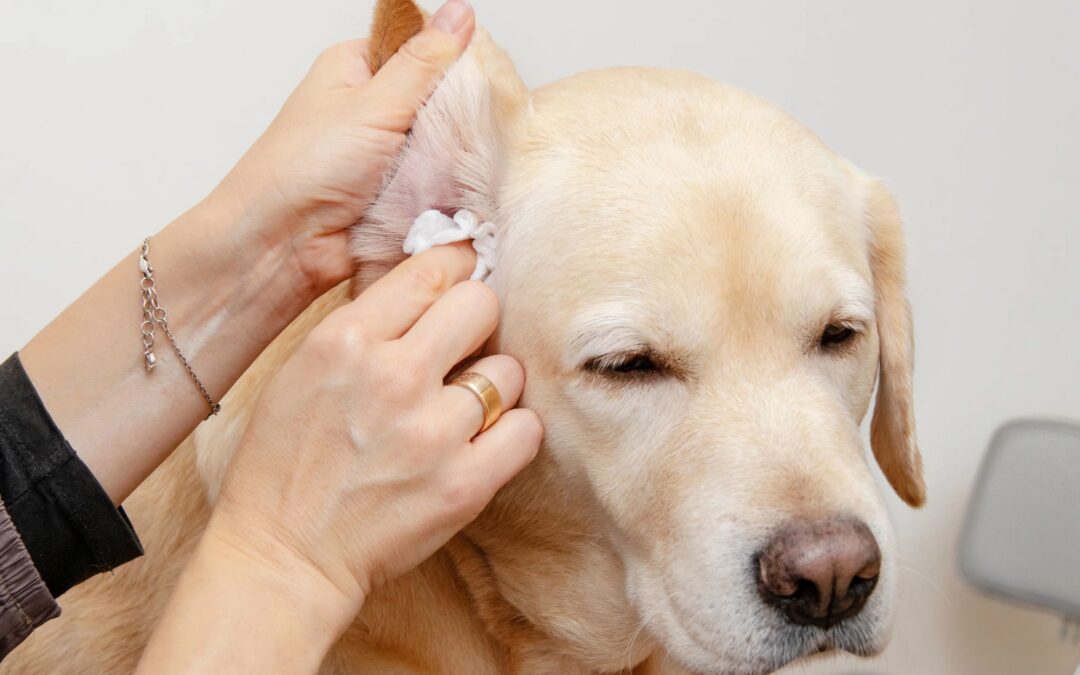
Cleaning your dog’s ears at home can be simple once you know the right steps. To clean dog ears safely, use a veterinarian-approved ear cleaning solution, gently massage the base of the ear, let your dog shake their head, and wipe away loosened debris with cotton or gauze. Never insert cotton swabs deep into the ear canal or use household cleaners that could irritate.
Not every dog needs regular ear cleaning, though. Some dogs naturally have clean ears, while others need extra care because of their ear shape, lifestyle, or history of ear problems. At Ridgefield Veterinary Center in Ridgefield, CT, we want to help you keep your furry friend’s ears healthy and comfortable. Here’s how to clean them safely, recognize when cleaning is needed, and know when it’s time to visit our veterinary team.
How to Tell if Your Dog’s Ears Need Cleaning
Before cleaning your dog’s ears, take a moment to check how they look and smell. Healthy ears are usually light pink, free from strong odors, and comfortable when touched. A small amount of earwax is normal and doesn’t always need to be removed.
Your dog may benefit from gentle ear cleaning if you notice:
- Visible dirt or debris around the ear opening
- Mild buildup of earwax
- Ears that need cleaning after swimming or bathing, based on your veterinarian’s advice
- Wax buildup that your veterinarian has recommended managing at home
If you only see a little earwax and your dog’s ears look healthy, there’s usually no need to clean them. Cleaning too often can irritate the delicate skin inside the ear canal.
Watch for redness, a strong odor, unusual discharge, or discomfort when touching your dog’s ears. These changes may signal an infection or another ear problem that needs a veterinarian’s attention.
What Do You Need to Clean Your Dog’s Ears Safely?
You only need a few supplies to clean your dog’s ears at home. Gather everything before starting so you can focus on keeping your pet calm and comfortable.
| Supplies | Purpose |
| Veterinarian-approved ear cleaning solution | Helps loosen and remove wax and debris |
| Cotton balls, cotton pads, or gauze | Gently wipes away loosened debris |
| Clean towel | Catches excess cleaning solution when your dog shakes |
| Favorite treats | Rewards cooperation and creates a positive association with ear care |
Not all ear cleaners are suitable for every dog. Some are designed to remove excess wax, while others may contain ingredients that irritate sensitive or inflamed ears.
As explained in VCA Animal Hospitals’ veterinary instructions for cleaning dogs’ ears, you should use an ear cleaning solution recommended by your veterinarian. This is especially important if your dog has allergies, recurring infections, or a history of ear problems.
How to Clean Dog Ears Safely: Step-by-Step Instructions
Once you have your supplies ready, choose a quiet place where your dog feels relaxed. A bathroom or another easy-to-clean area works well because some cleaning solution may splash when your dog shakes their head.
Follow these steps to safely clean your dog’s ears.
Step 1: Keep Your Dog Calm and Comfortable
Start by letting your dog sit or stand in a comfortable position. Give them a treat and gently touch their ears so they become familiar with the process.
For smaller dogs, sitting on the floor with your pet in your lap may help. Larger dogs may feel more comfortable sitting beside you. If your dog appears nervous, practice touching and lifting the ear flap before introducing the cleaning solution. Keep sessions short and reward calm behavior.
Step 2: Lift the Ear Flap and Apply the Cleaning Solution
Gently lift your dog’s ear flap to expose the ear opening. Hold the ear upright and position the tip of the cleaning solution bottle just above the opening.
Apply the amount of veterinarian-approved ear cleanser directed by your veterinarian or the product instructions. Many liquid ear cleaners are designed to fill the ear canal so they can loosen wax and debris. Avoid touching the ear with the bottle tip. Contact with the ear may contaminate the remaining solution.
Step 3: Gently Massage the Base of the Ear
While holding the ear flap upright, gently massage the base of your dog’s ear for about 30 seconds. Use slow, gentle movements to keep your dog comfortable. You may hear a soft squishing sound as the cleaning solution moves through the ear canal and loosens trapped wax and debris.
Since your dog’s ear canal has an L-shaped structure, some wax can be difficult to reach. Gentle massage helps the cleanser work its way through the canal without inserting anything inside. Watch your dog’s reaction and stop if they show signs of pain or discomfort.
Step 4: Let Your Dog Shake Their Head
Release the ear flap and allow your dog to shake their head naturally. This movement helps bring the cleaning solution, wax, and loosened debris toward the ear opening. Keep your towel nearby to catch any splashes.
Give your dog a moment to finish shaking before moving to the next step.
Step 5: Gently Wipe Away the Debris
Use a clean cotton ball or gauze to gently wipe the visible areas of the ear flap and the entrance to the ear canal. Remove debris that you can reach easily without forcing your fingers or cleaning materials deeper into the ear. As a general safety guide, do not reach farther than one knuckle into the canal, and stop sooner if you cannot clearly see or comfortably reach the area. Use a fresh cotton ball or gauze as needed until the visible area is clean.
Step 6: Repeat the Process on the Other Ear
If the other ear also needs cleaning, follow the same process using fresh cotton or gauze. Once you’re finished, reward your dog with a treat, praise, or a favorite activity. This helps build a positive association and may make future ear cleaning sessions easier.
Important: Stop immediately if your dog cries, pulls away in pain, or becomes very distressed. Pain during cleaning can signal inflammation, an infection, or another ear problem that needs veterinary care.
How Often Should You Clean Your Dog’s Ears?
The American Kennel Club’s guide to cleaning dog ears explains that some dogs rarely need cleaning, while others benefit from more frequent care.
Here are some factors that may affect your dog’s ear cleaning needs.
| Dog’s Characteristics | Ear Cleaning Considerations |
| Healthy ears with little wax | Clean only when needed |
| Floppy ears, such as Basset Hounds and Cocker Spaniels | Check regularly for trapped moisture and wax |
| Dogs that swim frequently | Ask your veterinarian about appropriate cleaning and drying care |
| Dogs prone to ear infections | Follow a cleaning schedule recommended by your veterinarian |
| Dogs with allergies or recurring ear problems | May need a personalized ear care plan |
Over-cleaning can irritate healthy skin cells and disturb the ear’s natural protective barrier. Cleaning more often does not always mean better protection. If you’re unsure how often to clean your dog’s ears, our veterinary team can help you choose a routine that fits your pet’s needs.
What Should You Avoid When Cleaning Your Dog’s Ears?
Using the wrong products or cleaning tools can irritate your dog’s ears and may cause injury. Here are some things you should avoid and why:
- Hydrogen peroxide: Can damage healthy skin cells and irritate, especially if your dog’s ear canal is already inflamed.
- Homemade ear cleaning solutions: Ingredients like vinegar and alcohol may sting, dry out the skin, or worsen existing irritation.
- Cotton swabs or Q-tips: Inserting them into the ear canal can push wax and debris deeper or accidentally damage the eardrum.
- Sharp or pointed objects: Using these to remove stubborn wax can scratch the ear canal or cause painful injuries.
- Forceful cleaning: Holding your dog down or forcing cleaning tools into the ear can cause pain, injury, and fear of future ear cleaning sessions.
Your dog’s ear canal has sensitive tissue that can be easily irritated or injured. Avoiding these products and practices helps protect your dog’s ears during home cleaning.
When Should You Avoid Cleaning Your Dog’s Ears at Home?
Avoid cleaning your dog’s ears at home if you notice signs of infection, inflammation, or pain. Applying an ear cleaning solution to an already irritated ear canal may cause more discomfort. Some products can also cause complications if the eardrum is damaged.
Instead, have your veterinarian examine your dog’s ears before attempting to clean them. Our guide to the signs of ear infection in dogs explains what to watch for and when your dog may need treatment.
Can Regular Ear Cleaning Help Prevent Ear Infections?
Regular ear cleaning can help prevent some ear infections by removing excess wax and debris. However, many dogs develop ear infections because of underlying issues, particularly allergies, rather than poor ear hygiene.
Allergies can cause inflammation in the ear canal, creating conditions where yeast and bacteria can multiply. Dogs with recurring ear infections may also have itchy skin or paws. Learn more about this connection in our guide to dog skin allergies and when to seek veterinary care.
When to Visit Ridgefield Veterinary Center for Your Dog’s Ear Health
If your dog has recurring ear infections, unusual discharge, or discomfort during cleaning, our team at Ridgefield Veterinary Center can help identify what’s causing the problem. We offer veterinary services that support your dog’s ear health, including:
Pet Wellness Exams
Our pet wellness exams in Ridgefield, CT include checking your dog’s ears for signs of inflammation, infection, parasites, and other concerns. During your visit, we can also discuss how often your dog needs ear cleaning and recommend a safe home care routine.
Pet Dermatology Services
Ear problems sometimes develop alongside allergies and other skin conditions. Our pet dermatology services in Ridgefield, CT help us evaluate skin and allergy-related concerns that may contribute to repeated ear inflammation or infections.
By identifying the underlying cause, we can recommend care that addresses more than the visible symptoms.
Conclusion
Keeping your dog’s ears healthy starts with knowing when and how to clean them. Every dog has different ear care needs, so understanding what’s normal for your pet can help you spot problems early and avoid unnecessary cleaning.
At Ridgefield Veterinary Center, we can show you how to clean your dog’s ears safely, recommend suitable ear cleaning products, and check for underlying problems if your dog has recurring ear infections. Our team provides gentle, Fear Free care for dogs and their families throughout Ridgefield, Redding, Wilton, Danbury, South Salem, and North Salem. Contact us today if you have concerns about your dog’s ear health.
FAQs
Can I use baby wipes to clean my dog’s ears?
Regular baby wipes aren’t recommended for cleaning inside your dog’s ears. Some contain fragrances or ingredients that may irritate the skin. Dog-specific ear wipes can be used on the visible outer ear if the product is suitable for your pet.
What color should my dog’s earwax be?
Normal dog earwax is usually light yellow to brown and appears in small amounts. Dark brown or black wax, especially when accompanied by an odor, itching, or redness, may indicate an ear problem. The color alone cannot tell you whether your dog has an infection.
Should I remove the hair inside my dog’s ears?
Not necessarily. Hair inside the ears is normal for many breeds, including Poodles and Schnauzers. Routine plucking may irritate the ear canal, so hair removal should depend on your dog’s needs and your veterinarian’s recommendation.
Can I clean my dog’s ears before applying ear medication?
Some ear medications work better when excess wax and debris are removed first. However, cleaning solutions can interfere with certain medications. Follow your veterinarian’s instructions on whether to clean the ears and how long to wait before applying the medication.
What should I do if ear cleaner gets in my dog’s eyes?
If ear cleaning solution accidentally gets into your dog’s eyes, rinse them promptly with sterile saline eye wash or clean, lukewarm water. Contact your veterinarian if your dog continues squinting, rubbing their eyes, or showing signs of irritation.
Can a veterinarian clean my dog’s ears during a wellness visit?
Yes. At Ridgefield Veterinary Center, our veterinary team can examine your dog’s ears during a wellness visit and determine whether cleaning is needed. We can also demonstrate proper cleaning techniques if you’re uncomfortable doing it at home.