
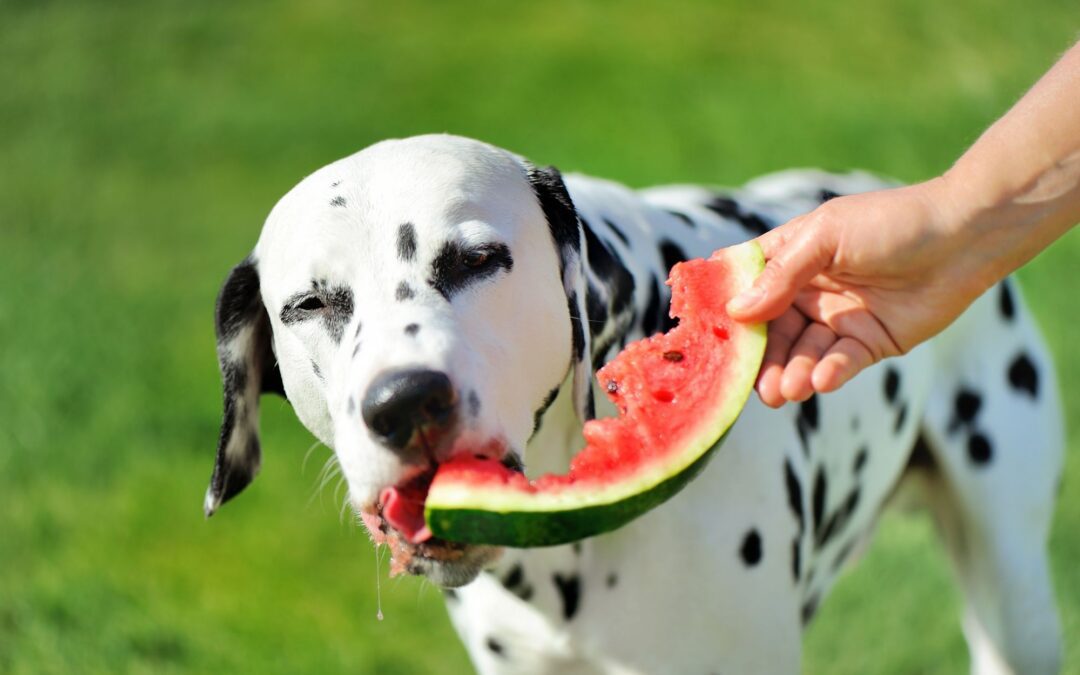
Many pet owners ask, “Can dogs eat watermelon?” The answer is yes. Most healthy dogs can safely enjoy small amounts of plain watermelon as an occasional treat. It is hydrating, low in calories, and can be a refreshing option during warm weather.
Watermelon should always be prepared correctly before serving. The rind and mature seeds must be removed, and the fruit should be cut into small, bite-sized pieces to reduce the risk of choking or digestive blockage. While it is generally safe, it should only be offered in moderation and should never replace a complete and balanced diet.
This guide explains how to safely feed watermelon to dogs, which parts are safe or unsafe, and how much you can offer based on your dog’s size. It also covers potential digestive risks, signs of overfeeding, and when to contact your veterinarian for advice.
Can Dogs Eat Watermelon Safely?
Safe feeding depends on preparation and portion size. Only plain watermelon flesh should be offered, and it must be cut into small pieces before feeding. The rind and mature seeds should always be removed to reduce choking and digestive risks.
Not all watermelon products are safe for dogs. Avoid any watermelon products with added ingredients such as sugar, syrup, chocolate, or artificial sweeteners. According to the ASPCA Animal Poison Control Center, products containing xylitol can cause a dangerous drop in blood sugar and liver injury in dogs.
Even when prepared correctly, watermelon should be treated as an occasional snack because too much can lead to digestive upset due to its natural sugar and fiber content.
What Parts of Watermelon Can Dogs Eat?
Your dog can eat the plain red or yellow flesh after you remove the rind and the mature black or brown seeds. Cut it into pieces that match your dog’s size and chewing habits. Seedless watermelon may still contain small, soft white seed coats. While these are different from hard, mature seeds, it’s still best to remove any visible seeds before serving.
Safe watermelon for dogs: Plain, fresh watermelon flesh with the rind and mature seeds removed, served in small, bite-sized pieces appropriate for your dog’s size.
If your dog accidentally eats the rind, too many seeds, or another unsafe food, contact your veterinarian for advice. It also helps to understand what to do if your dog eats something bad, so you can respond appropriately while waiting for further guidance.
Which Parts of Watermelon Are Unsafe for Dogs?
The watermelon rind and mature black or brown seeds are unsafe for dogs because they can create choking, digestive, or intestinal blockage risks. Dogs should eat only the soft flesh with the rind and visible mature seeds removed. Plain juice and small frozen pieces may be offered in limited amounts, but sweetened or flavored products may contain unsafe ingredients.
Each form of watermelon carries a different level of risk. Use the table below to compare safer options and avoid parts that dogs cannot digest easily.
| Option | Evidence Level | Best Suited For | Main Limitation |
| Plain seedless watermelon flesh | Strong veterinary consensus | Most healthy adult dogs receiving a small treat | Natural sugars and large portions may cause digestive upset |
| Fresh flesh with mature seeds removed | Strong veterinary consensus | Healthy dogs when the fruit is prepared carefully | A missed hard seed may create a choking or digestive concern |
| Small frozen watermelon pieces | Veterinary expert consensus | Dogs that chew slowly and tolerate cold treats | Large or hard pieces can become a choking hazard |
| Plain blended watermelon | Veterinary expert consensus | Lick mats or small frozen bites | Easy to serve too much |
| Watermelon rind | Veterinary consensus against feeding | Not recommended | Difficult to digest and may cause choking or intestinal blockage |
| Mature black or brown seeds | Veterinary consensus against feeding | Not recommended | May cause choking or obstruction, mainly when many are swallowed |
| Sweetened juice or flavored products | Strong consensus against routine feeding | Not recommended | May contain added sugar, xylitol, or other unsafe ingredients |
| Watermelon-flavored dog treats | Product-dependent | Dogs whose owners have checked the full ingredient list | May contain more calories or additives than fresh fruit |
Can Dogs Eat Watermelon Rind?
You should not feed watermelon rind to your dog. Its tough texture makes it harder to chew and digest than the flesh. A small accidental bite does not always cause a problem, but the risk depends on your dog’s size, the amount swallowed, and whether the piece was chewed. A large rind piece may become lodged in the stomach or intestines.
Can Dogs Eat Watermelon Seeds?
Remove mature black or brown watermelon seeds before serving the fruit. One or two accidentally swallowed seeds may not affect a healthy large dog, but a cluster of seeds can create more risk for a puppy or small dog.
The seeds are a physical concern rather than a reason to panic over one missed seed. Watch your dog and call your veterinarian when the amount eaten is unclear.
What Should You Do If Your Dog Ate Watermelon Rind or Seeds?
If your dog ate watermelon rind or many mature seeds, remove the remaining fruit and record what was swallowed. Watch for vomiting, abdominal pain, appetite loss, diarrhea, lethargy, or trouble passing stool. Call a veterinarian promptly if symptoms develop or a small dog has swallowed a large piece.
The Merck Veterinary Manual lists vomiting, loss of appetite, diarrhea, lethargy, and shock among the possible signs of gastrointestinal obstruction. Symptoms can vary based on where an object is lodged and whether the blockage is partial or complete.
Follow These Four Steps
- Remove the remaining watermelon. Keep your dog away from discarded rind, seeds, and food scraps.
- Record what happened. Note the type of material, estimated amount, time of ingestion, and your dog’s weight.
- Watch for symptoms. Look for repeated vomiting, retching, abdominal discomfort, loss of appetite, diarrhea, weakness, straining, or trouble passing stool.
- Call your veterinarian when the risk is unclear. Seek guidance sooner if your dog is a puppy, a toy breed, a senior, or has an existing digestive condition.
Do not make your dog vomit unless a veterinarian or animal poison-control professional tells you to do so. The safest response depends on what was swallowed, the amount, your dog’s health, and how much time has passed.
If you cannot tell how much rind or seed material your dog swallowed, call Ridgefield Veterinary Center for guidance before symptoms become severe.
How Much Watermelon Can You Give Your Dog?
Watermelon should make up only a small part of your dog’s daily calories. Start with one bite-sized piece and watch for stomach upset before offering more. Larger dogs may tolerate more than small dogs, but watermelon and all other dog treats should remain limited.
Treat limits depend on your dog’s regular food, weight, age, activity, and medical needs. The World Small Animal Veterinary Association nutrition guidelines support nutrition plans tailored to each pet rather than one feeding rule for every dog.
The portions below are conservative starting amounts:
| Dog Size | Suggested Starting Portion | Preparation |
| Under 10 pounds | 1 very small cube | Cut smaller than a standard ice cube |
| 10–25 pounds | 1–2 small cubes | Remove the rind and visible mature seeds |
| 26–50 pounds | 2–3 small cubes | Serve slowly and watch your dog chew |
| 51–90 pounds | 3–5 small cubes | Count the fruit toward daily treats |
| Over 90 pounds | Up to 5–6 small cubes | Adjust for health, diet, and other treats |
Start With Less for Sensitive Stomachs
Offer one small piece the first time your dog eats watermelon. Wait and watch for diarrhea, gas, vomiting, or discomfort before serving it again. Even healthy foods can trigger gastrointestinal upset when introduced too quickly. Dogs with sensitive stomachs may not tolerate watermelon even when it is prepared properly.
Count Every Treat
Your dog’s daily treat intake includes more than fresh fruit. Training rewards, dental chews, table scraps, frozen treats, and store-bought dog treats all add calories. Watermelon should never replace your dog’s meal. Keep portions small enough that your dog still eats a complete and balanced diet.
What Are the Benefits of Watermelon for Dogs?
Watermelon can provide dogs with extra moisture and a relatively low-calorie treat when served in small portions. It also contains carbohydrates and small amounts of vitamins and minerals. However, watermelon is not nutritionally necessary because a complete and balanced dog food should already meet your dog’s core dietary needs.
Watermelon Can Add Moisture to a Treat
A few pieces can add moisture to your dog’s snack during warm weather. Watermelon is still not a treatment for dehydration, overheating, or heatstroke. Your dog must always have access to fresh drinking water.
Watermelon Is Not a Medical Treatment
Do not use watermelon to:
- Treat dehydration
- Manage heatstroke
- Replace a balanced meal
- Correct a nutrient deficiency
- Control diabetes
- Treat constipation
The strongest evidence supports watermelon’s nutrient and water content. Claims that an occasional serving will strengthen immunity or prevent disease go beyond what the food-composition data can show.
When Should Dogs Avoid Watermelon?
Some dogs should avoid watermelon or eat it only after veterinary approval. Dogs with diabetes, obesity, digestive disease, chewing problems, food sensitivities, or on prescription diets may need tighter treat limits. Puppies and dogs that gulp food also need smaller pieces and closer supervision.
Watermelon contains natural sugars that can affect blood sugar levels and add calories to a weight-control plan. A veterinarian can tell you whether it fits your dog’s current diet.
Ask Your Veterinarian Before Serving It If Your Dog Has:
- Diabetes mellitus
- Obesity or an active weight-loss plan
- Chronic diarrhea
- A history of pancreatitis
- Inflammatory bowel disease
- Food allergies or intolerances
- Kidney disease
- A prescription diet
- Recent gastrointestinal surgery
- Trouble chewing or swallowing
Watermelon does not automatically cause pancreatitis. Still, adding treats may interfere with a prescribed diet or cause digestive upset in a dog with a sensitive gastrointestinal tract.
Can Too Much Watermelon Cause Diarrhea or Vomiting?
Too much watermelon can cause diarrhea, gas, vomiting, or stomach discomfort because it contains water, fiber, and natural sugars. Mild digestive upset may settle after you stop the treat, but repeated vomiting, weakness, abdominal pain, blood in the stool, or inability to keep water down needs veterinary guidance.
Do not assume watermelon caused every digestive symptom just because your dog recently ate it. Vomiting may have many causes, including sudden diet changes, infection, foreign objects, medication reactions, and disease.
Mild Signs You Can Monitor
A dog that ate too much watermelon may have:
- One loose stool
- Mild gas
- Brief stomach noises
- A short-term decrease in appetite
- Mild discomfort that passes quickly
Stop offering watermelon and provide fresh water. Call your veterinarian if the symptoms continue or worsen.
Signs That Need Veterinary Attention
Seek veterinary advice if your dog has:
- Repeated vomiting
- Ongoing or severe diarrhea
- Blood in vomit or stool
- Abdominal swelling or pain
- Marked weakness
- Refusal to drink
- Trouble keeping water down
- Straining without passing stool
- Known or suspected rind ingestion
If your dog vomits yellow bile after eating watermelon or at any other time, understanding the possible causes can help you decide when to seek veterinary care.
How Can You Safely Feed Watermelon to Your Dog?
To safely feed watermelon, wash the outer surface, remove the rind and mature seeds, and cut the flesh into pieces suited to your dog’s size. Offer one piece first and watch for any digestive upset before giving more. Always serve watermelon plain, without added sugar, syrup, seasonings, chocolate, or artificial sweeteners.
When introducing any new treat, start with a small amount so you can see how your dog responds. If they develop vomiting, diarrhea, or other signs of digestive discomfort, stop feeding watermelon and contact your veterinarian.
Use This Five-Step Preparation Method
- Wash the whole watermelon before cutting it.
- Remove all of the green and white rind.
- Take out mature black or brown seeds.
- Cut the flesh into small cubes.
- Offer a small portion and refrigerate the rest.
Do not leave discarded rind where your dog can reach it. Some dogs will pull scraps from a counter, trash container, or compost bin.
Safe Ways to Serve Watermelon
You can offer watermelon in several simple forms:
- A few small cubes served fresh
- Small frozen watermelon chunks
- Plain blended watermelon frozen in an ice cube tray
- A spoonful mixed into your dog’s meal
- A thin layer spread on a lick mat
Frozen pieces can still become a choking hazard. Use small pieces and avoid frozen bites if your dog swallows treats without chewing. RVC can help you choose treats that fit your dog’s age, weight, health history, and regular food.
Conclusion
Most healthy dogs can eat small portions of plain watermelon flesh. Remove the rind and mature seeds, cut the fruit into pieces that suit your dog’s size, and stop serving it if digestive symptoms appear. Ridgefield Veterinary Center approaches feeding and health questions with the same care we would give our own pets.
At Ridgefield Veterinary Center, we’re happy to answer questions about your dog’s diet and digestive health. If your dog develops digestive problems after eating watermelon or you have concerns about introducing new foods, contact us to schedule an appointment with our veterinary team.
FAQs
How Much Watermelon Can I Give My Dog?
Start with one or two small cubes and adjust the portion based on your dog’s size, health, and response. A dog under 10 pounds should receive less than a large dog, and all treats should remain a small part of daily calories. Stop feeding watermelon if vomiting, diarrhea, or stomach discomfort develops.
Is Watermelon a Laxative for Dogs?
Watermelon is not a veterinary laxative, though too much can cause loose stool because it contains water, fiber, and natural sugars. Do not use it to treat constipation. Call your veterinarian if your dog strains, appears painful, vomits, or cannot pass stool.
What Should I Do If My Dog Ate Watermelon Rind?
Remove the remaining rind and estimate how much your dog swallowed. Call a veterinarian if the piece was large, your dog is small, or symptoms such as vomiting, pain, appetite loss, lethargy, or straining develop. Pet owners in Redding, Danbury, Wilton, South Salem, and North Salem can contact Ridgefield Veterinary Center for guidance based on the dog’s size and amount eaten.
Can Puppies Eat Watermelon?
A fully weaned puppy can usually eat one tiny piece of plain watermelon flesh with the rind and mature seeds removed. Puppies have small calorie allowances and may develop digestive upset more easily than adult dogs. Do not let a puppy chew rind or swallow large frozen pieces.
What Fruit Can’t a Dog Eat?
Dogs should not eat grapes, raisins, or currants because these fruits can cause severe kidney injury. Fruit products containing xylitol are also dangerous. Remove hard pits, cores, mature seeds, and tough rinds from other fruits before serving them.