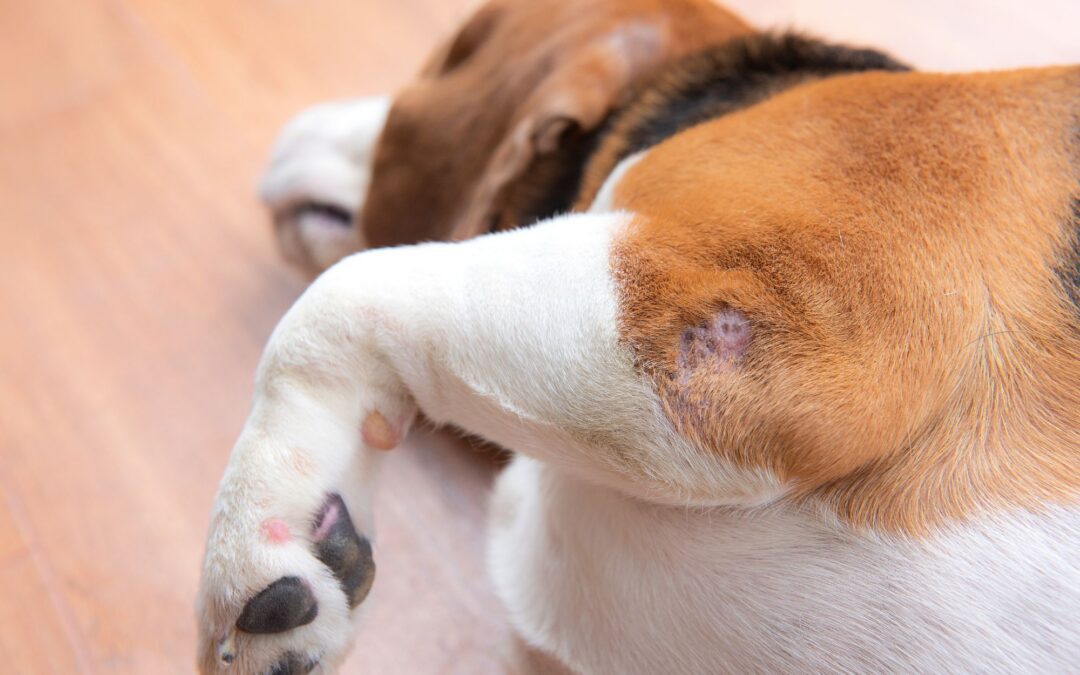
It can be worrying when a wound on your dog doesn’t seem to be healing. Knowing how to tell if a dog wound is infected can help you decide when it’s time to contact your veterinarian. Increasing redness, swelling, heat, pain, thick discharge, or a foul odor may all point to an infection.
Some redness and tenderness are normal during the early stages of healing and should gradually improve over time. Bite wounds, puncture wounds, deep cuts, and contaminated injuries can become infected even when they look minor. If the wound becomes more painful, swollen, or irritated instead of healing, your dog should be examined by a veterinarian.
How to Tell If a Dog Wound Is Infected
An infected dog wound usually becomes worse instead of steadily improving. Check both the wound and your dog’s overall behavior, since an infection can affect the skin, deeper tissue, and, in severe cases, the rest of the body.
No single symptom confirms an infection. Mild redness can be part of normal healing, but redness that spreads, swelling that increases, or new discharge are more concerning. Watching how the wound changes over time is often more helpful than judging it from a single look.
Redness That Spreads or Gets Worse
Mild redness around a recent wound is a normal part of the body’s early healing response and should remain close to the injured area. As the wound heals, the redness should gradually fade instead of spreading across the surrounding skin.
Redness that continues to spread, becomes darker, or appears with heat, swelling, or increasing pain is more concerning because it may indicate that inflammation is worsening or an infection is developing. In some cases, red streaks extending away from the wound may suggest that the infection is spreading beyond the injured area. Persistent licking can also irritate the skin, making it more difficult to tell whether the wound is healing normally or becoming infected.
Increasing Swelling, Heat, or Pain
Some swelling is normal after an injury and should gradually decrease as the wound heals. Swelling that becomes larger, warmer, or more painful instead of improving is a common sign that the healing process has been disrupted. This often happens when inflammation continues instead of settling down or when an infection develops beneath the skin.
As the wound becomes more painful, dogs often try to protect the injured area. They may pull away when the area is touched, limp if the injury is on a paw or leg, avoid lying on the affected side, or become less active than usual. These changes, together with increasing swelling and warmth, suggest the wound is becoming more painful rather than healing as expected.
Pus, Thick Discharge, or a Foul Smell
A small amount of clear or lightly blood-tinged fluid may appear during the early stages of healing. Drainage becomes more concerning when it is:
- Thick, cloudy, yellow, or green
- Increasing rather than decreasing
- Mixed with growing amounts of blood
- Accompanied by a strong or foul odor
Pus and foul-smelling drainage are common signs of a wound infection. They develop as bacteria, damaged tissue, and the body’s immune cells collect in the affected area. Instead of gradually drying up, an infected wound often produces more discharge as the infection progresses.
Dead Tissue or Separating Wound Edges
Healthy tissue in a healing wound is usually pink or red. As the wound repairs itself, new tissue gradually fills the injured area, and the edges begin to close together.
Gray, brown, or black tissue is not a normal part of healing and may be a sign of dead tissue or poor blood flow. Wound edges that pull apart, expose deeper tissue, continue getting larger, or stop closing can also indicate that healing has slowed or an infection is interfering with the repair process.
Changes in Appetite, Energy, or Behavior
A wound infection can affect more than the injured area. As the infection worsens, some dogs become more tired than usual, lose their appetite, shiver, act weak, or breathe more rapidly. Fever may also develop as your dog’s immune system responds to the infection.
These changes suggest the infection is affecting your dog’s overall condition rather than remaining limited to the wound. When they occur alongside increasing redness, swelling, pain, or discharge, they often indicate that the infection is becoming more serious.
If your dog shows any of these signs, it’s important to have the wound evaluated promptly. At Ridgefield Veterinary Center, our Pet Diagnostic Services can help identify the cause and extent of the infection so your dog can receive the most appropriate care.
Normal Dog Wound Healing Stages vs. Infection
Wounds heal in stages as your dog’s body stops bleeding, removes damaged tissue, builds new tissue, and closes the injury. Infection is not a normal part of this process. Instead, it can interrupt healing and cause the wound to worsen instead of steadily improving.
The appearance of a wound depends on its depth, location, cause, treatment, and the animal’s health. You should not expect every wound to follow the same timeline.
| Feature | May occur during normal healing | More concerning for infection |
| Redness | Mild and limited to the edges | Spreading, darkening, or increasing |
| Swelling | Mild and gradually decreasing | Growing, firm, hot, or painful |
| Drainage | Small amount of clear or lightly blood-tinged fluid | Thick, cloudy, yellow, green, or foul-smelling |
| Pain | Gradually improving | Increasing or causing guarding and limping |
| Tissue | Pink or red granulation tissue | Gray, brown, black, or foul-smelling tissue |
| Wound size | Stable and then shrinking | Enlarging, reopening, or forming pockets |
| Behavior | Normal appetite and energy | Lethargy, weakness, fever, or appetite loss |
Inflammation and Bleeding Control
Healing begins immediately after an injury. A blood clot forms to stop the bleeding, while immune cells move into the area to remove bacteria and damaged tissue. Mild redness, warmth, swelling, and tenderness are expected during this stage and should remain limited to the wound.
As healing progresses, these early signs should gradually improve. Redness that spreads, swelling that increases, or pain that becomes more severe may indicate that the wound is no longer healing normally.
Removal of Damaged Material
During this stage, the body continues removing bacteria, dead cells, and other debris from the wound. This natural cleanup process creates a healthier environment for new tissue to develop.
Healing may slow if dirt, plant material, or other debris remains trapped in the wound. As a result, inflammation can persist and the risk of infection increases.
Granulation and Repair
As healing continues, healthy new tissue begins filling the wound from the inside out. This tissue is usually pink or red, slightly moist, and gradually helps the wound become smaller.
During this stage, swelling, pain, and drainage should continue to decrease. Infection, repeated licking, poor blood flow, or underlying health conditions can interrupt this process and delay healing.
Closure and Scar Formation
In the final stage, new skin grows over the wound while the surrounding tissue strengthens. Although the area continues to heal beneath the surface, the wound should keep getting smaller as the edges close together.
A wound that reopens, stops getting smaller, or develops new redness, swelling, or discharge may no longer be healing as expected.
Which Dog Wounds Have the Highest Infection Risk?
Some wounds are more likely to become infected than others because of their depth, location, or the way they occur. Even a small wound can hide damage beneath the skin, making it difficult to judge its severity based on appearance alone.
Bite Wounds and Animal Bites
Bite wounds from dog fights or other animal bites can carry bacteria deep beneath the skin. Even when the surface wound looks small, the teeth may damage muscle and other tissue underneath. Because the surface can seal quickly, bacteria may become trapped and continue multiplying before obvious signs of infection appear. As a result, swelling, heat, pain, discharge, fever, or appetite loss may not develop until days after the bite occurs.
Puncture Wounds
Sticks, thorns, nails, teeth, and other sharp objects can create puncture wounds that push dirt, bacteria, or small fragments deep beneath the skin. Because the surface opening is often small, these wounds can appear minor even when deeper tissue has been damaged. For example, a dog may step on a broken branch while exploring a local trail or wooded area, leaving only a small mark on the paw while plant material remains trapped underneath. This hidden damage can increase the risk of infection before obvious signs appear.
Deep, Open, or Contaminated Wounds
Deep, open, or contaminated wounds have a higher risk of infection because they expose more of the dog’s skin and underlying tissue to bacteria, dirt, mud, dirty water, feces, and plant debris. Unlike minor dog wounds, these injuries are often more difficult to keep clean and may take longer to heal, increasing the chance of delayed healing and excessive scar tissue. Even when the surface appears manageable, the full extent of the damage may not be immediately visible, especially if deeper tissue has been affected.
Paw and Joint Wounds
Paw and joint wounds can be more difficult to heal because these areas are constantly moving and bearing weight. Every step places pressure on injured tissue, while bending at the joints can pull wound edges apart before they have fully healed. Regular paw care, including proper dog nail trimming at home, can also help prevent overgrown nails from curling into the paw pad, breaking, or causing irritation that affects the way your dog walks.
Surgical Incisions
Surgical incisions are created under sterile conditions, so they generally have a lower risk of infection than accidental wounds. However, they can still become infected if bacteria enter the incision before it has fully healed. Increasing redness, swelling, discharge, a foul odor, separated wound edges, or missing sutures may indicate that the incision is no longer healing as expected.
Proper incision care plays an important role in preventing infection. As explained in VCA Animal Hospitals’ guide to caring for surgical incisions in dogs, dogs should be prevented from licking or scratching the incision, and creams, ointments, disinfectants, hydrogen peroxide, or rubbing alcohol should not be applied unless specifically recommended by a veterinarian, as these products can damage healing tissue or delay recovery.
What Should You Do If You Suspect an Infected Dog Wound?
If you suspect your dog’s wound is infected, keep the wound clean, prevent your dog from licking or irritating it, and have it examined by a veterinarian as soon as possible. Home care may help protect the wound, but it cannot treat an established infection or identify damage beneath the skin. Signs of infection can appear within 24 to 72 hours after an injury, although the timeline varies depending on the type of wound, the amount of contamination, and your dog’s overall health. Continue monitoring the wound closely, even if it initially appears to be healing normally.
Keep your dog calm and limit running, jumping, or other activities that could place stress on the wound. Avoid squeezing, scrubbing, cutting, or probing the injured area, as this can damage healing tissue or push bacteria deeper into the wound. If your dog’s wound is bleeding, apply firm, steady pressure with clean gauze or a clean towel without repeatedly lifting the material, as this can disturb the forming clot. Severe bleeding that does not stop requires immediate veterinary attention.
If the wound is small, shallow, and appropriate for basic first aid, gently rinse it with sterile saline or clean water to remove surface debris. Only use a pet-safe antiseptic solution if your veterinarian has recommended the product for your dog’s specific wound. Prevent your dog from licking or chewing the area by using an Elizabethan collar when needed, as licking can introduce bacteria and interfere with healing. Check the wound at least twice a day for changes such as increasing redness, swelling, discharge, odor, worsening pain, or other signs of infection. A hard or tender lump beneath the skin may also indicate a developing abscess, particularly after a bite or puncture wound.
Bandaging Requires Care
A temporary covering may help protect some minor wounds during transport, but improper bandaging can trap moisture, restrict blood flow, or hide changes that need attention. Avoid wrapping a wound too tightly or placing self-adhesive bandages directly over injured tissue.
If your dog wears a bandage, monitor the area for swelling, cold or discolored toes, slipping, moisture, chewing, or foul odors. These changes may indicate that the bandage needs adjustment or that the wound requires further evaluation.
What Should You Never Put on a Dog’s Wound?
Avoid applying hydrogen peroxide or rubbing alcohol to an open wound unless your veterinarian specifically recommends them. These products can irritate tissue, damage healing cells, and slow the recovery process.
Do not use household disinfectants, concentrated soaps, essential oils, powders, numbing creams, or human medications on your dog’s wound. Some products can damage the skin, cause problems if swallowed, or delay proper healing.
Even products marketed as “natural” are not always safe for damaged skin. Wound care products should be selected based on your dog’s injury, overall health, and veterinary guidance.
When Is a Dog Wound an Emergency?
Not every wound requires emergency care, but certain injuries can become life-threatening without prompt treatment. Seek urgent veterinary care for wounds involving severe bleeding, major trauma, breathing problems, collapse, or extensive tissue damage.
Some wounds that need emergency evaluation include:
- Bleeding that does not slow with firm, steady pressure
- Collapse, severe weakness, or pale or blue gums
- Trouble breathing or rapid worsening of your dog’s condition
- Exposed bone, organs, or extensive loss of skin or tissue
- Severe pain or rapidly expanding swelling
- Injuries involving the eye, chest, or abdomen
- Major bite injuries or trauma from a car accident
For less severe wounds, prompt veterinary evaluation is still important when you notice signs such as deep punctures, contaminated injuries, increasing pain, pus, foul odor, dead tissue, or a wound that reopens. These changes may indicate infection, hidden tissue damage, or a complication that cannot be evaluated fully at home.
If your dog has a true emergency, avoid delaying care while trying multiple home treatments. Keep your dog as calm and comfortable as possible, protect the injured area if you can do so safely, and seek veterinary help right away.
How Veterinarians Diagnose and Treat Wound Infections
Veterinary treatment depends on the wound’s cause, location, depth, contamination level, and your dog’s overall health. During an examination, the veterinarian may clip the surrounding fur to fully evaluate the injury and check for hidden damage beneath the skin.
For painful or severe wounds, sedation or pain control may be needed for a safe examination. The veterinarian may check for damaged tissue, foreign material, fluid pockets, and signs of infection. Blood tests, imaging, or a sample of wound drainage may be recommended when an injury is severe, recurring, or not healing as expected.
Treatment may include cleaning and flushing the wound, removing debris or damaged tissue through debridement, draining an abscess, or treating deeper injuries with surgery. Debridement removes unhealthy tissue that can interfere with healing and allows healthy tissue to develop. Depending on the wound, your dog may also need antibiotics, pain medication, bandaging, activity restrictions, or follow-up care.
Not every wound should be closed immediately. A contaminated wound may be left open temporarily to allow drainage and support the repair process. As new tissue forms and the wound continues to heal, some injuries may later require surgical closure or other wound-management methods.
Certain health conditions can slow healing, including diabetes, poor circulation, immune system disorders, immune-suppressing medications, poor nutrition, obesity, and advanced age. Repeated licking, dirty bandages, retained debris, or missed treatments can also delay recovery or increase the risk of complications.
How to Monitor a Healing Wound at Home
Proper dog wound care does not end after the injury is treated. Pet parents should continue monitoring the wound during their dog’s recovery to notice changes that may suggest delayed healing, infection, or other complications.
Check the wound as often as your veterinarian recommends and look for changes over time. Taking a photo in similar lighting and from the same distance can help you compare progress. You can also record changes in redness, swelling, drainage, odor, pain, limping, appetite, activity level, medication, and licking behavior. For larger wounds, these observations can help your veterinarian better understand your pet’s condition during follow-up care.
A healing wound should gradually become smaller, less swollen, and less painful. Drainage should decrease, odor should remain absent, and healthy tissue should continue replacing damaged tissue. If you notice increasing redness, returning discharge, a wound that opens again, gray or black tissue, worsening pain, or signs that your injured dog seems unwell, these changes may indicate infection or other complications that need veterinary attention.
Preventing licking is also an important part of recovery. An e-collar may be recommended to stop your dog from chewing or irritating the wound while it heals. Monitoring these changes helps your veterinarian identify problems early and determine whether additional care is needed for proper healing.
Conclusion
A dog’s wound that becomes more painful, swollen, red, draining, or slow to heal may need veterinary attention. While some changes can occur during normal healing, worsening symptoms may indicate infection, hidden damage, or other complications that require an accurate diagnosis. Early evaluation of your pet’s wound can help prevent serious infections from developing into more serious problems.
Ridgefield Veterinary Center provides veterinary evaluation for dogs with wounds that are worsening, infected, or not healing as expected. Contact us today if your dog has increasing redness, swelling, discharge, pain, or other signs of infection. Our team can examine the wound site, identify possible complications, and recommend the appropriate next steps.
FAQs
Can a dog wound be infected without pus?
Yes. A dog wound infection can develop even without pus. Early signs may include increasing redness, warmth, swelling, pain, tenderness, or changes around the wound site. Pus is a common sign of infection, but it is not always present before a wound becomes more serious.
How quickly can a dog wound become infected?
A dog wound can become infected within days, depending on the injury, contamination level, location, and your dog’s overall health. Bite wounds, punctures, and wounds on a dog’s paw may develop infections beneath the surface before obvious symptoms appear.
Can minor wounds be treated at home?
Some minor injuries may be managed with basic first aid treatment if they are small, clean, and not worsening. A pet first aid kit can help with basic supplies, but home care is only supportive and cannot replace veterinary evaluation for deeper wounds, contamination, or possible infections.
Can I apply hydrogen peroxide or rubbing alcohol to a dog wound?
No. Hydrogen peroxide and rubbing alcohol should generally be avoided because they can cause tissue irritation and damage healing tissue. Avoid harsh cleaners and other caustic cleaning products unless specifically recommended by your veterinarian.
Should I cover an infected wound?
It depends on the wound’s location, depth, and drainage. Using a self-adhesive elastic bandage incorrectly can trap moisture, restrict blood flow, or worsen irritation. Ask your veterinarian what type of covering is appropriate for your pet’s wound.
What does healthy granulation tissue look like?
Healthy granulation tissue is usually pink or red, moist, and slightly uneven as healing dog wounds repair. Dark, dry, foul-smelling, or deteriorating tissue may indicate delayed healing or infection.