
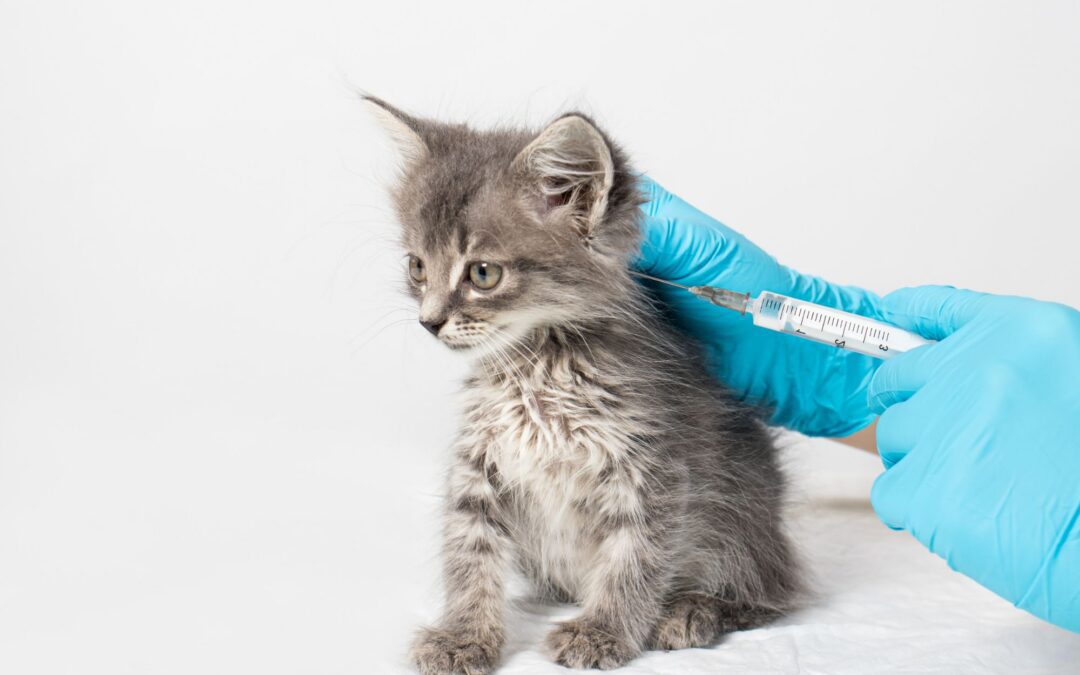
A kitten vaccination schedule usually begins at 6 to 8 weeks of age. The FVRCP series is typically repeated every three to four weeks until 16 to 20 weeks of age, while FeLV and rabies follow their own recommended schedules.
This guide explains when kittens typically receive each vaccine, what each shot protects against, and what to expect at vaccination visits. If you recently adopted a kitten or are preparing for your kitten’s first veterinary appointment, use this schedule as a starting point and work with your veterinarian to create a plan for your pet.
Kitten Vaccination Schedule at a Glance
The following table shows a typical kitten vaccine schedule. FVRCP is a combination vaccine that protects against feline viral rhinotracheitis, calicivirus, and panleukopenia. Your veterinarian may adjust the timing based on your kitten’s vaccination records, health, age, living environment, and possible contact with other cats.
| Kitten’s Age | Vaccines Commonly Given | Other Preventive Care |
| 6-8 weeks | First FVRCP vaccine | Physical exam, fecal test, deworming, and parasite prevention |
| 9-12 weeks | Second FVRCP vaccine and first FeLV vaccine | Growth check, FeLV testing before initial FeLV vaccination, and continued parasite prevention |
| 12-14 weeks | Rabies vaccine; next FVRCP or FeLV dose if due | Lifestyle review and discussion of spay or neuter timing |
| 16-20 weeks | Final FVRCP dose in the initial series; completion of the two-dose FeLV series if not already completed | Confirmation of the next booster dates |
| Around 6 months | FVRCP revaccination is recommended | Growth, nutrition, behavior, and dental review |
| About 1 year after the applicable initial series | Rabies and FeLV boosters as required or recommended | Annual wellness exam and updated lifestyle assessment |
This kitten vaccination schedule is a general guide. A kitten that begins vaccination early may receive more FVRCP doses than one whose initial vaccinations start later. Vaccine type, product labeling, maternal antibodies, health history, and Connecticut law can also affect the final plan.
Why Do Kittens Need Several Vaccinations?
Kittens receive several doses of some vaccines because maternal antibodies can affect how well a vaccine works during the first few months of life. Kittens receive these temporary antibodies from their mother’s first milk, but the amount and duration of protection vary from kitten to kitten.
While maternal antibodies are still present, they can interfere with a kitten’s immune response to vaccination. Repeating FVRCP vaccines every three to four weeks gives kittens multiple opportunities to develop protection as those antibodies gradually decline.
For this reason, the AAHA/AAFP feline vaccination guidelines recommend continuing the FVRCP series until 16 to 20 weeks of age. The number of doses your kitten needs depends on when vaccination begins and their individual health and risk factors.
Which Core Vaccines Are Included in a Kitten Vaccination Schedule?
Core vaccines protect kittens against serious diseases they may encounter as they grow. Your veterinarian will consider your kitten’s age, health, vaccination history, lifestyle, and exposure risk when deciding which vaccines to give and when.
- FVRCP: This combination vaccine protects against feline viral rhinotracheitis, calicivirus, and panleukopenia. Kittens typically begin the FVRCP series at 6 to 8 weeks of age, with additional doses given every three to four weeks until 16 to 20 weeks of age.
- Rabies: Rabies is a fatal disease that can spread from infected animals to people. In Connecticut, cats are required to receive rabies vaccination. The first rabies vaccine is generally given when a kitten is at least 12 weeks old, with the exact timing depending on the vaccine used and applicable requirements.
- Feline leukemia virus (FeLV): FeLV can spread through close contact with infected cats and cause serious illness. FeLV vaccination is considered a core vaccine for kittens and cats younger than 1 year. The initial series typically begins at 8 weeks of age or later and consists of two doses given three to four weeks apart.
These vaccines do not all follow the same schedule, and your kitten may need additional doses or different timing based on when vaccination begins and their individual risk. Your veterinarian can use your kitten’s medical records and examination to create an appropriate vaccination plan.
Is the Feline Leukemia Vaccine Part of the Kitten Vaccine Schedule?
Yes. Feline leukemia virus (FeLV) vaccination is considered a core vaccine for kittens and cats younger than 1 year because young cats are especially vulnerable to FeLV infection.
FeLV spreads mainly through close contact with an infected cat. Grooming, shared food and water bowls, prolonged contact, and cat bites can all create opportunities for transmission.
The initial FeLV series usually starts at 8 weeks of age or later and includes two doses given three to four weeks apart. FeLV testing is recommended before the initial FeLV vaccination because the vaccine cannot treat an infection that is already present.
After the initial series, your kitten will generally need another FeLV vaccine 12 months after the last dose. What happens after that depends on your cat’s lifestyle. A cat that spends time outdoors or regularly encounters other cats may continue to need protection, while a low-risk indoor cat may have a different plan.
As your cat grows, their routine may change. A kitten that stays indoors today may start going outside, live with new cats, or spend time boarding later on. Those changes can affect which vaccines they need.
What Are Non-Core Vaccines for Kittens?
Your kitten doesn’t necessarily need every vaccine available. Some vaccines are recommended only when there is a particular reason your kitten might be exposed to the disease.
For example, vaccines for Chlamydia felis or Bordetella bronchiseptica may come up if your kitten will spend time in a shelter, breeding facility, or another environment where infections can spread easily.
For a kitten growing up in a typical home, these vaccines may not be part of the routine schedule. Your vet can talk through your kitten’s surroundings and daily life to decide whether an additional vaccine makes sense.
Do Indoor Kittens Need Vaccinations?
Yes, and this is one of the questions we hear from new cat owners all the time.
It makes sense to think an indoor kitten is protected from infectious diseases. After all, they’re not roaming outside, meeting stray cats, or getting into fights. But some risks are surprisingly easy to overlook.
A kitten can dash through an open door, encounter another cat at a veterinary visit, or come into contact with a bat that finds its way inside your home. Some viruses can also hitch a ride indoors on contaminated objects.
Feline panleukopenia is particularly concerning because the virus can survive in the environment for a long time. Rabies is another reason indoor cats need protection. A bat or other wild animal can enter a home without warning.
Keeping your kitten indoors is still one of the best ways to reduce their exposure to disease. Vaccination gives them another layer of protection for the situations you can’t always control.
What Happens If Your Kitten Misses a Vaccine?
If your kitten is late for a vaccine, don’t assume you’ve ruined the schedule.
This happens. Appointments get missed, records get lost, and sometimes a kitten comes home from a shelter or rescue with only part of their vaccination history. Your vet can review what your kitten has already received and work out the next step.
Bring every record you can find, even if it seems incomplete. The vaccine name, date, and product information can help determine whether your kitten can continue the series or needs another dose.
If you don’t have any records, tell your vet that too. It’s better to start with an honest “I’m not sure” than to guess at your kitten’s vaccination history.
When Is a Kitten Fully Vaccinated?
Most kittens finish their initial FVRCP series between 16 and 20 weeks of age. However, there is no single age when every kitten is considered fully vaccinated because the timing depends on the vaccines received, when the series began, and the kitten’s vaccination history.
Your veterinarian can confirm when your kitten has completed the recommended initial series and when they can safely take part in activities that involve contact with other cats or higher-risk environments.
What Else Should Happen at Kitten Vaccination Visits?
A kitten’s vaccine appointment should be about more than giving a shot and sending you home.
Those early visits are some of the best opportunities to make sure your kitten is growing normally, catch small health concerns early, and ask the questions that come with caring for a new pet. Your vet may check your kitten’s:
- Weight and overall growth
- Heart, lungs, eyes, ears, mouth, and skin
- Stool for intestinal parasites
- Need for flea, tick, and other parasite prevention
- FeLV or FIV status when appropriate
- Nutrition and feeding routine
- Litter box and behavior habits
- Spay or neuter timing
- Developing teeth and dental health
Your veterinarian may also recommend additional preventive care based on what they find during the exam. This can include kitten wellness care such as parasite control, nutrition optimization, behavioral foundation, or growth monitoring.
It’s also a good time to bring up anything that has seemed unusual at home. Maybe your kitten has been sneezing, isn’t eating quite as much as expected, or has suddenly started avoiding the litter box. Small observations can give your vet useful clues about your kitten’s health.
There is no vaccine for feline heartworm disease, so prevention is handled separately. Indoor cats can still be bitten by mosquitoes, which can transmit heartworm.
These first visits are about helping your kitten get a healthy start, but they’re also about helping you feel confident caring for them.
What Reactions Can Occur After a Kitten Vaccine?
Mild tiredness, temporary soreness at the injection site, a low fever, or reduced appetite may occur after kitten vaccination. These signs are usually brief. Let your kitten rest, provide fresh water, and monitor their behavior.
Contact your veterinarian if mild symptoms persist or your pet’s condition concerns you. Seek immediate veterinary attention for signs of a serious reaction, including:
- Facial swelling
- Trouble breathing
- Repeated vomiting or diarrhea
- Collapse or extreme weakness
- Pale gums
- Widespread itching or hives
Serious reactions are rare, but they require fast care. Tell the veterinary team about any previous vaccine reaction before your kitten receives another dose.
Monitor any lump at an injection site. The AAHA post-vaccination monitoring guidelines recommend veterinary evaluation and biopsy consideration when a lump remains for three months, is larger than 2 centimeters, or is increasing in size one month after vaccination.
How Can You Prepare for Your Kitten’s Vaccination Appointment?
Bring any medical records supplied by the breeder, rescue, shelter, or previous veterinarian. A receipt alone may not identify the vaccine, administration date, or product, so bring the complete record when possible.
Before the visit, write down details about your kitten’s:
- Appetite and diet
- Energy level
- Stool and urination
- Sneezing, coughing, or eye discharge
- Vomiting or diarrhea
- Current medications and supplements
- Contact with other cats
- Outdoor access or travel plans
- Previous reactions to vaccines or medications
Transport your kitten in a secure carrier with familiar bedding. Covering part of the carrier with a lightweight towel may help reduce visual stress. Ridgefield Veterinary Center uses Fear Free veterinary care to support calmer, more positive visits for cats and their owners.
Conclusion
Your kitten may not follow the same vaccination schedule as another kitten. The first vaccines may have been given by a shelter or breeder, records may be incomplete, or your kitten’s health and lifestyle may change as they grow. What matters is knowing what your kitten has already received and what they need next.
At Ridgefield Veterinary Center, we can review your kitten’s vaccination history, explain what is due, and help you plan the next steps in their preventive care. If you recently welcomed a kitten home or are unsure whether their vaccines are up to date, contact our team or call 203-438-2658 to schedule a kitten wellness visit in Ridgefield, CT.
FAQs
When should a kitten receive its first vaccine?
Most kittens receive their first FVRCP vaccine between 6 and 8 weeks of age. At Ridgefield Veterinary Center, the first kitten wellness visit commonly takes place around 8 weeks. The exact starting date depends on the kitten’s age, health, previous care, and documented vaccination history.
What should I do if I cannot find my kitten’s vaccination records?
Tell your veterinarian that the vaccination history is unknown and share any information you have about the kitten’s origin. A verbal statement that a kitten “had shots” may not identify the vaccine or date. Your veterinarian can create a safe catch-up schedule based on the kitten’s age, health, and exposure risk.
When must a kitten receive a rabies vaccine in Connecticut?
Connecticut law requires vaccination at least 12 weeks but younger than 14 weeks, or at the manufacturer-approved age. This requirement is set out in Connecticut General Statutes § 22-339b. A kitten vaccinated before 1 year gets a booster 1 year later, then at least every 3 years.
Does an indoor kitten need the FeLV vaccine?
Current feline vaccination guidelines classify FeLV vaccination as core for kittens and cats younger than one year. Continued vaccination after the initial series and booster depends on contact with other cats, outdoor access, boarding, travel, and the possibility of escape.
Can a kitten go outside before completing its shots?
Keep a kitten away from unknown cats and high-risk outdoor environments until the vaccination series is complete and your veterinarian confirms when protection should develop. Outdoor exposure can introduce feline panleukopenia, FeLV, upper respiratory infections, parasites, and other hazards.
What happens if a kitten receives a vaccine later than scheduled?
A delay does not always mean the entire series must restart. The next step depends on the vaccine, the kitten’s age, the previous dose, and the length of the delay. Contact your veterinary team with the available records so they can determine the appropriate catch-up schedule.
This article provides general educational information and does not constitute medical advice for an individual pet. Your veterinarian should create a vaccination plan based on your kitten’s examination, medical history, lifestyle, and exposure risk.