
Pet Microchipping Services in Ridgefield, CT
Pet Microchipping Services in Ridgefield, CT
Protect your pet with permanent identification from Ridgefield Veterinary Center. Since 1955, we’ve helped reunite lost pets with their families throughout Ridgefield, Redding, Wilton, Danbury, South Salem, and North Salem. Microchipping is a quick, safe procedure providing lifelong identification that can’t fall off or fade. Our Fear Free certified team makes the experience stress-free for your pet. A microchip dramatically increases the chances of recovering your lost pet. Studies show microchipped pets are up to 20 times more likely to be reunited with their owners.

Why Pet Microchipping Matters for Your Companion’s Safety
Every year, millions of pets go missing in the United States. Without proper identification, the chances of recovering a lost pet drop dramatically. Collars and tags can fall off, fade, or be removed, but a microchip provides permanent identification that lasts your pet’s lifetime.
Pet microchipping is the most reliable way to ensure your lost pet can be identified and returned home. Animal shelters, veterinary clinics, and rescue organizations routinely scan found pets for microchips as standard protocol.
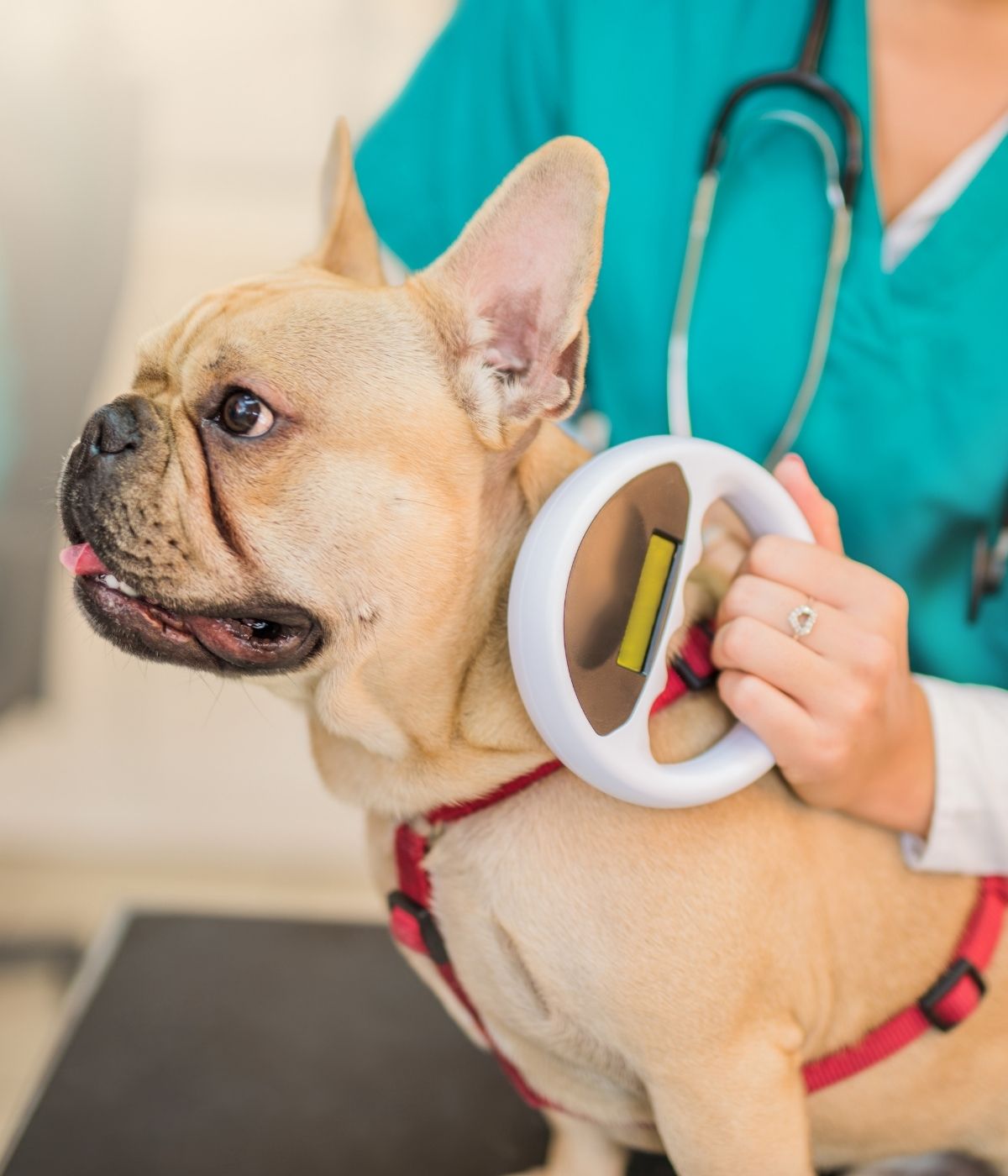
Critical benefits of pet microchipping:
- Permanent identification – Unlike collars and tags, microchips can’t fall off, break, or become unreadable
- Lifelong protection – One-time procedure provides identification for your pet’s entire life
- Proof of ownership – Microchip registration documents establish legal ownership of your pet
- Increased recovery rates – Microchipped dogs are 2.5 times more likely to be reunited with owners; microchipped cats are 20 times more likely
- Quick procedure – Takes less than a minute with no anesthesia required
- Minimal discomfort – Similar to a routine vaccination injection
- Universal scanning – Shelters and veterinary clinics nationwide scan for microchips
- Travel requirements – Many countries require microchips for international pet travel
Ridgefield Veterinary Center uses ISO-standard microchips compatible with universal scanners, ensuring your pet can be identified anywhere in the United States and internationally.
What to Expect During Pet Microchipping
Pet microchipping is a simple, quick procedure performed during a regular office visit. The entire process takes less than 5 minutes and causes minimal discomfort, similar to a routine vaccination.
Your pet’s microchipping appointment includes:
Before the Procedure (5 minutes)
We verify your pet’s information and ensure all contact details are current and accurate. This information will be registered with the microchip database. We answer any questions about the microchipping process, recovery rates, and registration.
We scan your pet to confirm they don’t already have a microchip. Some pets adopted from shelters or rescues may already be microchipped.
During the Procedure (1-2 minutes)
The microchip is about the size of a grain of rice and comes pre-loaded in a sterile applicator. Using Fear Free techniques, we gently restrain your pet to ensure accurate placement. For dogs, the microchip is implanted between the shoulder blades beneath the skin. For cats, placement is the same location between the shoulder blades.
The injection takes only seconds. Most pets tolerate it well; it feels similar to a regular vaccination. No anesthesia or sedation is required. The microchip is immediately readable after implantation.
We scan the microchip to verify proper placement and record the unique identification number in your pet’s medical record.
After the Procedure (5 minutes)
There’s no recovery time needed. Your pet can return to normal activities immediately. No special care or restrictions are necessary.
We complete microchip registration paperwork with your contact information, including your name, address, phone number, and email. We provide you with microchip documentation, including the chip number and registration information.
We explain how to update your contact information if you move or change phone numbers. Keeping registration current is essential for reuniting lost pets.
Total appointment time: Microchipping typically takes 10-15 minutes total, including paperwork and registration. Many pet owners choose to have microchipping done during regular wellness exams, puppy or kitten visits, or spay/neuter procedures.
When Should Your Pet Be Microchipped?
Pets can be microchipped at any age, from 8 weeks old through senior years. We recommend microchipping as early as possible to provide immediate protection.
Ideal Times for Pet Microchipping

Signs Your Pet Needs Microchipping Now
- Your pet doesn't currently have permanent identification
- Your pet has escaped or gotten lost before
- Your pet slips out of collars easily
- You live near busy roads or unfamiliar areas
- Your pet is fearful and might hide if lost
- You're planning to move or travel with your pet
- Your area has experienced pet theft
- You want peace of mind about your pet's safety

Common Situations Where Microchips Save Lives
Microchip Registration is Essential
A microchip is only effective if registration information is current. Studies show that over 50% of microchipped pets in shelters can’t be reunited with owners because registration information is missing or outdated. We help ensure your pet’s microchip is properly registered and provide guidance on updating information when you move or change phone numbers.
How Ridgefield Veterinary Center Provides Pet Microchipping Services Differently
Fear Free Microchipping Techniques
We understand some pets are anxious about veterinary procedures. Our Fear Free certification means we use gentle handling and minimal restraint, provide treats and positive reinforcement, allow pets to remain comfortable during the procedure, work quickly to minimize stress, and create positive associations with veterinary visits. Most pets tolerate microchipping better than nail trims.
ISO-Standard Universal Microchips
We use ISO 11784/11785 compliant microchips, the international standard recognized by shelters, veterinary clinics, and scanners worldwide. Universal compatibility means your pet can be identified anywhere in the United States and internationally. Our microchips are compatible with all major registries, including AKC Reunite, HomeAgain, and Found Animals Registry.
Complete Registration Assistance
We don’t just implant microchips; we ensure proper registration. Our team completes initial registration paperwork during your visit, verifies all contact information for accuracy, explains how to update information when you move, provides written documentation of the chip number and registration, and offers guidance on maintaining current registration. A microchip is only effective if registration is current.
Lifetime Microchip Scanning
We scan all patients at every visit to verify microchip presence and functionality. This routine scanning ensures the chip hasn’t migrated, confirms the chip is still readable, and verifies registration information remains current. If we find issues, we address them immediately.
Integration with Wellness Care
Microchipping fits seamlessly into your pet’s healthcare routine. We offer microchipping during puppy and kitten wellness visits, at the time of spay/neuter procedures, during annual wellness exams, and as a standalone quick appointment. Combining services saves you time and provides comprehensive protection.
Education on Lost Pet Prevention
Beyond microchipping, we provide guidance on preventing pets from getting lost, including secure fencing and containment, proper collar fit, visible ID tags with current information, training for recall commands, and safety during high-risk situations like fireworks and storms.
Multi-Pet Household Support
For families with multiple pets, we streamline the microchipping process by offering same-day appointments for all pets, group microchipping with efficient scheduling, family registration linking all pets to your account, and clear documentation distinguishing each pet’s unique chip number.
70 Years of Pet Safety Experience
Since 1955, Ridgefield Veterinary Center has prioritized pet safety and owner peace of mind. Our extensive experience means understanding the importance of permanent identification, knowing how microchips reunite lost pets with families, staying current with registration technology and databases, and providing realistic guidance on pet safety and recovery.
Pet Microchipping FAQs
How does a pet microchip work?
A microchip is a tiny electronic device (the size of a grain of rice) implanted under your pet’s skin between the shoulder blades. It contains a unique identification number. When a scanner passes over the area, it activates the chip and displays the ID number. Shelters and veterinary clinics then contact the microchip registry to retrieve your contact information and reunite you with your pet. The chip has no battery, never needs charging, and lasts your pet’s lifetime.
Does microchipping hurt my pet?
Microchipping causes brief discomfort similar to a routine vaccination. The procedure takes only seconds. Most pets tolerate it well with minimal reaction. No anesthesia or sedation is required. The injection site may be slightly tender for a day, but most pets show no signs of discomfort after the procedure.
How much does pet microchipping cost?
Microchipping is an affordable one-time investment in your pet’s safety. Contact us at 203-438-2658 for current pricing. The cost typically includes the microchip, implantation procedure, initial registration, and documentation. This one-time fee provides lifelong identification, far more cost-effective than replacing lost pets or paying shelter redemption fees.
Can a microchip track my pet's location like GPS?
No. Microchips are not GPS tracking devices and don’t track your pet’s location. They only provide identification when scanned by a compatible reader at shelters, veterinary clinics, or animal control facilities. The chip is passive; it has no battery or power source and only activates when scanned. For active location tracking, consider GPS collars in addition to microchipping.
Can a microchip track my pet's location like GPS?
No. Microchips are not GPS tracking devices and don’t track your pet’s location. They only provide identification when scanned by a compatible reader at shelters, veterinary clinics, or animal control facilities. The chip is passive; it has no battery or power source and only activates when scanned. For active location tracking, consider GPS collars in addition to microchipping.
Will the microchip move around in my pet's body?
Microchips rarely migrate. They’re designed with an anti-migration cap that encourages tissue growth around the chip, keeping it in place. The standard placement between the shoulder blades is an area with minimal muscle movement. We scan pets at every visit to verify chip location. On rare occasions when migration occurs, the chip remains readable and functional.
What information is stored on the microchip?
The microchip itself only contains a unique identification number; no personal information is stored on the chip. Your contact information (name, address, phone, email) is stored in the microchip registry database linked to that ID number. This protects your privacy; someone finding your pet can’t access your information without going through proper channels (shelters, veterinary clinics).
How do I update my contact information?
Contact your microchip registry directly to update information when you move, change phone numbers, or update email addresses. We provide registry contact information and your chip number at the time of implantation. Most registries offer online portals for easy updates. Keeping registration current is essential; over 50% of microchipped pets can’t be reunited with owners due to outdated information.
Do all shelters and vets have microchip scanners?
Yes. Microchip scanning is standard protocol at all animal shelters, humane societies, animal control facilities, and veterinary clinics in the United States. Universal scanners read all ISO-standard microchips regardless of manufacturer or registry. Found pets are routinely scanned as part of the intake process.
Can my pet have an MRI with a microchip?
Yes. Modern microchips are MRI-safe and won’t interfere with imaging. However, always inform your veterinarian or imaging facility that your pet has a microchip so they can note it in records. The chip may create a small artifact on images but won’t harm your pet or damage the chip.
My pet already has a microchip from the shelter. What should I do?
Contact the microchip registry to transfer ownership and update contact information to your name, address, and phone number. Shelters often register chips under their organization’s information as a backup. We can scan your pet to identify the chip number and registry, then help you complete the transfer process. Never assume registration is current; always verify and update.
Can I register my pet's microchip with multiple databases?
Yes. You can register your pet’s microchip number with multiple free registries for added protection. Some popular free registries include Found Animals Registry, FreePetChipRegistry.com, and PetMicrochipLookup.org. However, ensure your primary registry (the manufacturer’s database) has current information, as this is where shelters check first.
What if my pet gets lost? What should I do?
Contact your microchip registry immediately to report your pet as lost and verify your information is current. File reports with local animal shelters, animal control, and police. Post on lost pet websites and social media. Check shelters in person daily; some found pets aren’t scanned immediately. Distribute flyers in your neighborhood. Contact local veterinary clinics. The microchip works best when combined with active searching efforts.
Have more questions about microchipping?
Call 203-438-2658 or schedule your pet’s microchipping appointment at Ridgefield Veterinary Center today.
Comprehensive Veterinary Services for Your Pet’s Safety and Health
Pet microchipping integrates with multiple veterinary services, protecting your pet throughout their life:
Pet Wellness Exams in Ridgefield, CT – Annual examinations include microchip scanning to verify chip function and confirm registration remains current.
Dog Vaccinations in Ridgefield, CT – Puppy vaccination visits are an ideal time to add microchipping for early protection during the critical socialization period.
Cat Vaccinations in Ridgefield, CT – Kitten visits provide opportunities to microchip before cats go outdoors or potentially escape.
Spay Neuter Services in Ridgefield, CT – Many pet owners combine microchipping with spay/neuter surgery for convenience during a single visit.
Fear Free Veterinary Care – Our certification ensures microchipping procedures use gentle, low-stress techniques, creating positive experiences for anxious pets.
Travel Health Certificates – International travel often requires microchip identification. We provide health certificates with documented microchip numbers for travel.
Schedule Your Pet’s Microchipping Appointment Today
Protect your pet with permanent identification from Ridgefield Veterinary Center. Our Fear Free certified team makes microchipping quick, safe, and stress-free for your companion.
Three Easy Ways to Schedule:
📞 Call us directly
203-438-2658 Our team answers microchipping questions and schedules your appointment.
🖥️ Book online now
Request a microchipping appointment 24/7.
📍 Visit us
722 Danbury Road, Ridgefield, CT 06877
Monday-Friday 8:00 AM – 5:00 PM (Closed 1-2 PM daily)