Pet Orthopedic Services in Ridgefield, CT
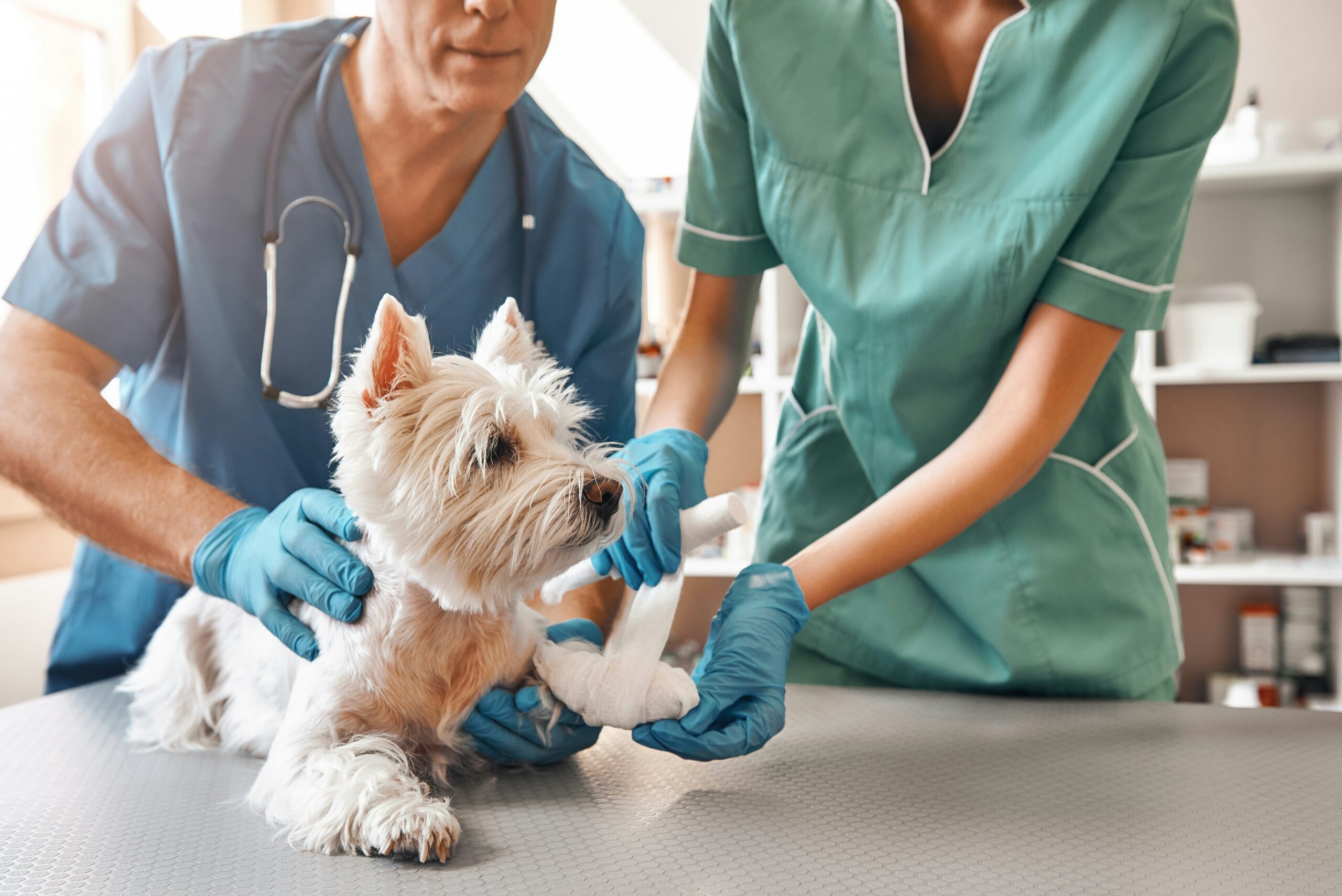
Whether your dog is limping after activity or your cat has become reluctant to jump, we work to identify the cause and recommend the right path forward, from conservative management to surgical intervention with our board-certified veterinary surgeon.
Why Pet Orthopedic Health Should Not Be Overlooked
Orthopedic problems can develop suddenly from an injury or gradually over time due to wear, genetics, or degenerative changes. Without proper evaluation and treatment, minor issues can progress into chronic pain, permanent joint damage, and significant loss of quality of life.
Mobility Problems Often Have an Underlying Structural Cause
When a dog or cat starts limping, favoring a leg, or slowing down, the cause is frequently orthopedic. Common conditions include:
- Cranial cruciate ligament (CCL) tears or ruptures
- Luxating patellas (kneecaps that slip out of position)
- Hip dysplasia or elbow dysplasia
- Fractures from trauma or falls
- Osteoarthritis and degenerative joint disease
- Intervertebral disc disease affects mobility
- Growth plate injuries in young, developing pets
- Osteochondritis dissecans (OCD) in larger breed dogs

Many of these conditions require diagnostic imaging and a hands-on orthopedic evaluation to accurately identify them, as symptoms can overlap among different problems.
Orthopedic Issues Affect More Than Movement
Dogs and cats with untreated orthopedic conditions may experience:
- Chronic pain that limits daily activities and play
- Muscle loss from favoring the injured limb
- Compensatory injuries in other legs from altered movement
- Reduced appetite and weight changes
- Behavioral changes, including irritability, withdrawal, or reluctance to be touched
- Progressive joint deterioration that becomes harder to treat over time
Early diagnosis and intervention help prevent these cascading effects and give your pet the best chance for a full or functional recovery.
Pets Rarely Show the Full Extent of Their Pain
Dogs and cats are naturally inclined to mask discomfort. A pet with a torn ligament or painful joint may still walk, eat, and interact somewhat normally. Subtle signs like occasional limping that seems to resolve, stiffness after rest, or hesitation before jumping are often the only clues that something is wrong. A professional orthopedic evaluation can reveal what is hidden beneath the surface.
How Orthopedic Care Works at Ridgefield Veterinary Center
At Ridgefield Veterinary Center, orthopedic care begins with a thorough evaluation. If the veterinarian determines that advanced treatment or surgery is needed, we coordinate care with our board-certified veterinary surgeon who performs procedures on-site at our clinic.
Step 1: The Orthopedic Exam
During your pet’s appointment, our veterinarian performs a comprehensive musculoskeletal evaluation. This includes observing your pet’s gait and stance, palpating joints and limbs for pain, swelling, or instability, and testing range of motion. Your veterinarian will discuss your pet’s history, activity level, and the symptoms you have observed at home.
Based on the physical exam findings, your veterinarian will determine whether diagnostic imaging or additional evaluation is needed.
Step 2: Diagnostic Imaging
When further information is required, we use in-house digital radiographs (X-rays) to evaluate bone structure, joint alignment, and signs of degenerative changes in dogs and cats. Radiographs help identify fractures, joint malformations, arthritis, and other structural abnormalities that guide the treatment plan.
For cases that require more advanced imaging, such as MRI, our partnership with Veterinary Multi-Imaging (VMI) provides access to these services to ensure a complete and accurate diagnosis.
Step 3: Treatment Planning
Once the diagnosis is established, your veterinarian will explain the findings and discuss the recommended treatment approach. Depending on the condition, treatment may include:
- Conservative management – rest, weight management, controlled exercise, and anti-inflammatory medications for conditions that can improve without surgery
- Pain management protocols – tailored medication plans to keep your pet comfortable during recovery
- Surgical intervention – for conditions such as cruciate ligament tears, fractures, or luxating patellas that require structural repair
- Referral to our board-certified surgeon – Dr. Pacchiana, who performs orthopedic surgeries on-site at Ridgefield Veterinary Center, including cranial cruciate ligament repair, fracture stabilization, and other advanced procedures
- Post-operative rehabilitation guidance – instructions for at-home recovery, activity restrictions, and follow-up milestones
Your veterinarian will walk you through every option so you can make an informed decision about your pet’s care.
Board-Certified Surgical Expertise, Right Here at Our Clinic
For pets that need orthopedic surgery, we offer the advantage of having a board-certified veterinary surgeon perform the procedure at our facility. This means your pet receives specialist-level surgical care in a familiar environment with a team that already knows them, rather than being referred to an unfamiliar hospital.
Safe Anesthesia Protocols
For pets undergoing orthopedic surgery, we use modern anesthesia protocols tailored to your pet’s age, breed, and health status. Pre-anesthetic bloodwork is required to confirm your pet is a safe candidate for anesthesia. During the procedure, a dedicated team member continuously monitors vital signs, including heart rate, blood pressure, oxygen levels, and temperature.
Pain Management
Comfort is a priority before, during, and after every orthopedic procedure. We administer appropriate pain relief so your pet recovers as smoothly as possible and returns to comfortable movement.
Post-Treatment Care
After orthopedic treatment or surgery, our team provides you with clear instructions for at-home recovery, including activity restrictions, medication schedules, and signs to watch for. Follow-up appointments are scheduled as needed to monitor healing, assess progress, and adjust the care plan.
Signs Your Dog or Cat May Need an Orthopedic Evaluation
| Symptom | What It May Indicate |
| Limping or favoring one leg | Ligament injury, fracture, joint disease, or muscle strain |
| Stiffness after rest or sleep | Arthritis, degenerative joint disease, or early joint deterioration |
| Excessive tearing; | Blocked tear duct or irritation |
| Reluctance to jump, climb stairs, or play | Hip or knee pain, spinal issue, or joint instability |
| Swelling around a joint or limb | Injury, infection, or inflammatory joint condition |
| Crying out when moving or being picked up | Acute pain from fracture, disc disease, or joint injury |
| Difficulty standing up from a lying position | Hip dysplasia, arthritis, or muscle weakness |
| Holding a leg up or not bearing weight | Fracture, ligament rupture, or luxating patella |
| Decreased activity or reluctance to walk | Chronic pain, degenerative condition, or spinal issue |
| Visible change in posture or gait | Compensatory movement due to pain in one or more limbs |
| Muscle loss in one leg compared to the other | Chronic disuse from pain or instability in the affected limb |
If your pet is showing any of these signs, an orthopedic exam can determine what is happening and whether further treatment, including surgery, is the right next step.
Pets at Higher Risk for Orthopedic Conditions
- Large and giant breed dogs (Labrador Retrievers, Golden Retrievers, German Shepherds, Rottweilers) are predisposed to cruciate ligament tears, hip dysplasia, and elbow dysplasia
- Small breed dogs (Yorkshire Terriers, Chihuahuas, Pomeranians) are prone to luxating patellas and Legg-Calvé-Perthes disease
- Active and athletic dogs face higher risk of ligament injuries and fractures from high-impact activity
- Senior dogs and cats develop osteoarthritis and degenerative joint disease with age
- Overweight pets experience accelerated joint wear and increased strain on ligaments
- Cats with outdoor access have higher exposure to traumatic injuries including fractures and dislocations
Even pets without obvious symptoms benefit from periodic orthopedic screening, especially breeds with known predispositions. Early detection of joint changes can slow disease progression and preserve mobility.
Our Approach to Pet Orthopedic Care
30-Minute Appointments
Orthopedic evaluations are scheduled within our standard 30-minute appointment blocks, giving your veterinarian adequate time for a thorough musculoskeletal assessment, gait observation, and discussion of findings and next steps with you.
Exam-First Philosophy
We never jump straight to surgery or advanced treatment. Every pet receives a complete orthopedic evaluation first so we can assess the situation accurately, explain our findings, and make a recommendation based on what your pet actually needs.
In-House Diagnostic Imaging for Dogs and Cats
Our digital radiography equipment allows us to capture detailed images of bones and joints during your pet’s visit, providing immediate diagnostic information without the need for an outside referral for standard imaging.
Fear Free Handling
Our Fear Free certified team uses gentle, low-stress techniques throughout every interaction, from the initial orthopedic exam to post-surgical recovery. Reducing anxiety leads to more accurate assessments and a better overall experience for your pet.
In-House Pharmacy Access
Medications prescribed for orthopedic conditions, including anti-inflammatory medications, pain relievers, joint supplements, and post-surgical medications, are available from our on-site pharmacy so you can begin your pet’s treatment plan immediately.
Coordinated Care
Orthopedic health connects to your pet’s overall wellness. Our team works alongside other services at Ridgefield Veterinary Center to ensure orthopedic care fits within your pet’s complete health plan, from weight management to ongoing pain control.
Integrated Orthopedic Care Support Services
Orthopedic conditions often require a multifaceted treatment approach. At Ridgefield Veterinary Center, the following services support your pet’s orthopedic health:
- Pet Wellness Exams in Ridgefield, CT – Routine musculoskeletal screening during annual wellness visits to catch joint and mobility changes early
- Pet Pain Management Services in Ridgefield, CT – Comprehensive comfort management for pets with chronic joint pain or recovering from orthopedic surgery
- Pet Diagnostic Services in Ridgefield, CT – Bloodwork and testing to evaluate your pet’s overall health before anesthesia and surgery
- Pet Pharmacy in Ridgefield, CT – Immediate access to anti-inflammatories, pain medications, joint supplements, and post-operative prescriptions
- Fear Free Veterinary Care in Ridgefield, CT – Low-stress handling for anxious pets during orthopedic exams, imaging, and recovery
Comprehensive orthopedic care works best when it is part of a coordinated approach to your pet’s overall health and comfort.
Restore Your Pet’s Comfort and Mobility
Orthopedic problems are progressive, but many conditions are highly treatable when caught early. An orthopedic evaluation gives your veterinarian the information needed to determine whether your pet’s discomfort can be managed conservatively or whether surgical intervention will provide the best outcome.
Three Easy Ways to Schedule:
📞 Call us directly: 203-438-2658 Our team answers questions about the dental cleaning process and schedules convenient appointments.
🖥️ Book online now – Request a dental evaluation appointment 24/7.
📍 Visit us: 722 Danbury Road, Ridgefield, CT 06877 Monday-Friday 8:00 AM – 5:00 PM (Closed 1-2 PM daily)