
Finding out your cat has kidney disease can bring up a lot of questions. How serious is it? Can your cat still enjoy a good quality of life? What can you do to help? Understanding the four stages of kidney disease is a good place to start. Each stage gives your veterinarian a better idea of how well your cat’s kidneys are working and what care may help them feel their best.
Chronic kidney disease (CKD) develops when the kidneys gradually lose their ability to filter waste from the blood and maintain a healthy balance of fluids and minerals. It’s more common in older cats, but younger cats can develop it, too.
If you’re caring for a cat with kidney disease in Ridgefield, Redding, Wilton, or Danbury, understanding the condition can help you make informed decisions about their care. With appropriate veterinary support, many cats with CKD continue to enjoy their favorite activities and spend comfortable time with their families.
What Are the Four Stages of Kidney Disease in Cats?
Veterinarians use the staging system developed by the International Renal Interest Society (IRIS) to assess the severity of chronic kidney disease in cats. The system has four stages, based primarily on blood creatinine and SDMA levels. Each stage helps your veterinarian understand the extent of kidney dysfunction and determine which treatments and monitoring plans may benefit your cat.
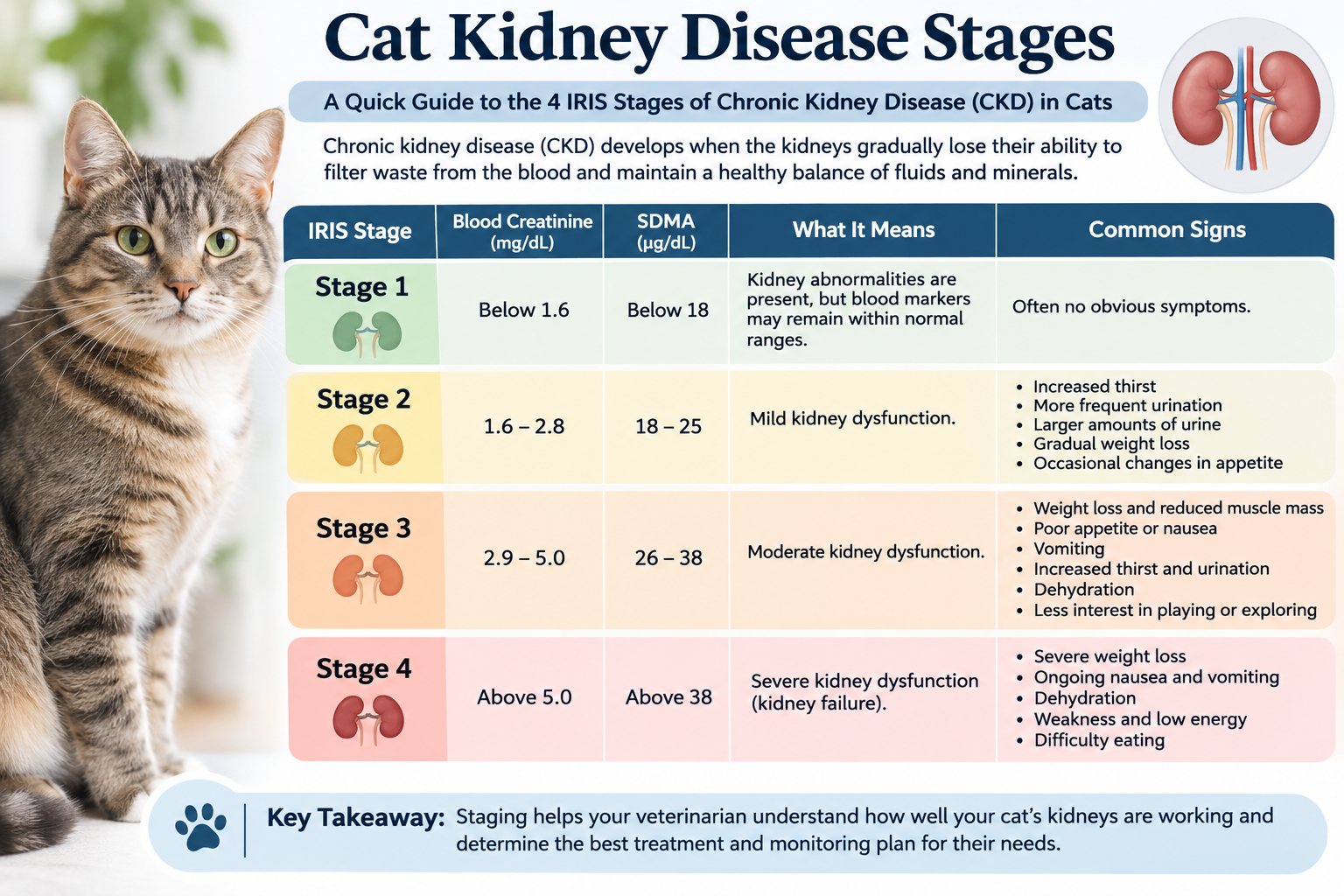
| IRIS Stage | Blood Creatinine (mg/dL) | SDMA (μg/dL) | What It Means for Your Cat |
| Stage 1 | Below 1.6 | Below 18 | Kidney abnormalities are present, but blood markers may remain within normal ranges. Your cat may show no obvious symptoms. |
| Stage 2 | 1.6-2.8 | 18-25 | Mild kidney dysfunction. Some cats develop increased thirst and urination, while others show few noticeable changes. |
| Stage 3 | 2.9-5.0 | 26-38 | Moderate kidney dysfunction. Symptoms such as weight loss, reduced appetite, and vomiting may become more noticeable. |
| Stage 4 | Above 5.0 | Above 38 | Severe kidney dysfunction. Cats may experience significant symptoms and complications that require supportive care. |
These are the feline creatinine and SDMA ranges used in IRIS staging. Stage 1 requires other evidence of chronic kidney disease, even when blood markers are within these ranges. Veterinarians also assess urine protein, blood pressure, and your cat’s overall health. Staging should be based on consistent measurements taken on at least two occasions when your cat is clinically stable and properly hydrated.
Stage 1: Early Kidney Disease With Few Symptoms
At Stage 1, some kidney damage has occurred, but the remaining healthy kidney tissue can still do much of the work. Because of this, your cat may not show any obvious signs of illness.
You might notice that your cat is eating, playing, and behaving just as they always have. In fact, many cats are diagnosed at this stage during a routine veterinary examination. Early changes may appear in urine tests, kidney imaging, or blood markers before noticeable symptoms develop.
Finding kidney disease this early gives you and your veterinarian more time to plan ahead. Some cats remain stable for years, especially when underlying concerns are identified and managed.
Stage 2: Mild Kidney Disease With Early Changes
During Stage 2, the kidneys become less efficient at filtering waste and conserving water. Your cat may still seem happy and active, but you might begin noticing small changes in their daily routine.
Common signs include:
- Drinking more water than usual
- Visiting the litter box more frequently
- Producing larger amounts of urine
- Gradual weight loss
- Occasional changes in appetite
You may notice that you’re refilling the water bowl more often or cleaning larger urine clumps from the litter box. These changes can be easy to overlook, particularly if they develop slowly.
Stage 2 is often a good time to discuss dietary changes and a long-term care plan with your veterinarian. With proper monitoring and treatment, many cats can continue enjoying a good quality of life.
Stage 3: Moderate Kidney Disease
At Stage 3, the kidneys have more difficulty removing waste products from your cat’s blood. As kidney function declines, waste products can build up and contribute to symptoms that affect your cat’s appetite, energy, and overall comfort.
As chronic kidney disease progresses, you may notice:
- Weight loss and reduced muscle mass
- Poor appetite or nausea
- Vomiting
- Increased thirst and urination
- Dehydration
- Less interest in playing or exploring
Some cats also develop high blood pressure or anemia. Anemia happens when damaged kidneys produce less erythropoietin, a hormone that helps the body make red blood cells.
Seeing your cat become less energetic or lose interest in food can be concerning. Fortunately, treatments are available to help manage these symptoms and complications. Your veterinarian can create a care plan focused on maintaining your cat’s nutrition, hydration, and comfort.
Stage 4: Advanced Kidney Disease and Kidney Failure
Stage 4 is the most advanced stage of chronic kidney disease. At this point, the kidneys have lost much of their ability to remove waste, maintain fluid balance, and support normal body functions.
Cats in Stage 4 may experience severe weight loss, ongoing nausea, vomiting, dehydration, weakness, and difficulty eating. These symptoms can become more challenging to manage as kidney function continues to decline.
Although Stage 4 is sometimes called end-stage kidney failure or end-stage renal failure, the diagnosis does not mean every cat will have the same experience. Some cats still respond to supportive treatment and enjoy comfortable time with their families.
At this stage, your cat’s comfort becomes an especially important part of every care decision. Your veterinarian can help you understand which treatments may still provide relief and when a more comfort-focused approach may be appropriate.
How Do Veterinarians Determine a Cat’s Kidney Disease Stage?
Because cats are often very good at hiding illness, kidney disease cannot always be identified through symptoms alone. Blood tests, urine tests, and blood pressure measurements help your veterinarian understand what’s happening inside your cat’s body.
Before assigning an IRIS stage, your veterinarian will first confirm that your cat has chronic kidney disease. This is important because dehydration, acute kidney failure, and urinary blockages can also cause abnormal kidney test results.
Blood Tests: Creatinine, SDMA, and BUN
Blood tests help veterinarians evaluate kidney function and look for signs that waste products are building up in your cat’s bloodstream.
Three important blood markers include:
- Serum creatinine: A waste product that increases when kidney filtration declines. Cats with low muscle mass may have lower creatinine levels than expected.
- SDMA: A marker used to assess renal function that is less affected by muscle mass.
- Blood urea nitrogen (BUN): A measurement of urea waste in the blood. Higher levels may indicate reduced kidney function, dehydration, or other health concerns.
Your veterinarian looks at these results together rather than relying on a single number. Changes over time can also provide valuable information about your cat’s kidney health.
Urine Tests: Concentration and Protein Loss
Healthy kidneys help the body conserve water and remove waste through urine. When kidney function declines, cats may begin producing larger amounts of dilute urine.
A urine specific gravity test measures how concentrated your cat’s urine is. A urine protein-to-creatinine ratio (UPC) helps determine whether protein is being lost through the kidneys.
Your veterinarian may also check for urinary tract infections if your cat’s symptoms or test results suggest an infection. If you’ve noticed changes in your cat’s urine, our guide to blood in cat urine explains other warning signs that deserve veterinary attention.
Blood Pressure and Proteinuria Substaging
Kidney disease can affect more than your cat’s ability to filter waste. Some cats develop high blood pressure (hypertension) or lose excess protein through their urine (proteinuria). These complications can increase the risk of further kidney damage and other health problems.
Veterinarians use urine protein-to-creatinine ratio (UPC) measurements and systolic blood pressure (SBP) readings to identify these additional risks.
| Measurement | Classification |
| UPC below 0.2 | Non-proteinuric |
| UPC 0.2-0.4 | Borderline proteinuric |
| UPC above 0.4 | Proteinuric |
| SBP below 140 mmHg | Normotensive |
| SBP 140-159 mmHg | Prehypertensive |
| SBP 160-179 mmHg | Hypertensive |
| SBP 180 mmHg or higher | Severely hypertensive |
Proteinuria should be confirmed through repeat urine testing, with other possible sources of protein in the urine ruled out. Blood pressure classification should also be based on multiple consistent measurements.
These classifications help your veterinarian assess your cat’s risk of complications and determine whether additional treatment is needed. Depending on the results, your cat may need medication to manage high blood pressure or reduce protein loss through the kidneys. Regular monitoring helps your veterinary team track changes and adjust the treatment plan as needed.
How Is Chronic Kidney Disease Treated at Each Stage?
Although chronic kidney disease cannot usually be reversed, there are ways to help cats feel better and manage the effects of declining kidney function.
Treatment depends on your cat’s IRIS stage, symptoms, laboratory results, and overall health. Your veterinarian will consider these factors when recommending a plan that fits your cat’s individual needs.
According to the 2026 iCatCare consensus guidelines, treatment focuses on slowing disease progression when possible, managing complications, and maintaining quality of life.
| Kidney Disease Stage | Common Treatment Priorities |
| Stage 1 | Monitor kidney health, investigate possible causes, and manage high blood pressure or protein loss if present |
| Stage 2 | Consider a kidney supportive diet, encourage hydration, and monitor blood pressure and phosphorus |
| Stage 3 | Manage nausea, appetite changes, dehydration, and other complications while continuing kidney-supportive care |
| Stage 4 | Provide individualized supportive care, manage uncomfortable symptoms, and regularly assess quality of life |
Kidney Diets and Hydration Support
What your cat eats and drinks can make a meaningful difference in managing chronic kidney disease. Veterinary prescription kidney diets are designed to support cats with reduced renal function through controlled phosphorus levels and adjusted amounts of high-quality protein.
Staying hydrated is also important. Some cats benefit from wet food, additional water bowls, or drinking fountains. In certain cases, your veterinarian may recommend subcutaneous fluid therapy to help manage dehydration.
Every cat has different needs, so changes should be made with veterinary guidance. If your cat refuses a new diet, your veterinarian can help you find an approach that supports both nutrition and comfort.
Medications for Kidney Disease Complications
As kidney disease progresses, some cats need medication to manage symptoms or complications. These medications cannot repair permanently damaged kidney tissue, but they may help your cat feel more comfortable.
Depending on your cat’s condition, treatment may include anti-nausea medications, appetite stimulants, phosphorus binders, or blood pressure medication. Some cats also need treatment for anemia or persistent protein loss.
Giving medication to a cat isn’t always easy, especially when they’re already feeling unwell. Our guide on how to pill a cat safely shares tips that may help make medication time easier for both you and your cat.
How Long Can a Cat Live With Each Stage of Kidney Disease?
There is no single life expectancy for each stage of feline kidney disease. Some cats have minimally progressive kidney disease and remain stable for several years, while others experience faster changes in kidney function.
Cats diagnosed in Stage 1 or Stage 2 generally have a better long-term outlook than those diagnosed in Stage 3 or Stage 4. However, your cat’s prognosis also depends on their age, blood pressure, protein loss, appetite, other medical conditions, and response to treatment.
Rather than focusing only on the numbers, it helps to consider how your cat feels day to day. Their appetite, comfort, activity level, and enjoyment of familiar routines all matter when evaluating their quality of life.
How Often Should Cats With Kidney Disease Be Monitored?
Regular veterinary visits are an important part of caring for cats with CKD. Because kidney function can change gradually, follow-up testing helps your veterinarian recognize concerns and adjust treatment before symptoms become more severe.
Cats with early, stable kidney disease may need less frequent monitoring. Those with advanced kidney disease or recent treatment changes often need closer follow-up.
Monitoring may include:
- Blood tests to track kidney markers, phosphorus, and electrolytes
- Urine tests to check concentration and protein levels
- Blood pressure measurements
- Weight and muscle condition assessments
- Discussions about appetite, hydration, energy, and daily habits
At home, you can help by paying attention to small changes. Notice whether your cat is eating normally, drinking more water, losing weight, or spending less time doing things they usually enjoy.
For families in Ridgefield, Redding, Danbury, and surrounding Connecticut communities, regular senior wellness visits can be especially helpful for identifying early kidney changes. Our guide to preparing your pet for a veterinary visit can help you organize your questions and observations before an appointment.
When Does a Cat With Kidney Disease Need Urgent Veterinary Care?
Even cats with stable chronic kidney disease can experience sudden health changes. Dehydration, infections, urinary obstructions, or acute kidney injury may cause your cat’s condition to worsen unexpectedly.
Contact your veterinarian promptly if your cat:
- Stops eating or struggles to keep food down
- Experiences repeated vomiting
- Becomes unusually weak or lethargic
- Shows signs of dehydration
- Has a sudden change in behavior or awareness
Seek emergency veterinary care immediately if your cat collapses, struggles to breathe, develops sudden blindness, or strains to urinate without producing urine.
These symptoms don’t always mean your cat’s kidney disease has progressed. Some changes may have treatable causes, so it’s important to have your cat checked as soon as possible.
If you’re concerned about your cat’s kidney health, the team at Ridgefield Veterinary Center is here to help. We understand how much your cat means to your family, and we’ll work with you to find the right approach to their care. From diagnostic testing to personalized treatment plans and ongoing monitoring, we provide support throughout your cat’s kidney disease journey. Learn more about our pet kidney disease management services or contact us to discuss your cat’s needs.
Conclusion
A kidney disease diagnosis can feel overwhelming, but understanding your cat’s condition can help you feel more prepared for the road ahead. Each cat is different, and their care needs may change over time. With regular veterinary guidance and a plan that considers their individual needs, many cats with chronic kidney disease can continue enjoying a good quality of life.
At Ridgefield Veterinary Center, we’ve been caring for pets and their families since 1955. We know that every cat is an important part of the family, and we’re here to help you make informed decisions about their health. Contact us today if you have questions about your cat’s kidney health or need guidance after a diagnosis.
FAQs
Can a cat have stage 1 kidney disease with normal creatinine levels?
Yes. Cats can have stage 1 chronic kidney disease (CKD) even when their creatinine levels are within the normal range. Early kidney changes may show up through urine tests, kidney imaging, or other diagnostic findings. Your veterinarian will consider these results along with your cat’s medical history to determine whether CKD is present.
Can a cat’s kidney disease stage improve?
A cat’s kidney disease stage can sometimes change if test results improve after dehydration or another treatable condition is addressed. However, chronic kidney damage generally cannot be reversed. Your veterinarian may recommend repeat blood and urine tests to determine whether the improvement is lasting or reflects a temporary change in your cat’s condition.
Are cats in pain when they have kidney disease?
Kidney disease does not always cause direct pain, but related complications can make your cat uncomfortable. Nausea, dehydration, mouth ulcers, and other problems may affect how your cat feels. If your cat stops eating, hides more than usual, or shows signs of discomfort, schedule a veterinary examination to identify the cause and discuss ways to help.
How long can a cat live with kidney disease?
A cat’s life expectancy depends on several factors, including the stage of kidney disease, how quickly it progresses, and whether complications such as high blood pressure or proteinuria develop. Some cats live comfortably for years with early-stage CKD and appropriate care. More advanced disease can be harder to manage, but treatment and supportive care may still help maintain your cat’s comfort and quality of life.
Can stage 4 kidney disease be managed at home?
Some cats with stage 4 kidney disease can receive supportive care at home under veterinary supervision. Care may include prescribed medications, nutritional support, and fluid therapy when appropriate. However, cats with severe symptoms or complications may need hospital treatment. Your veterinarian can help you decide which approach best supports your cat’s health and comfort.