
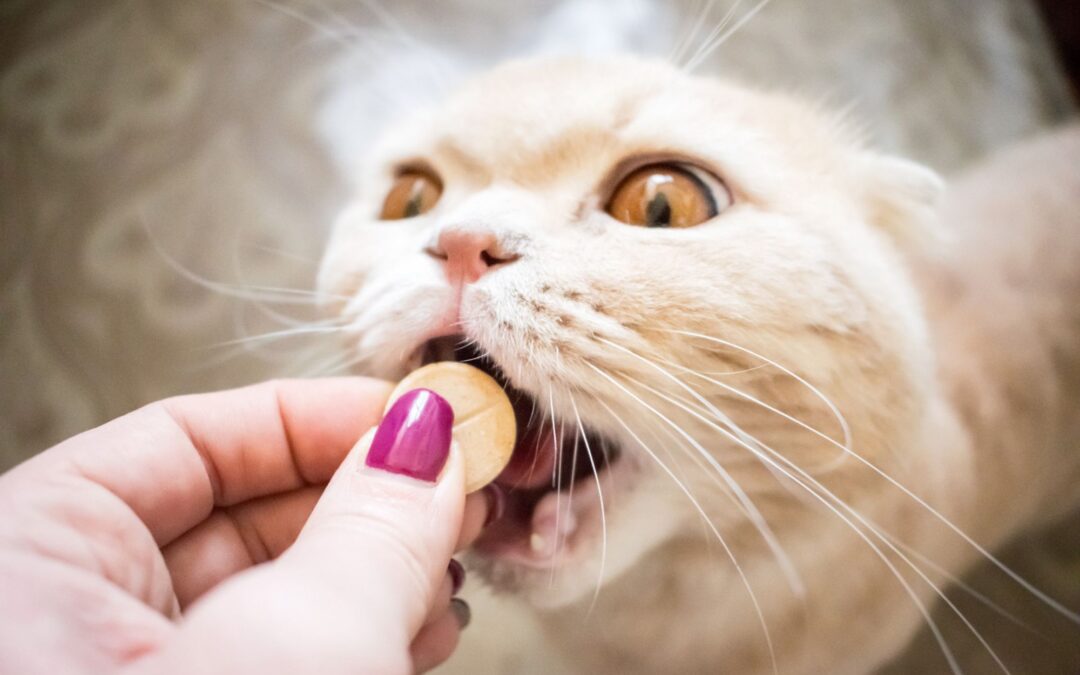
Your cat needs a pill, but the moment you bring the medication out, they hide, squirm, or clamp their mouth shut. If you’re wondering how to pill a cat, start with the method that keeps your cat safe and as calm as possible. Some cats will take a pill hidden in a small amount of food, while others need to be given the pill by hand.
The best approach depends on your cat, the medication, and whether it can be given with food. Below, we’ll cover the easiest ways to pill a cat, how to safely give a pill by hand, and what to do if your cat spits it out.
What Is the Easiest Way to Pill a Cat?
For many cats, the easiest way to give a pill is to hide it in a small amount of wet cat food, a soft treat, or a pill pocket. This works best when your veterinarian confirms that the medication can be given with food.
Here’s how to try it:
- Check the medication instructions. Make sure the pill can be given with food and does not need to be taken on an empty stomach.
- Choose a small amount of food or a treat. Use a little wet cat food, a pill pocket, or another vet-approved treat your cat enjoys.
- Hide the pill completely. Cover it well enough that your cat is less likely to notice it.
- Offer the pill separately. Give the medicated treat before your cat’s regular meal, if the medication instructions allow.
- Watch your cat eat. Make sure they swallow the entire pill instead of eating around it.
Keep the medicated portion small so you can tell whether your cat actually ate the entire dose. A large serving of food makes this harder to know. VCA Animal Hospitals recommends using a small amount of food when a cat’s medication can be given this way.
You may be tempted to use whatever soft food your cat loves, but foods such as cream cheese aren’t appropriate for every cat. Stick with a treat or food your veterinarian has approved, especially if your cat has dietary restrictions.
If your cat eats around the pill, spits it out, or refuses the treat altogether, don’t keep adding medication to their food. It’s time to try another approach, such as giving the pill by hand.
Which Method Should You Use to Give Your Cat a Pill?
The best way to give your cat a pill depends on their behavior, the medication instructions, and how comfortable they are with handling. Here’s how to choose a method:
| Method | Best For | When to Stop or Get Help |
| Hiding the pill in food | Cats that readily eat treats or wet food, when the medication can be given with food | Your cat refuses the food, eats around the pill, or may not have swallowed the full dose |
| Giving the pill by hand | Cats that tolerate gentle handling but won’t take medication in food | Your cat struggles, bites, scratches, or becomes distressed |
| Using a pill popper | Cats that spit out pills or are difficult to medicate by hand | You’re unsure how to use the tool safely, or your cat resists the procedure |
Start with the least stressful option that’s safe for your cat’s medication. If your cat repeatedly refuses the pill or you cannot confirm how much they swallowed, contact your veterinarian before attempting another dose. Your veterinary team can recommend a safer technique or another medication form when appropriate.
How to Pill a Cat by Hand: Step-by-Step Instructions
To pill a cat by hand, gently hold their head, open their mouth, place the pill toward the back of the tongue, and encourage them to swallow. This method takes practice, and it should only be attempted when your cat can be handled safely.
Before starting, carefully read the medication’s dosing instructions. Have the pill ready and choose a quiet place where your cat feels comfortable. The steps below follow guidance from VCA Animal Hospitals.
Step 1: Prepare Your Cat and the Medication
Place your cat on a stable, non-slip surface or hold them comfortably in your lap. If your cat moves their front paws or tries to scratch, you can gently wrap their body in a towel, leaving only the head exposed. Keep the towel snug without restricting breathing or movement. If needed, ask another person to help hold your cat. Avoid using force if your cat is already frightened or struggling.
Step 2: Hold the Pill Between Your Fingers
Use your dominant hand as your pilling hand. Hold the pill between your thumb and index finger so it’s ready when your cat opens their mouth. Keep your movements calm and controlled. Having everything within reach will help you finish quickly.
Step 3: Gently Hold Your Cat’s Head
With your other hand, gently grasp your cat’s head from above. Place your thumb on one side of the upper jaw and your fingers on the other side. Hold the head steady without squeezing. Slowly tilt your cat’s head upward until their nose points toward the ceiling. The lower jaw may drop open slightly. Do not force the head backward. If your cat seems uncomfortable or resists, stop and ask your veterinarian for guidance.
Step 4: Open Your Cat’s Mouth
While holding the pill, use the little finger or ring finger of your pilling hand to apply gentle downward pressure near the lower front teeth. This should open your cat’s mouth enough to place the pill. Be careful not to put your fingers between the back teeth, where your cat could bite. If your cat keeps their mouth tightly closed or begins struggling, don’t force it open.
Step 5: Place the Pill Toward the Back of the Tongue
Once your cat’s mouth opens, place the pill as far back on the tongue as you safely can. A pill placed near the front of the mouth is easier for your cat to push out. Work gently and quickly, but never push your fingers down your cat’s throat. If you cannot place the pill safely, stop and ask your veterinarian to demonstrate the technique.
Step 6: Close the Mouth and Encourage Swallowing
After placing the pill, gently close your cat’s mouth and return their head to a normal position. You can gently rub their throat or nose to encourage swallowing. Some cats also respond to a light puff of air toward the nose. Watch for signs of swallowing, such as a throat movement or licking of the lips. Do not assume the pill was swallowed immediately. Some cats hold it in their mouths and spit it out a few moments later.
Step 7: Follow With Water or an Approved Treat
Once your cat swallows the pill, offer praise, gentle petting, or an approved treat. Then follow the medication instructions for anything your cat should have after the dose.
Giving a cat a tablet or capsule without a suitable follow-up can allow it to remain in the esophagus. Ask your veterinarian about an appropriate water or food follow-up for the medication and your cat, rather than assuming the pill has reached the stomach. Cornell University College of Veterinary Medicine recommends about 5 to 6 mL of water after certain tablets or capsules to help prevent them from becoming lodged.
If your veterinarian recommends giving water after the pill, use an oral syringe or medicine dropper and give it slowly. Never squirt water forcefully into your cat’s mouth, as your cat could inhale it.
Can You Use a Pill Popper to Give Your Cat Medicine?
Yes. A pill popper, sometimes called a pill gun or pet piller, can help place medication toward the back of your cat’s tongue without putting your fingers as far into their mouth. This tool may be helpful if your cat tends to spit out pills or if giving medication by hand is difficult.
However, a pill popper must be used correctly. Placing it too far into the mouth or using too much force can cause injury. Before trying one at home, ask your veterinarian to show you the proper technique. Our team can help you decide whether a pill popper is appropriate for your cat and their medication.
What Should You Do if Your Cat Keeps Spitting Out Pills?
When your cat spits out a pill, don’t automatically give another dose. Check whether the pill came out whole, and contact your veterinarian when you’re unsure how much medication your cat swallowed. Giving another full dose could result in too much medication if some of the first dose was absorbed.
Repeated problems may mean it’s time to change how you give the medication instead of continuing with the same technique. Depending on the medication and your cat’s needs, your veterinarian may recommend:
- A different food or treat: Cats that detect pills in wet food may respond better to a pill pocket or another small, vet-approved treat.
- A pill popper: Cats that push pills out during hand-pilling may be easier to medicate with a pill popper. Ask your veterinarian to demonstrate how to use one safely.
- Another form of medication: Some medications are available as flavored liquids, smaller tablets, or compounded formulations. The appropriate options depend on the specific medication.
- A lower-stress approach: Scratching, biting, or severe distress are signs to stop repeated attempts and ask your veterinarian about a safer way to administer the dose.
Not every medication can be crushed, mixed with food, or changed into another form. Your veterinarian or pharmacist can confirm which options are safe for your cat’s specific prescription.
For help with your cat’s medication, Ridgefield Veterinary Center’s pet pharmacy services can help you understand your prescription and available medication options. Ongoing difficulty with medication can also be addressed during a pet wellness exam, where our veterinary team can review your cat’s treatment and discuss a safer approach.
When Should You Call Your Veterinarian About Giving Your Cat Medication?
Call your veterinarian for guidance when:
- You’re unsure about the dose. Your cat may have received too much, too little, or only part of the pill.
- Your cat misses a dose. Ask when to give the next dose instead of automatically doubling up.
- Your cat vomits after taking the medication. Your veterinarian can tell you whether another dose is appropriate.
- You notice an unusual reaction. New or concerning symptoms after medication should be checked with your veterinary team, especially when your cat is hiding, refusing food, or showing other changes in behavior.
- You need to change how the medication is given. Check before crushing, splitting, or mixing a pill with food, or switching to another form of medication.
- Giving the medication has become unsafe. Repeated scratching, biting, or severe distress means it’s time to stop and ask about a safer approach. For cats that become especially fearful or stressed during handling, learn more about cat anxiety symptoms and ways to recognize when your cat may need a lower-stress approach.
Seek emergency veterinary care immediately if your cat has trouble breathing, collapses, chokes, or shows signs of severe distress.
Conclusion
Giving your cat medication can take some patience, especially when your cat resists, hides, or spits out the pill. Using the right technique can make the process safer and less stressful for both you and your cat. Start with the method that works best for your cat, and don’t hesitate to get help when giving medication becomes difficult or unsafe.
At Ridgefield Veterinary Center, we can help you understand your cat’s medication instructions, demonstrate safer handling techniques, and discuss other medication options when pills are difficult to give. Our team provides gentle, Fear Free care for cats and their families throughout Ridgefield, Redding, Wilton, Danbury, South Salem, and North Salem. Contact us today to discuss your cat’s medication needs.
FAQs
Can I give my cat a pill without food?
Yes, when the medication instructions allow it. Some pills need to be given with food, while others work best on an empty stomach. Follow the instructions that came with the medication or check with your veterinarian before changing how you give it.
How long should I watch my cat after giving a pill?
Stay with your cat for a few minutes after giving the medication. Some cats may hold a pill in their mouth and spit it out later, so watching for swallowing and checking that the pill hasn’t been expelled can help confirm that the dose was given successfully.
Should I give my cat water after a pill?
Some tablets and capsules should be followed by a small amount of water to help the medication move into the stomach. Follow your veterinarian’s instructions for the specific medication, especially if your cat has difficulty swallowing pills.
What should I do if my cat refuses every way of taking a pill?
Talk to your veterinarian about whether the medication is available in another form. Depending on the prescription, options may include a liquid, smaller tablet, compounded medication, or another method of administration.