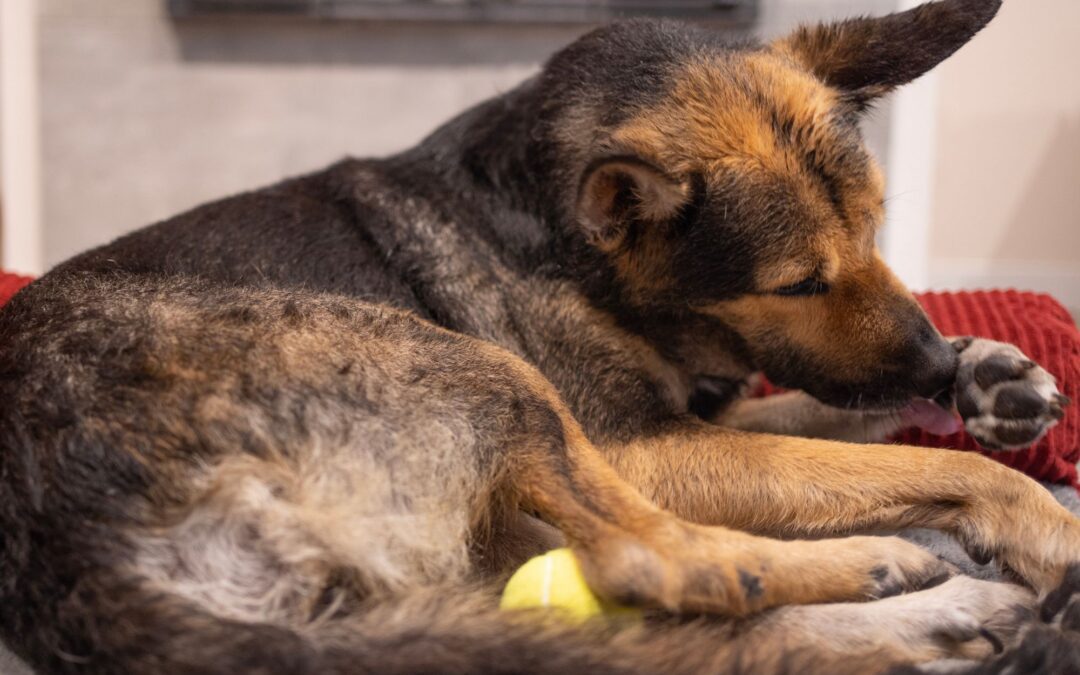
When you notice your dog licking paws excessively, it can be a sign that something is bothering their feet or skin. Occasional paw licking is normal, especially after being outside, but frequent licking or chewing can point to itching, irritation, pain, infection, allergies, or stress. Redness, swelling, odor, or hair loss are also signs that your dog may need veterinary attention.
This guide explains the most common reasons dogs lick their paws, what different licking patterns may mean, what you can safely do at home, and when it is time to see a veterinarian. Understanding the possible cause can help you respond sooner and prevent continued licking from causing more irritation and discomfort.
When Does Normal Paw Licking Become Excessive?
Dogs lick their paws as part of normal grooming. Your dog may briefly lick their paws to clean off dirt, moisture, or outdoor debris after a walk. Occasional licking is generally normal, especially when there are no other signs of irritation.
Excessive paw licking looks different. Your dog may return to the same paw repeatedly, lick or chew between their toes, or seem unable to settle without licking. Some dogs lick hard enough to leave wet spots on their bedding or cause red, raw areas on the skin.
Watch for these signs alongside excessive licking:
- Red, swollen, or moist skin between the toes
- Brown or rust-colored saliva stains on light-colored fur
- Hair loss on the paws or lower legs
- Cracked, dry, or damaged paw pads
- A strong, musty, or unpleasant odor
- Discharge, bleeding, scabs, or open sores
- Limping or reluctance to place weight on a paw
- Frequent scratching, ear problems, or itching elsewhere
These symptoms can indicate that your dog’s paw licking is more than routine grooming and may be related to an underlying skin, allergy, infection, injury, or other problem.
What Are the Most Common Causes of Excessive Paw Licking?
Excessive paw licking can have several causes, including allergies, infections, injuries, parasites, skin irritation, pain, and stress. More than one problem can occur at the same time. For example, allergies may make the paws itchy, while repeated licking can damage the skin and lead to a secondary infection.
Environmental Allergies Can Make Your Dog’s Paws Itchy
Environmental allergies are a frequent cause of paw licking in dogs. Pollen, grass, weeds, mold, dust mites, and other particles can trigger skin inflammation. The feet, face, ears, abdomen, and front legs are commonly affected areas in dogs with environmental allergies.
Ridgefield’s wooded properties, grassy yards, trails, and changing seasons give dogs regular contact with outdoor allergens. A dog may lick more after walking through grass, spending time in leaf-covered areas, or playing outside during a high-pollen period. Indoor allergens, including dust mites and mold, can cause year-round symptoms.
Environmental allergies may also cause:
- Red skin between the toes
- Face rubbing
- Recurrent ear infections
- Itching around the abdomen or legs
- Seasonal flare-ups
- Secondary bacterial or yeast infections
According to the Merck Veterinary Manual’s guidance on allergies in dogs, the paws are commonly affected by canine atopic dermatitis. However, paw licking alone does not confirm an allergy. Seasonal patterns, other signs such as itchy ears or face rubbing, and the presence of secondary yeast or bacterial infections can provide additional clues.
For more on recognizing seasonal triggers and allergy symptoms, see our guide to spring allergies in dogs. Allergy testing may help identify relevant environmental triggers when immunotherapy is being considered, but it is not used by itself to diagnose environmental allergies.
Food Allergies or Food Intolerance May Cause Ongoing Itching
Food allergies can cause itchy skin, paw licking, ear inflammation, and recurring skin infections. Unlike seasonal allergies, food-related itching can happen year-round. Some dogs may also have vomiting, loose stools, or other digestive problems.
Food allergies involve an immune reaction to an ingredient, while food intolerance causes a different type of reaction. Either way, paw licking alone cannot tell you whether food is the problem.
If a food allergy is suspected, your veterinarian may recommend an elimination diet using a prescription hydrolyzed-protein or novel-protein food. Your dog needs to eat only the prescribed diet during the trial, including no table scraps, treats, chews, or flavored medications. Even small amounts of other foods can make the results harder to interpret.
Blood, saliva, and hair tests are not reliable ways to diagnose food allergies in dogs. Avoid repeatedly switching foods on your own, since your dog may continue eating the same triggering ingredients without giving you a clear answer.
Yeast and Bacterial Infections Can Develop Between the Toes
Warm, moist spaces between the toes can support yeast or bacterial growth. An infection may begin after allergies, a minor injury, trapped moisture, or another skin condition weakens the normal skin barrier.
Yeast infections often cause redness, greasy skin, dark discoloration, and a musty odor. Bacterial infections may produce swelling, pustules, crusts, discharge, or painful sores. Some dogs develop both types of infection at once.
Licking adds moisture and friction to the affected area. This can worsen inflammation and spread irritation across the paw. These infections often require veterinary treatment because the correct medication depends on the organism involved and the depth of the infection. Topical treatments, medicated shampoos, antibiotics, or antifungal medications may be prescribed after an examination and testing.
An Injury or Foreign Object May Affect One Paw
If your dog suddenly starts licking one paw much more than the others, pain or irritation may be the cause. Common problems include:
- A splinter, thorn, burr, or grass awn
- A torn or broken nail
- A cut or puncture
- An insect bite or sting
- A burn from hot pavement
- Ice, salt, or deicing products trapped between the toes
- An interdigital cyst or swollen lump
If your dog allows it, gently check between the toes and around the nails for anything obvious. Do not dig into the skin or try to remove anything deeply embedded. A painful paw can also make even a normally gentle dog pull away or react when touched.
Swelling, drainage, limping, severe pain, or a foreign object you cannot safely remove should be checked by a veterinarian.
Fleas, Ticks, and Mites Can Cause Paw Irritation
Fleas commonly cause itching around the back, tail base, and hind legs, but an itchy dog may also chew or lick their paws. A dog with flea allergy dermatitis can have a strong allergic reaction to a small number of flea bites.
Ticks may attach around the toes or paw pads, where they are easy to miss. Certain mites can also cause intense itching, scaling, hair loss, and inflamed skin. Your veterinarian may perform skin scrapings or other tests if parasites are suspected.
Year-round flea and tick prevention is helpful for dogs in Ridgefield and surrounding communities. Local dogs may encounter ticks in wooded yards, tall grass, trails, and brush during much of the year.
Weather and Household Products Can Irritate the Paws
Your dog’s paws come into contact with many surfaces and products that can irritate the skin. Lawn treatments, fertilizers, cleaning products, ice-melting chemicals, and other substances may irritate when they get between the toes or onto the paw pads. Wet grass and snow can also leave the skin damp and more prone to irritation.
Hot pavement can burn the paw pads, while rough, frozen, or dry surfaces can cause cracking and discomfort. If the licking starts after walks or exposure to a particular surface or product, irritation may be the reason.
Rinse your dog’s paws with lukewarm water after exposure to potential irritants and dry well between the toes. Avoid using harsh soaps, alcohol, hydrogen peroxide, or human skin products unless your veterinarian recommends them.
Joint, Nail, or Nerve Pain May Lead to Licking
Paw licking is not always caused by itchy skin. Dogs may lick an area that hurts because of a torn nail, sprain, arthritis, joint discomfort, or nerve pain.
Pain-related licking often focuses on one paw or one specific area. Your dog may also lick higher up the leg if the source of discomfort is in a joint or muscle. This is why persistent licking of one paw does not always mean there is a problem with the paw itself.
Stress or Boredom Can Turn Licking Into a Habit
Dogs may lick their paws as a self-soothing behavior when they feel stressed, frustrated, or bored. Changes at home, long periods alone, loud noises, conflict with another pet, or too little physical and mental activity can contribute to this dog behavior.
Paw licking can also become a habit after an earlier medical problem. A dog may start licking because of an injury or itchy skin and continue even after the original problem improves. Over time, obsessive paw licking can further irritate the skin, creating a cycle of licking and discomfort.
Because stress-related licking can look similar to licking caused by allergies, infection, parasites, or pain, behavioral causes should be considered after medical causes have been ruled out.
What Does Your Dog’s Paw-Licking Pattern Mean?
The pattern cannot provide a diagnosis, but it can help your veterinarian narrow the possibilities.
| Paw-licking Pattern | Possible Causes |
| One paw, sudden onset | Cut, broken nail, sting, splinter, tick, or other injury |
| Several paws, seasonal pattern | Grass, pollen, mold, or other environmental allergies |
| Several paws, year-round pattern | Dust mites, food allergies, chronic skin disease, or behavioral causes |
| Red paws with odor | Yeast or bacterial infection |
| Licking with limping | Injury, joint pain, nail damage, or foreign material |
| Licking with ear infections | Environmental or food allergies |
| Licking mainly when alone or resting | Stress, boredom, pain, or an established habit |
Take note of when the licking happens, which paws are affected, and whether symptoms change after meals, walks, grooming, seasonal shifts, or time alone. Photos taken during a flare can also help your veterinarian see how the skin changes over time.
What Can You Do at Home?
Begin with a gentle paw check. Look at the tops and bottoms of the paws, between the toes, around the nails, and along the paw pads. Stop if your dog appears painful or resists handling.
If the paws are dirty or may have contacted an irritant, rinse them with lukewarm water and dry them thoroughly. Keeping the paws clean and dry may provide relief from mild surface irritation. It will not resolve an infection, embedded foreign body, allergy, or painful injury.
Prevent licking if your dog is damaging the skin. A properly fitted recovery collar may protect the affected area until your veterinary appointment. Socks and booties can trap moisture and worsen some skin conditions, so they should not be left on without guidance.
Do not apply human anti-itch creams, antibiotic ointments, essential oils, or pain medications unless your veterinarian approves them. Some ingredients are unsafe when swallowed, and licking makes ingestion likely. Home care should also not delay an examination when symptoms are painful, persistent, or worsening.
How Will a Veterinarian Find Out What’s Causing the Paw Licking?
A veterinarian will examine the skin, paw pads, nails, spaces between the toes, and the rest of your dog’s body. The pattern of symptoms and your dog’s medical history can help separate allergies from infections, pain, parasites, and behavioral causes.
During a pet dermatology appointment, diagnostic steps may include skin cytology to look for bacteria or yeast, skin scrapings to check for mites, and a close inspection for foreign material. Bloodwork or imaging may be recommended when an underlying health condition, joint problem, or deeper infection is possible.
The veterinarian may also ask about your dog’s food, treats, parasite prevention, home environment, recent activities, grooming products, seasonal symptoms, ear problems, and previous medications. This information matters because excessive paw licking often has several contributing factors.
How Is Excessive Paw Licking Treated?
Treatment depends on what is causing the licking. An infection may require antibiotics, antifungal medication, or topical treatment. Parasites need appropriate parasite control, while an injury may require wound care, pain relief, or removal of a foreign object. Dogs with allergies may need itch relief, treatment for secondary infections, allergy management, or immunotherapy.
If a food allergy is suspected, your veterinarian may recommend a strict elimination diet instead of simply switching foods. When stress or anxiety contributes to the licking, treatment may focus on reducing triggers, improving daily routines and enrichment, and providing behavioral support or medication when needed.
Ridgefield Veterinary Center provides allergy evaluation, dermatology care, nutritional guidance, and an in-house pet pharmacy for prescribed treatments. Follow-up care can help determine whether the treatment is working and whether the plan needs to be adjusted.
When Should You Call a Veterinarian About Your Dog Licking Its Paws?
Schedule a veterinary visit if your dog’s paw licking:
- Continues for more than a few days
- Keeps coming back after it improves
- Causes redness, swelling, odor, or discharge
- Leads to hair loss, sores, or bleeding
- Is accompanied by a damaged nail or signs of pain
Seek prompt veterinary care if your dog’s paw licking is accompanied by:
- Inability to put weight on the leg
- Rapid swelling of the paw
- Bleeding that will not stop
- A suspected burn or deep puncture
- A deeply embedded foreign object
- Signs of a serious allergic reaction
Seek emergency veterinary care if your dog develops facial swelling, widespread hives, difficulty breathing, collapse, or repeated vomiting after a possible sting or exposure.
Conclusion
Persistent paw licking is your dog’s way of responding to discomfort, even when the cause is not immediately visible. Allergies, infection, parasites, injuries, pain, environmental irritants, and anxiety can produce similar symptoms. An examination can identify the underlying issues before constant licking creates a more painful skin problem.
At Ridgefield Veterinary Center, we help identify what is causing your dog’s paw licking and recommend treatment based on the underlying problem. Our veterinary team has cared for local pets and their families since 1955. If your dog’s paw licking has become frequent or difficult to stop, contact us to schedule an evaluation. We serve pet families in Ridgefield, Redding, Danbury, Wilton, South Salem, North Salem, and nearby communities.
FAQs
Why is my dog licking their paws excessively at night?
Nighttime licking may become more noticeable when there are fewer distractions. It can be linked to allergies, infection, pain, arthritis, anxiety, or a learned self-soothing habit. Persistent nighttime licking, especially with redness, odor, swelling, or tenderness, warrants veterinary attention.
Why does my dog keep licking only one paw?
Licking one paw often suggests a localized problem, such as a thorn, cut, torn nail, tick, insect sting, cyst, or injury. Check the paw gently, including between the toes and around the nails. Limping, swelling, bleeding, or pain should be evaluated by a veterinarian.
Can I give my dog an antihistamine for paw licking?
Only give your dog an antihistamine if your veterinarian recommends it. The appropriate medication and dose depend on your dog’s size, health, and other medications. Some combination products contain ingredients that can be harmful to dogs, and antihistamines will not treat infections or injuries.
How can I prevent paw licking after outdoor walks?
Rinse or wipe your dog’s paws after walks, especially after contact with grass, mud, road salt, or other environmental factors that may irritate. Dry between the toes and keep the nails trimmed. Paw balms may help protect healthy pads, but they do not treat an underlying medical problem.
Can yeast infections cause dogs to lick their paws?
Yes. Yeast overgrowth can cause itching, redness, darkened skin, greasy residue, and a musty odor around the toes. These fungal infections can occur alongside bacterial infections, so veterinary testing may be needed to determine the appropriate treatment.
Will changing my dog’s food stop the paw licking?
Only if food is contributing to the problem, unplanned dietary changes may not identify the trigger and can make it harder to determine whether food is involved. When a food allergy is suspected, your veterinarian may recommend a strict elimination diet using a prescribed food.