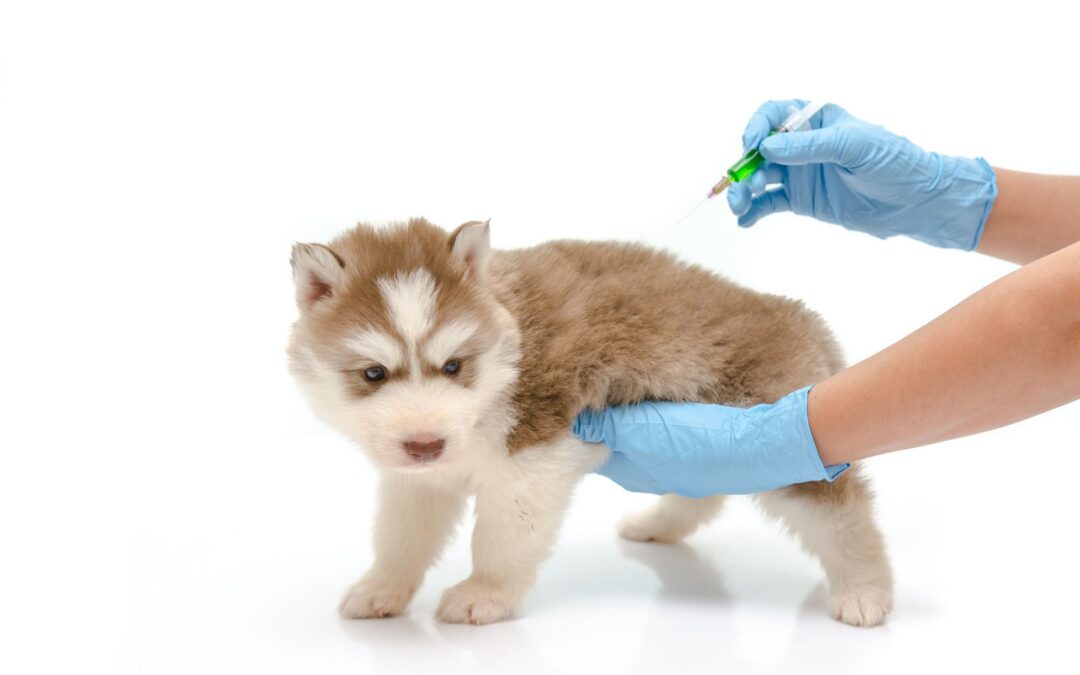
A puppy vaccination schedule usually starts when your puppy is 6 to 8 weeks of age. The DHPP/DAPP core vaccine series is typically given every 2 to 4 weeks, with the final puppy-series dose given at 16 weeks of age or older. Other core vaccines, including leptospirosis and rabies, follow their own recommended schedules. This series helps protect your puppy from serious diseases while their developing immune system is still learning how to respond to infectious diseases.
Your veterinarian will build a vaccine plan around your puppy’s age, health, prior records, and daily life. A new puppy who will hike in wooded areas around Ridgefield, attend daycare, meet other dogs, or spend time near wildlife may need a different plan from a puppy who stays mostly at home. The goal is to protect your furry friend while giving you clear guidance on puppy care, socialization, and preventive care.
Puppy Vaccination Schedule at a Glance
A typical puppy vaccination schedule includes a series of core vaccines, plus other dog vaccines based on lifestyle and exposure risk. Your puppy may need more or fewer visits depending on when their vaccine series starts and which non-core vaccinations are recommended.
| Puppy’s Age | Puppy Vaccines Commonly Discussed | Other Puppy Care Topics |
| 6-8 weeks | Begin DHPP/DAPP combination vaccine series | Physical exam, fecal testing, deworming, nutrition |
| 10-12 weeks | DHPP/DAPP booster; Bordetella if appropriate for lifestyle; leptospirosis series may begin at or after 12 weeks | Parasite prevention, socialization, flea and tick prevention |
| 12-14 weeks | Rabies vaccination according to Connecticut requirements and the vaccine manufacturer’s approved age | Review vaccine records and upcoming lifestyle needs |
| 14-16 weeks | Continue the DHPP/DAPP series. If leptospirosis vaccination has started, give the second dose 2–4 weeks after the first, depending on the vaccine product. Review lifestyle, training, daycare, and boarding plans. | Lifestyle vaccines, training, daycare, and boarding plans |
| 16-20 weeks | Complete the final puppy-series DHPP/DAPP dose at 16 weeks of age or older. In higher-risk situations, an additional dose may be recommended at 18–20 weeks. Confirm vaccine records, socialization progress, and parasite prevention. | Confirm vaccine records, socialization plan, and ongoing parasite prevention |
| Within one year after the initial series | Booster vaccinations based on vaccine type and your veterinarian’s recommendations | Long-term vaccination schedule and wellness care |
This puppy vaccine schedule is a general guide and not a replacement for veterinary care. Exact vaccine timing can vary based on the product label, your puppy’s age and health, prior vaccination records, exposure risk, and applicable state requirements.
Why Puppies Need Several Vaccine Visits
The American Animal Hospital Association (AAHA) canine vaccination guidelines recommend a series of core vaccines for puppies because maternal antibodies can provide temporary protection while also interfering with early vaccine responses. These antibodies fade at different rates, so one vaccine visit may not provide reliable protection.
Each dose gives your puppy’s immune system another opportunity to build protection as maternal antibodies decline. A final DHPP/DAPP core vaccine dose at 16 weeks of age or older helps ensure coverage during this transition. The number of visits can vary depending on when your puppy starts their vaccines.
At Ridgefield Veterinary Center, our puppy wellness care services include vaccinations and routine wellness care to help keep your puppy protected as they grow.
Core Vaccines in a Puppy Vaccination Schedule
Core vaccines are recommended for dogs because they protect against serious diseases and are appropriate for most dogs unless there is a specific medical reason not to vaccinate. Current AAHA guidance lists distemper, adenovirus, parvovirus, rabies, and leptospirosis as core vaccines for dogs. AAHA updated its guidelines in 2024 to include leptospirosis as a core vaccine for all dogs.
DHPP, DAPP, and DA2PP Combination Vaccines
DHPP, DAPP, and DA2PP are names commonly used for a combination vaccine. The letters can vary by manufacturer, so ask your veterinarian which antigens your puppy received.
These common dog vaccinations may protect against:
- Canine distemper: A highly contagious virus that can affect the respiratory, digestive, and nervous systems.
- Canine adenovirus: Protection against adenovirus type 1 is associated with protection from canine hepatitis, a disease that can affect the liver.
- Parvovirus: A highly contagious virus that can cause severe vomiting, diarrhea, dehydration, and sometimes death in young puppies.
- Parainfluenza: This may be included in some vaccines and can be part of canine respiratory disease.
Parvovirus is a fatal virus for some unvaccinated dogs, especially puppies. It can remain in contaminated environments, which is why early socialization plans should balance behavior needs with parvovirus exposure risk.
Rabies Vaccine for Puppies in Connecticut
Connecticut law requires dogs and cats to receive a rabies vaccine when they are at least 12 weeks old but younger than 14 weeks, or at the age recommended by the vaccine manufacturer and approved by the USDA. Dog owners also need a current rabies vaccination certificate to license their dogs. Connecticut requirements outline these vaccination and certification rules.
Your veterinarian will schedule your puppy’s rabies vaccine based on Connecticut requirements, the vaccine manufacturer’s approved age, and your puppy’s health. The timing of future boosters depends on the vaccine used and state requirements.
Keep your puppy’s rabies certificate with their medical records. You may need it for licensing, boarding, travel, grooming, or other situations that require proof of vaccination.
Leptospirosis Vaccine
Leptospirosis is a bacterial disease that spreads through the urine of infected animals and can contaminate water and soil. Puppies can be exposed through puddles, standing water, wet soil, streams, rodents, and wildlife. The infection can cause serious kidney and liver problems and can also spread to people.
Your puppy’s initial leptospirosis vaccine series typically includes two doses given 2 to 4 weeks apart. Your veterinarian will determine when your puppy should receive each dose based on the vaccine product, age, and health history.
Lifestyle Vaccines for Your Puppy
Some vaccines are chosen based on your puppy’s routine, travel plans, environment, and contact with other dogs. These may be described as non-core vaccines, non-core vaccinations, or lifestyle vaccines.
Bordetella Vaccine for Kennel Cough
The Bordetella vaccine helps protect against Bordetella bronchiseptica, one cause of kennel cough. Kennel cough is a highly contagious respiratory infection that can spread where dogs gather, including daycare, boarding facilities, grooming salons, training classes, shelters, and dog parks.
A Bordetella vaccine may be given by a nasal, oral, or injectable route. The vaccine schedule can differ depending on which form your veterinarian uses. If you plan to board or groom your puppy, ask the facility about its vaccine rules well before the reservation date.
Lyme Vaccine and Tick Prevention in Connecticut
Lyme disease is a concern for many dogs in Ridgefield, Redding, Danbury, Wilton, South Salem, and North Salem. Blacklegged ticks can be active in Connecticut whenever temperatures are above freezing. Puppies can encounter ticks in yards, leaf litter, trails, brushy areas, and wooded edges.
A Lyme vaccine may be appropriate for some dogs, but it does not replace flea and tick prevention. Your veterinarian may recommend vaccination along with regular tick checks and a veterinarian-recommended parasite prevention product.
Canine Influenza Vaccines
Canine influenza vaccines may be recommended for puppies with regular exposure to group-dog settings. Canine influenza is a contagious respiratory illness that can spread through close contact, shared spaces, and infected respiratory droplets.
Your veterinarian may discuss canine influenza if your puppy will attend daycare, boarding, grooming, dog shows, or frequent training classes. Most canine influenza vaccines need an initial two-dose series given weeks apart before ongoing boosters.
Can Your Puppy Go Outside Before All Shots Are Complete?
Puppies do not need to stay indoors until they finish their entire vaccine series. They can begin exploring and socializing in lower-risk settings while they are still receiving their vaccines, but they should avoid places where they are likely to encounter sick or unvaccinated dogs or contaminated surfaces. Your puppy’s age, vaccination history, and local disease risks also affect which activities are appropriate.
Lower-risk activities include:
- Being carried while visiting new places
- Riding in the car
- Meeting healthy, fully vaccinated dogs in a clean private home
- Seeing people, bicycles, traffic, and new sounds from a safe distance
- Attending a veterinarian-approved puppy class with health requirements
- Spending time in your own clean yard if unknown dogs do not use it
Higher-risk places include:
- Dog parks
- Pet-store floors
- Shared apartment dog areas
- Busy outdoor areas with unknown dogs
- Areas with feces or poor sanitation
- Places with known parvovirus activity
As your puppy progresses through the vaccine series, gradually expand their outdoor activities while continuing to avoid high-risk environments until they have adequate protection.
Puppy Vaccines Cost and Pet Insurance
Puppy vaccine costs can vary based on the combination vaccine used, which lifestyle vaccines your puppy needs, exam fees, fecal testing, deworming, and parasite prevention. A puppy vaccine series often requires several appointments because each vaccine has its own recommended schedule.
Ask for an estimate that includes expected visits through the first-year booster. This can help you plan for puppy care rather than only the next appointment.
Pet insurance usually does not cover routine dog vaccinations under accident-and-illness plans. Some providers offer separate wellness plans that may help with preventive care costs. Read the policy details before choosing coverage, since benefits, waiting periods, and reimbursement limits vary.
What Side Effects Can Happen After Puppy Vaccines?
Most puppy vaccines are well tolerated. Some puppies have mild reactions after a vaccine visit. These signs often improve within a day or two.
Mild reactions can include:
- Tiredness
- Mild soreness
- A small lump or tenderness at the injection site
- Lower appetite for a short time
- Less interest in play
- Mild fever
Call your veterinarian if signs are severe, worsen, or last longer than expected. Seek urgent veterinary care for:
- Facial or muzzle swelling
- Hives
- Trouble breathing
- Collapse
- Marked weakness
- Severe vomiting
- Repeated diarrhea
Do not give human pain medicine or other medications unless your veterinarian tells you to do so. A record of prior reactions helps the veterinary team plan future dog vaccinations safely.
What if Your Puppy Misses a Vaccine Appointment?
If your puppy is late for a vaccine appointment, call your veterinarian and bring all available records. Do not assume that the whole vaccination schedule must restart. Do not assume a missed dose can be skipped either.
The correct catch-up plan depends on:
- Your puppy’s current age
- Vaccine names and dates
- The number of valid prior doses
- The time between doses
- Product-label instructions
- Your puppy’s health and exposure risk
A breeder or rescue note that says “shots given” may not include the vaccine name, date, product, or clinic information. A clear record helps your veterinarian avoid unnecessary repeat vaccines while filling gaps in protection.
Keep Your Puppy’s Vaccine Records Organized
Store a paper copy and a digital copy of your puppy’s health records. You may need them when changing veterinarians, registering for training classes, boarding your dog, traveling, or licensing your dog.
Keep track of:
- Vaccine name
- Date each vaccine was given
- Clinic name
- Product and lot number when provided
- Next-due date
- Rabies certificate
- Parasite prevention products
- Any past mild reactions or other health concerns
This record stays useful as your puppy becomes an adult dog and later a senior dog. Adult dogs and senior dogs still need regular wellness visits, even when their vaccine needs change over time.
Questions to Ask at Your Puppy’s First Veterinary Visit
- Which puppy vaccines does my dog need today?
- What is my puppy’s next vaccine schedule date?
- Does my puppy need a Bordetella vaccine for daycare, grooming, or training?
- Should we discuss a Lyme vaccine and tick prevention?
- Is canine influenza protection appropriate for my puppy?
- When can my puppy safely meet other dogs or go to public places?
- Which parasite prevention products fit my puppy’s age and weight?
- What side effects should I watch for after puppy vaccination?
- What records should I keep for boarding, licensing, and travel?
Conclusion
A puppy vaccination schedule helps protect your dog during a period when they are still developing immunity and learning about the world around them. The right plan includes more than puppy vaccines. It also includes safe socialization, parasite prevention, wellness exams, vaccine records, and support for your puppy’s healthy life.
Ridgefield Veterinary Center provides puppy vaccinations and preventive care for families in Ridgefield, Redding, Danbury, Wilton, South Salem, and North Salem. Contact us today to schedule your puppy’s vaccination visit, review their vaccine records, and make sure they receive the vaccines they need as they grow.
FAQs
When do puppy shots start?
Puppy vaccinations typically start at 6 to 8 weeks of age, when maternal antibodies begin to decrease, and puppies become more susceptible to infection. Starting vaccines at this age helps build early protection.
How often do puppies need booster shots?
For the DHPP/DAPP series, puppies usually receive doses every 2 to 4 weeks, with the final puppy-series dose given at 16 weeks of age or older. This timing helps account for maternal antibodies that may have blocked earlier vaccine responses.
How many vaccines does my puppy need before going outside?
There is no single number that applies to every puppy. A puppy may be able to have controlled, lower-risk outings before finishing all vaccines. Busy dog parks and shared dog areas usually carry more exposure risk. Ask your veterinarian about the specific place you plan to visit.
What is the difference between DHPP, DAPP, and DA2PP?
These names usually refer to a combination vaccine that protects against several infectious diseases, including canine distemper, adenovirus, and parvovirus. Some formulations also include parainfluenza. Ask your veterinarian which antigens were included in your puppy’s vaccine.
Does my puppy need a Lyme vaccine in Connecticut?
A Lyme vaccine may be a good choice for some puppies in Connecticut, especially those spending time in tick-prone areas. Your veterinarian can review your puppy’s lifestyle, home environment, and tick exposure before recommending it.
What if my puppy already received vaccines from a breeder or rescue?
Bring every record to your puppy’s first appointment. Your veterinarian will review the dates, vaccine types, and your puppy’s age when they were given. This helps create a safe vaccine plan for your puppy.